Facts on the Cricket Insect

Facts on the Cricket Insect thumbnail
Crickets are found throughout the U.S.

In the autumn when the weather begins to cool, a chorus of cricket songs fills the night air. These are the songs of male crickets trying to attract a female. The beauty of a cricket's song isn't apparent to everyone, but in some cultures singing crickets are kept as pets.

  1. Types of Crickets

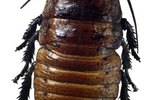
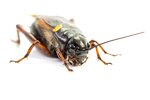
    • There are three types of crickets commonly found in the U.S. Field crickets are black or dark brown and measure from 1/2 inch to just over an inch long. House crickets look a lot like field crickets but are yellowish-brown and only about 3/4 inch long; they have three dark bands across the head and the upper part of the thorax. Cave crickets, also called camel crickets, are wingless and have longer antennae and hind legs. The camel cricket's back is arched, giving it a hump-backed appearance.

    Chirping

    • A male cricket chirps by scraping his wings against each other. On one wing he has a series of ridges called a file, and on the other he has one sharp ridge called a scraper. The tone of the chirp is determined by wing structure and the distance between the ridges on the file. The frequency of chirps is related to the temperature. If you count the number of chirps in 15 seconds and add 37, you get the approximate temperature in degrees Fahrenheit.

    The Importance of Songs

    • All crickets have ears located below the bend in their front legs. The ears allow crickets to hear chirps, and by changing the direction he is facing a cricket can also tell what direction a chirp is coming from.

      Male crickets communicate through their songs. Female crickets choose a mate according to the tone and vigor of his song. The loud, steady chirps heard at night are the male's mating song. When a female is nearby he produces a softer, quicker chirp, Crickets also have a chirp to define their territory and an alarm chirp to warn others of danger.

    Habitat and Damage

    • Crickets live in cool, damp, dark places such as caves, basements, under rocks and in plumbing. They hide in cracks and crevices during the day and come out at night to feed. Outdoor crickets feed on garden plants and are normally just a nuisance, but they damage plants when the population is high. Indoor crickets damage fabrics and carpeting.

    Life Cycle

    • Adult female crickets are easy to recognize. They have a long, straight structure extending from the end of their body, called an ovipositor. The ovipositor is used to deposit eggs. They also have two small appendages near the ovipositor, called cerci. These are used during mating.

      Female crickets deposit their eggs in moist sand or soil in autumn, and they hatch in 15 to 25 days. When newly hatched insects look similar to adults except in size, they are called nymphs. Cricket nymphs are wingless, and develop into adults in about 12 weeks. Adult crickets die in winter.

Related Searches:

References

  • Photo Credit cricket image by Henryk Olszewski from Fotolia.com

Comments

You May Also Like

  • Facts on the Cricket Insect

    The cricket is a member of the Orthopteran family, along with grasshoppers and katydids. They are considered my many cultures to bring...

  • Cricket Insect Information

    Although close relatives of the grasshopper, crickets belong to a distinct group of insects that possess very large back legs in proportion...

  • Snowy Tree Cricket Facts

    The snowy tree cricket is an insect species native to North America. They are particularly well known for the song they produce....

  • How to Get Rid of Humpback Cricket Insects

    Humpback crickets are also known as camel crickets. Moisture attracts camel crickets. If they get inside your house, they can feed on...

  • Interesting Information About a Cricket

    Crickets are a type of insect known for their distinctive call and jumping ability. Similar to grasshoppers, crickets can be found in...

  • Cool Facts About New York's Field Trips

    Do tourist traps have you dreaming of the cramped, foodless plane ride home? Or do you live in New York and fear...

  • Cricket Behavior Facts

    Like more-complex creatures of the animal kingdom, crickets exhibit behaviors that are studied by scientists for their uniquely advanced nature. Crickets are...

  • House Cricket Scientific Facts

    Crickets are typical of insects in that they possess six legs, a head, abdomen and thorax, and have two antennae. Crickets, though,...

  • Jerusalem Cricket Facts

    The Jerusalem Cricket is a member of the Stenopelmatidae family. This nocturnal cricket lives underground, and despite its fearsome reputation, it is...

  • Grasshoppers Vs. Crickets

    Grasshoppers and crickets frequently appear in lawns and houses during summertime. Both types of bugs exist in the same insect order called...

  • How to Kill Spider Crickets

    Spider crickets are actually camel or camelback crickets. The insect's back has the humpback look of a camel and the long legs...

  • Interesting Facts About a Cricket

    Crickets are usually brown or black and are related to grasshoppers and katydids. Most cricket species communicate with chirping sounds that are...

  • Can a Cricket Live 6 Months Without a Head?

    With such a diversity of wildlife all around us, there is a smorgasbord of fun and exciting facts we know little about....

  • Interesting Ground Cricket Facts

    There are two main kinds of ground cricket: the standard ground cricket and the striped ground cricket. Ground crickets measure approximately 12...

  • Facts on Crickets

    In any moment of silence, you're bound to hear them--crickets. Their characteristic chirping is used by males to find a mate. Male...

  • How to Raise Crickets for Fish Bait

    Crickets are used for fish bait and to feed fish, birds and other insectivores. People in the southern United States can catch...

  • How to Repel Crickets

    The sound of chirping crickets is a staple of summer to many and others consider a cricket inside the house to be...

  • Camel Cricket Information

    Camel crickets, also known as cave crickets, like dark, cool, damp areas such as under stones or logs, according to the University...

  • Anatomy of a Cricket

    Crickets are familiar to anyone who has lived in a temperate climate during the spring or summer months. These insect musicians serenade...

  • How Long Do Pinhead Crickets Live?

    A pinhead cricket is a popular term with reptile keepers when referring to crickets after they have hatched. Black or brown field...

Related Ads

Featured