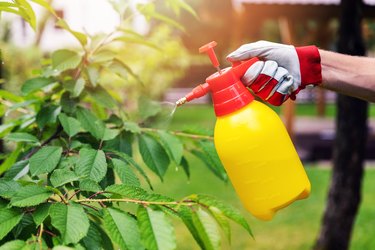
What Is the Best Temperature to Use Roundup Weed Killer?

From 5 to 8 million pounds of herbicides containing glyphosate are annually applied to yards and lawns, and another 85 to 90 million pounds are applied to agricultural crops. The correct temperature to apply Roundup, the original glyphosate herbicide, is just one of the factors a gardener faced with noxious weeds needs to take into account. Does this Spark an idea?

  1. Background

    • In the 1970s, the Monsanto Co. patented and sold Roundup. The Monsanto patent expired in 2000, and herbicides containing glyphosate are now sold under numerous brand names.

      The instructions and precautions for using Roundup are similar to other herbicides using glyphosate, but the other varieties might contain different ingredients causing them to behave differently. Read carefully the specific directions for each brand.

    Weather and Temperature

    • Glyphosate kills actively growing plants. Drought conditions ordinarily associated with hot weather slow the growth of weeds. This retards the effectiveness of Roundup.

      Cool weather and frost also reduce the ability of Roundup to kill weeds. Likewise, the effectiveness of Roundup declines at temperatures above 85 degrees Fahrenheit.

      The best temperature to apply Roundup is between 60 degrees and 85 degrees.

    Time of Day

    • Controlling weeds with Roundup is best between 10 a.m. and 4 p.m.

      Even if the temperature is right, do not apply Roundup if rain is expected for one or two hours.

      Do not apply Roundup at otherwise optimal temperatures if the wind is blowing. Wind can blow Roundup onto your good plants. The air should be calm.

    Application

    • Roundup does not discriminate among the plants it destroys. It kills any plant that it lands on. It works best on perennials, including weedy grasses and broad-leaf weeds.

      Spray Roundup directly onto the plants you want to kill. If you're spraying uncomfortably close to plants you don't want harmed, make a cardboard shield to protect them.

      Use it to control weeds in shrub beds, to kill individual weeds in your lawn and to zap weeds growing through patio blocks and up the gravel in driveways,

      It is safe to use this herbicide to eliminate weeds before planting a landscape bed or sodding a new lawn. It kills plants. It doesn't poison the soil.

    How It Kills

    • Roundup is a "systemic" herbicide. That means it must be absorbed by the leaves. It moves down the plant and into the roots. This takes time. In about seven to 10 days plants sprayed with Roundup will begin turn yellow, after which they will die.

      Do not hoe or pull up the weeds until they are dead. If you yank them out before they're completely dead, they will grow back again.

    How Much to Use

    • Do not use too much Roundup. Roundup has to move down through the plant to the roots to kill it. If you use too much, the tops of the plants will die before the Roundup can settle into the roots.

      You can buy several formulations of Roundup. These range from a mixed solution that contains 5 per cent glyphosphate to concentrated formulas with 41 per cent glyphosphate. The stronger mixes are more expensive, but if you are going to use Roundup frequently, the concentrated form is the best buy.

    Safety Tips

    • Roundup applied in the recommended temperature range dries in about an hour. After that family and pets can use the treated area safely.

      When you finish applying Roundup or any herbicide or pesticide, wash your equipment thoroughly.

Related Searches:

References

Resources

Comments

You May Also Like

  • When to Apply Roundup?

    Roundup is an herbicide produced by The Scotts Miracle-Gro Company. It contains the active ingredient glyphosate, which is responsible for killing unwanted...

  • Roundup Application Directions

    No matter how often you pull a thistle or dig up that patch of Bermuda grass, somehow it returns, stronger than before,...

  • How to Apply Roundup to Sod

    Roundup is a brand name glyphosate-based chemical herbicide familiar to many homeowners and professionals alike who deal with weed control in a...

  • The Best Time of Day to Apply Weed Killer

    People with large yards know the benefits of using weed killer. Over the course of the summer, when growing conditions are perfect,...

  • The Best Time to Spray Roundup in a Yard

    Roundup is the Scotts MiracleGro Company version of glyphosate, a non-selective herbicide, meaning it will affect any leaves the spray touches. Glyphosate...

  • Facts About Round Up Weed Killer

    Roundup, a popular weed killer, is an effective product when used correctly. Gardeners and homeowners find that the active ingredient, Glyphosate isoproplymine...

  • The Best Time to Use Roundup Weed Killer

    Roundup is a Monsanto product containing glyphosate. Glyphosate is a broad-spectrum contact herbicide used to kill all plants with which it comes...

  • How to Mix Roundup Concentrate

    Roundup is a trademarked name for a line of glyphosate selective herbicides manufactured by the Monsanto Corporation. This product is often used...

  • The Best Temperature for Applying Roundup

    Monsanto's Roundup is an herbicide that can kill more than 200 varieties of weeds and other plant pests. Roundup's active ingredient, glyphosate,...

  • The Proper Use of Roundup Weed & Grass Killer

    Roundup Weed & Grass Killer is a lawn care product produced by Scotts Miracle-Gro Company. It is available either with a "pump-n-go"...

  • The Proper Temperature to Apply Roundup Weed Killer

    Roundup weed killer is a nonselective herbicide with the active ingredient glyphosate. Glyphosate is also sold under other trade names and may...

  • Mixing Rate for Roundup

    Over the years, Roundup has become a veritable household name when it comes to weed control around the home and in professional...

  • The Spray Mix Calculation for Roundup

    Roundup is a broad spectrum herbicide manufactured by the Monsanto Corporation. Other manufacturers produce similar products based on the active ingredient glyphosate...

  • How to Use Roundup Weed Killer

    Roundup is a weed killer for use in many home gardens. It comes in many varieties from the regular grass and weed...

  • What Is the Best Time to Spray Wasps?

    Wasps are active during the day and dormant at night, which makes night time the best time to spray. Do not spray...

  • How to Use Roundup Weed & Grass Killer

    The endless battle with weeds around your garden and walkway can feel never-ending. You may have noticed unwanted plants popping up in...

  • Can You Apply Roundup in Rainy Weather?

    Roundup is one brand name for a nonselective herbicide, glyphosate, which kills grass and weeds. It is a systemic and must be...

Related Ads

Featured