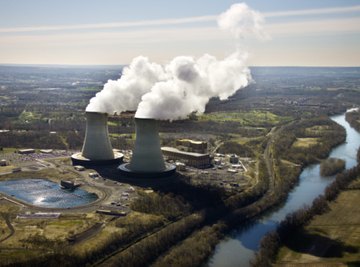
Nuclear power is a controversial source of energy, having both unique advantages and disadvantages. Energy is created through nuclear fission using uranium-235 or plutonium-239 isotopes. Large amounts of kinetic energy are produced during this process and converted into electricity. The Nuclear Regulatory Commission oversees the nuclear power industry in the United States.
Environmental Impact
Nuclear power has a different type of environmental impact than other energy sources. Abnormal events at nuclear power plants, such as a release of radioactive material following a damaging earthquake, can have severe consequences for the environment. Extensive backup systems and modern technology can reduce the chance of these events happening. The waste produced is discharged, high-level radioactive spent fuel and low- to intermediate-level radioactive waste. A modern nuclear plant produces about 1,050 cubic feet of compacted waste a year; compare this to a 1000-megawatt coal plant sending about 24,250 tons of nitrous oxides and 48,500 tons of sulphur oxides into the atmosphere each year.
Security Issues
Nuclear power plants must be thoroughly protected from terrorist attacks. Stolen fuel rods can potentially be used to make a "dirty bomb." An aircraft attack on a plant could release radioactive material. Use of nuclear power, however, can help a country reduce its dependence on external fuel sources and avoid national security threats and economic issues if those fuel sources become unavailable.
Costs
Nuclear power plants have high startup costs. Plants must invest heavily in containment systems and emergency plans. Extensive backup systems must be built and contingency plans must be developed to handle the rare threat of core meltdown. The cost of a nuclear plant's future decommissioning must be considered and funded, as well. Despite these costs, the uranium used for nuclear power plants is a heavily concentrated source of energy that transports easily.
Waste Storage
Radioactive waste must be placed in long-term storage systems. Spent fuel rods emit dangerous radioactivity that slowly decreases with time through radioactive decay. The United States has no permanent facility for high-level nuclear waste, so spent fuel is commonly stored in sites near nuclear power plants.
References
About the Author
Sean Mann has been a freelance writer since 2010. With thorough knowledge and experience in technological fields such as computer software, hardware, the internet and programming, he creates online content for various websites. Mann has a Bachelor of Science in computer science from Ohio State University.
Photo Credits
Jupiterimages/Photos.com/Getty Images