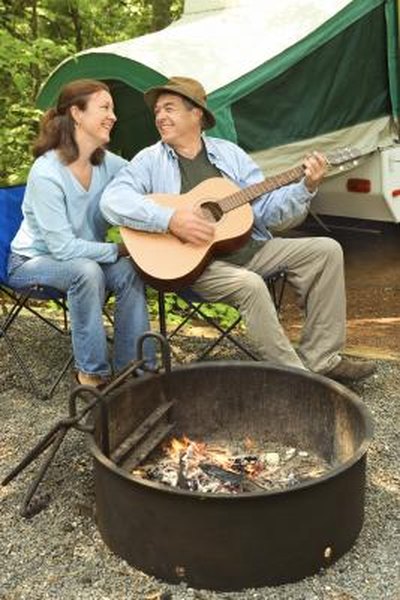


Pop-up campers are designed to combine a comfortable living space and a portable design. The camper roof collapses for easy transport and raises to create standing room and a living space. Living in a pop-up camper is possible in many regions with the fabric walls being the only downside. The fabric does not insulate well and wears when exposed to the elements for a prolonged period of time. Living in the camper is best attempted in moderate climates.
Items you will need
Camping site
Storage unit
Portable toilet
Income
Develop a minimalist mindset and sell or give away your bulk possessions. Pop-up campers do not provide space for furniture and storage is limited. Purchase a storage unit if you own items that do not fit the camper and are not disposable.
Select living sites for the camper based on weather, work, length of stay and comfort. Sites with shade provide comfort in a hot climates and a site close to your place of work is ideal for commuting. Be picky during the site selection for long-term stays, where you desire comfort and privacy.
Utilize RV parks and health clubs for shower and bathroom facilities. RV parks also provide water, sewer and electric hookups for self-contained pop-up campers. Fees are associated with RV parks but they provide easy access to the necessary facilities. Also carry a portable toilet system in pop-ups without a bathroom. You will eventually find yourself in a place where it is necessary.
Develop a mobile lifestyle with work in different regions. The pop-up camper is portable and may be towed around the country. Look for "workamping" opportunities and seasonal employment in areas with climates suitable for the camper. Spend the summer in the northern states and the winter in the southern states if possible.
Maintain the tent material to keep the camper clean and healthy for living. Wash the tent canvas with fresh water each month and allow it to fully dry. Collapsing the tent when wet may develop mold and mildew on the tent.
Warnings
- Living in the trailer is outside of the norm and you are likely to encounter difficulties. Be prepared to resolve issues with the trailer and lifestyle with an optimistic point of view.
Tips
- Place ads in classified listings to locate long-term camping sites. Many landowners will allow you to park the trailer and provide power for a lower fee than RV parks.
References
Tips
- Place ads in classified listings to locate long-term camping sites. Many landowners will allow you to park the trailer and provide power for a lower fee than RV parks.
Warnings
- Living in the trailer is outside of the norm and you are likely to encounter difficulties. Be prepared to resolve issues with the trailer and lifestyle with an optimistic point of view.
Writer Bio
Zach Lazzari is a freelance outdoor writer specializing in hunting, fly fishing and the general outdoors. He guided fly fishing trips for 10 years in Colorado, Alaska, Montana and Patagonia-Chile. Zach lives in Montana and splits time between the river and keyboard.