How Long is a Staph Infection Contagious?
"Staph" is short for "Staphylococcus" in the context of staph infections. Staphylococcus is a type of bacteria that causes infections, which are highly-contagious skin conditions. How long a staph infection is contagious depends on many factors that are mainly based on time, such as the how soon the condition is properly identified and diagnosed and how soon it is treated 2. Ceasing the contagiousness of staph infections requires following strict orders from a doctor, who can ensure that the infectious bacteria is gone.
If you are experiencing serious medical symptoms, seek emergency treatment immediately.
Staphylococci Bacteria
According to Dr. Melissa Conrad Stöppler, medical writer for MedicineNet.com, the staphylococci bacteria lives in the skin and nose of 20 to 30 percent of adults 1. In children, this bacteria is often found in the nose. Staphylococci bacteria can live harmlessly until it is aggravated by some wound or injury that punctures the skin, allowing it to move into the open wound where it causes infection. Over 30 types of the staphylococci bacteria cause a variety of illnesses, but it is the Staphylococcus aureus type that causes staph infections in the skin.
- According to Dr. Melissa Conrad Stöppler, medical writer for MedicineNet.com, the staphylococci bacteria lives in the skin and nose of 20 to 30 percent of adults 1.
- Over 30 types of the staphylococci bacteria cause a variety of illnesses, but it is the Staphylococcus aureus type that causes staph infections in the skin.
Contagiousness
Types of Bacteria Found in Makeup
Learn More
Staph infections are extremely contagious. The infectious bacteria spreads all too easily from person to person and even from people to animals and vice versa. Sometimes staph infections are not immediately identified as such, risking the transfer of bacteria. The infection transfers simply upon physical contact, either between body parts or from contact with any contaminated object with the skin. In public places such as pools and gyms, staph infections are usually spread by the feet, which track all over the floor and leave traces of infectious bacteria that can easily attach to the skin and feet of others. Children also easily spread staph infections by frequently touching their faces and sticking their fingers in their nose. This is why most staph infections occur on the face.
- Staph infections are extremely contagious.
- Sometimes staph infections are not immediately identified as such, risking the transfer of bacteria.
Identification and Symptoms
Staph infections appear in a variety of forms and varying degrees of intensity, but the first signs usually appear in the skin as small skin punctures that look like open wounds or red, swollen sores. The drainage of pus is common, and present another risk for the spread of the infection, as the drainage can get on clothes and bed linens. The staph infection cellulitus is bright red and painful. Typical infection forms are boils, or furnacles, which are abscesses in the skin; pus-filled red blisters at the hair follicles, called folliculitis; and crusted lesions and blisters on the skin's surface, called impetigo.
- Staph infections appear in a variety of forms and varying degrees of intensity, but the first signs usually appear in the skin as small skin punctures that look like open wounds or red, swollen sores.
- The drainage of pus is common, and present another risk for the spread of the infection, as the drainage can get on clothes and bed linens.
Treatment
How Long Does It Take for Ringworm to Clear Up?
Learn More
Staph infections are diagnosed with cultures or blood samples. Doctors prescribe antibiotics and provide the patient with special topical creams that address the infection at the skin's surface. These creams often have an antiseptic agent that attempts to kill of the bacteria and stop it from spreading. It is crucial that the infected stay dry and clean, and that the patient is extremely cautious about washing his or her hands constantly and not sharing clothes or linens.
Staphaseptic is a popular over-the-counter wound treatment used to fight the bacteria of staph infections.
- Staph infections are diagnosed with cultures or blood samples.
- Doctors prescribe antibiotics and provide the patient with special topical creams that address the infection at the skin's surface.
Ceasing Contagiousness
Doctors always recommend completing an entire antibiotic prescription, even if signs and symptoms of the condition seem to subside. **While a staph infection may appear to be visibly improved, it is important to remember that the infection began with the invisible presence of the bacteria on the skin 2. Therefore, patients must complete antibiotic treatment and continuously apply topical anti-septic creams until it has been confirmed with a doctor that the infectious bacteria is no longer present. How long this might take depends on the degree of the infection. Typically, patients with mild infections are warned against public places, such as fitness facilities, for a minimum of two weeks until it is certain that the infectious bacteria will not spread. Patients should never make assumptions about the infections contagiousness and must consult a doctor to ensure the infection is no longer contagious.
- Doctors always recommend completing an entire antibiotic prescription, even if signs and symptoms of the condition seem to subside.
- Typically, patients with mild infections are warned against public places, such as fitness facilities, for a minimum of two weeks until it is certain that the infectious bacteria will not spread.
Related Articles

Types of Bacteria Found in Makeup
Learn More

How Long Does It Take for Ringworm to Clear Up?
Learn More
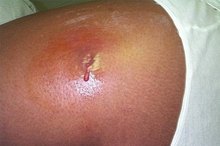
Symptoms of an MRSA Infection on the Face
Learn More

Symptoms of Infantigo
Learn More
Signs & Symptoms of Human Skin Mites
Learn More
What Happens If Ringworm Is Untreated?
Learn More

Ringworm in Babies
Learn More

How Effective Is Manuka Honey at Treating All Forms of Staph Infections?
Learn More

What Are the Most Contagious Diseases in Nursing Homes That Cause Diarrhea?
Learn More
Triamcinolone Acetonide for Treatment of Ringworm
Learn More
References
- "Staph Infections," by Melissa Conrad Stöppler, MD, MedicineNet.com, 2009
- KidsHealth.org: "What is a Staph Infection?" 2009
- King JM, Kulhankova K, Stach CS, Vu BG, Salgado-pabón W. Phenotypes and Virulence among Staphylococcus aureus. USA100, USA200, USA300, USA400, and USA600 Clonal Lineages. mSphere. 2016;1(3). doi:10.1128/CMR.00134-14
- Cleveland Clinic. (September 2019). Staph Infection (Staphylococcus Infection)
- Tong SY, Davis JS, Eichenberger E, Holland TL, Fowler VG Jr. Staphylococcus aureus infections: epidemiology, pathophysiology, clinical manifestations, and management. Clin Microbiol Rev. 2015 Jul;28(3):603-61. doi:10.1128/CMR.00134-14
- Sukumaran V, Senanayake S. Bacterial skin and soft tissue infections. Aust Prescr. 2016;39(5):159-163. doi:10.18773/austprescr.2016.058
- Bush L. (Modified June 2019). Merck Manual Consumer Version. Staphylococcus aureus Infections. (Staph Infections)
- De oliveira TH, Amorin AT, Rezende IS, et al. Sepsis induced by Staphylococcus aureus: participation of biomarkers in a murine model. Med Sci Monit. 2015;21:345-55. doi:10.12659/MSM.892528
- Harris A (Updated January 2019). Patient education: Methicillin-resistant Staphylococcus aureus (MRSA) (Beyond the Basics). Lowy FD, ed. UpToDate. Waltham, MA: UpToDate.
- Centers for Disease Control and Prevention. Invasive Methicillin-Resistant Staphylococcus aureus Infections Among Persons Who Inject Drugs. Six Sites, 2005–2016.
- Hassanzadeh P, Hassanzadeh Y, Mardaneh J, Rezai E, Motamedifar M. Isolation of Methicillin-Resistant Staphylococcus aureus (MRSA) from HIV Patients Referring to HIV Referral Center, Shiraz, Iran, 2011-2012. Iran J Med Sci. 2015;40(6):526-30.
- Chu C, Wong MY, Tseng YH, et al. Vascular access infection by Staphylococcus aureus from removed dialysis accesses. Microbiologyopen. 2019;8(8):e00800. doi:10.1002/mbo3.800
- Tong SY, Davis JS, Eichenberger E, Holland TL, Fowler VG Jr. Staphylococcus aureus infections: epidemiology, pathophysiology, clinical manifestations, and management. Clin Microbiol Rev. 2015 Jul;28(3):603-61. doi:10.1128/CMR.00134-14
- Romero-gómez MP, Cendejas-bueno E, García rodriguez J, Mingorance J. Impact of rapid diagnosis of Staphylococcus aureus bacteremia from positive blood cultures on patient management. Eur J Clin Microbiol Infect Dis. 2017;36(12):2469-2473. doi:10.1007/s10096-017-3086-5
- Missiakas DM, Schneewind O. Growth and laboratory maintenance of Staphylococcus aureus. Curr Protoc Microbiol. 2013;Chapter 9:Unit 9C.1. doi: 10.1002/9780471729259.mc09c01s28
- Kobayashi SD, Malachowa N, Deleo FR. Pathogenesis of Staphylococcus aureus abscesses. Am J Pathol. 2015;185(6):1518-27. doi:10.1016/j.ajpath.2014.11.030
- Centers for Disease Control and Prevention. (2019). Deadly Staph Infections Still Threaten the U.S.
- Centers for Disease Control and Prevention. (2011). Staphylococcus aureus in Healthcare Settings.
Writer Bio
Isobel Washington has been a freelance journalist since 2007. Washington's work first surfaced in Europe, where she served as a restaurant critic and journalist for "LifeStyles" magazine. Her love of travel and culture inspired her first novel, which is currently underway. Washington has a 10-year career in marketing communication and holds a Bachelor of Science degree.