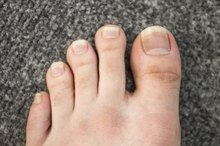
What Is an Ingrown Toenail?

What Is an Ingrown Toenail? thumbnail
What Is an Ingrown Toenail?

One of the most common health problems associated with the foot is the development of ingrown toenails. Typically this condition affects the big toe, but can occur in any one of the toenails. Ingrown nails can be easily prevented, but may require the attention of a podiatrist if the condition becomes severe or infection is present.

  1. The Facts

    • Ingrown toenails are known by the medical term unguis incarnates or onychocryptosis. A healthy toenail develops in a forward direction, causing the nail to become longer. When an ingrown toenail develops, the growth of the nail alters and occurs in a sideways direction. The new growth is pushed into the side of the skin and eventually breaks the surface. If left untreated, an ingrown toenail can become infected and require medical attention by a podiatrist.

    Cause

    • The most common cause of ingrown toenails is improper trimming, leading to a change in the growth pattern of the nail. Trauma, fungal infections and wearing improperly fitted shoes can increase the risk of developing this condition. In some cases, the condition can be genetic. Also, once an individual has developed and treated an ingrown toenail, the odds of this condition reoccurring increase.

    Identification

    • When an ingrown toenail initially develops, symptoms may be mild and include slight pressure along the side of the nail, slight discomfort, swelling and tenderness. Initially these symptoms will appear only along the infected side of the nail. As the nail grows and the condition increases in severity, the initial symptoms may increase in severity and may be accompanied by infection. Infection is the result of bacteria entering the broken area of skin and is indicated by heat, redness, swelling and pus.

    Prevention/Solution

    • Ingrown toenails can be easily prevented by following a few basic care steps. First, proper trimming is essential, because it is the leading cause of the development of ingrown nails. Nails should be trimmed straight across, should not be cut short, and the corners should not be curved. Wear shoes that are comfortable and fit correctly. For women, tight fitting and pointy shoes should be avoided--especially if this is a reoccurring condition. Also if there are other health concerns such as diabetes or if ingrown toenails are occurring on a habitual basis, regular visits with a podiatrist may be required.

    Treatment

    • In the initial stages of the development of an ingrown nail, treatment may be performed at home. The injured foot should be soaked in warm water and Epsom salts three to four times a day and dried completely to prevent infection. The nail can be gently lifted at the corner to remove it from its embedded position and encourage healthy growth. If possible open-toed shoes should be worn, or comfortable shoes should be selected that do not put pressure on the injured nail. Symptoms that do not disappear after 2 or 3 days of at-home treatment require medical treatment by a podiatrist resulting in the partial or complete removal of the nail. Antibiotic treatment may be required if infection has set in prior to surgical removal.

Related Searches:

References

  • Photo Credit Grace Brown at SXU

You May Also Like

  • Toenail Fungus Causes

    Fungus is a natural part of the skin. It is always present in certain amounts. This is why it can be difficult...

  • How to Treat Ingrown Toenails

    When the skin surrounding your toenail turns red and swollen and starts causing you a lot of discomfort, it is probable that...

  • What Are the Treatments for Ingrown Toenails?

    Ingrown toenails most often occur when a person trims his nails too short on the sides of the nail bed. Trimming your...

  • Home Remedies for an Ingrown Toenail

    An ingrown toenail is a painful condition where the sharp edge of a toenail cuts into the skin of a toe. The...

  • How to Heal an Ingrown Toenail

    This is simply remedy in healing an ingrown toenail. This does not however, replace the advice of a physician.

  • The Proper Way to Cut Toenails

    While good grooming is probably top on your list, you may not have the time or money for constant trips to the...

  • How to Fix an Ingrown Toenail

    An ingrown toenail can be anywhere from a nuisance to outright misery. Many people have chronic issues with an ingrown toenail and...

  • Ingrown Toenail Procedures

    Skin growing over the edge of a toenail or a toenail growing into the skin are two descriptions of the condition known...

  • Curved Toenail Problems

    Ingrown, curved, deformed toenails--onychogryposis--accounts for 20 percent of patients seeking family medical attention for a foot problem. The curved nail punctures ...

  • Toenail Growth Problems

    You may not spend much time thinking about your toenails, but problems with them may indicate other health issues. Since toenails are...

  • How to Improve Toenail Health & Increase Growth

    Healthy toenails are an important part of good general health. According to the American Academy of Dermatology, nail problems are responsible for...

  • Cure for Psoriasis in the Nail

    Nail psoriasis is a non-contagious condition that causes skin irritation under and around fingernails and toenails. Nail psoriasis can result in unsightly...

  • How to Prevent Ingrown Toenails

    Ingrown toenails occur when the edge of the nail pierces through the surrounding skin. The affected toe can become painful and infected....

  • How to Treat Your Ingrown Toenail

    Ingrown toenails are very painful. Ingrown toenails are often the result of tight fitting or ill fitting shoes. The shoes squeeze your...

  • Treatment Options for Ingrown Toenails

    An ingrown toenail causes an excruciating, throbbing pain. Created by the edge of a toenail that grows into the sensitive issue surrounding...

  • How to Smooth Rough Toenails

    Rough toenails are enough to make you want to wear sneakers forever. But once summer time comes calling, you don't want to...

  • Care of an Ingrown Toenail After Removal

    An ingrown toenail can be painful, and when it does not resolve on its own, a podiatrist may have to perform ingrown...

  • Treatments for an Ingrown Toenail Infection

    An ingrown toenail can be very painful and can lead to more serious infection. It's better to treat this condition than to...

  • Toe Nail Disorders

    Toenail disorders can be embarrassing and even painful. The most common toenail disorder is referred to as an ingrown toenail in which...

Related Ads

Featured