eHow launches Android app: Get the best of eHow on the go.

About

Types of Garden Edging

Contributor
By Adele Caelia
eHow Contributing Writer
(0 Ratings)
Types of Garden Edging

Edging does more than outline a landscape. The right edging can transform an OK-looking landscape to one that is eye-catching. The right design will set your home out from the rest. Yet, with all of the edging types available on the market, it can be not only confusing but time consuming to choose correctly. Knowing your choices is the first step in stress-free landscape design.

    Wood

  1. Wood edging is one of the cheapest types of edgings, making it a popular choice among many landscapers. The edging is available in 4-foot-6-inch long boards, as well as circular styles that look like small tree trunks. The boards offer versatility because they can be cut to size or curved to shape. It is important to use nontreated lumber around a garden bed, due to chemicals in the treated wood that can soak into the surrounding soil. According to the article, "Woods for Outdoor Furniture" at Plowhearth.com, you should choose woods such as redwood, cypress and cedar for outdoor projects because they contain natural chemicals that resist rotting.
  2. Metal

  3. Metal edging can be difficult to work with, making it best for projects where the land is flat and straight. Care should be taken when working with metal edging because a bend or crease cannot be fixed and will ruin the metal. A study done by the University of Colorado Health Sciences Center warns that metal edging should also be avoided in areas where children play, to avoid injury if a child trips or falls on the edging. Time should be taken to routinely check the edging for sharp edges or signs of rust and to replace as needed.
  4. Plastic

  5. Plastic edging is available as hollow tubing and in faux brick and stone styles. It is the most inexpensive type of edging and it is highly versatile. It is easily bent and shaped, making it workable for curved beds. However, this also makes it a poor choice for designs with sharp edges. After it's installed, plastic edging needs to be securely anchored into the ground, or with time, it will slowly pop out of place and will be difficult to reinstall.
  6. Stone

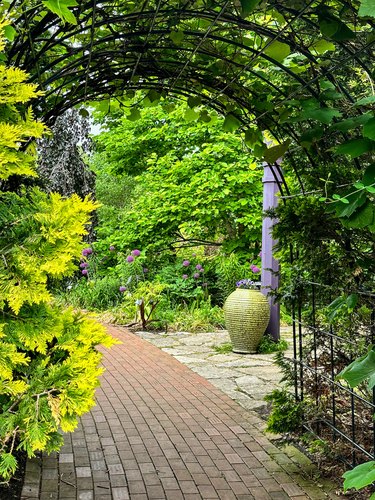
  7. Stone edging, which includes brick and rock, is expensive when compared to the other alternatives, yet the high durability and versatility may justify the cost. This type of edging can create a variety of looks. Fieldstone and flagstone are popular choices for garden paths, while natural stone is often used for patios and walkways.
  8. Plants

  9. Plants can also create an inexpensive garden edging that allows landscapers to explore a variety of style and color options. When choosing plants for edging, keep in mind that some plants are more expensive than others, making it important to note the cost. Although if chosen correctly, plant edging can create an inexpensive and beautiful edge, it also requires a lot of upkeep and daily care, and the plants will need replacing occasionally.

Post a Comment

Post a Comment Post this comment to my Facebook Profile

eHow Article: Types of Garden Edging

Related Ads

Home & Garden
Ruby Bayan,

Meet Ruby Bayan eHow's Home & Garden Expert.
Get Free Home & Garden Newsletters

Copyright © 1999-2009 eHow, Inc. Use of this web site constitutes acceptance of the eHow Terms of Use and Privacy Policy.   en-US Portions of this page are modifications based on work created and shared by Google and used according to terms described in the Creative Commons 3.0 Attribution License.

eHow Home and Garden
eHow_eHow Home and Garden