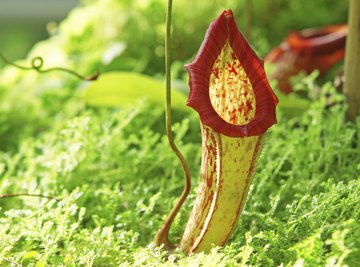

The pitcher plant is a type of plant that eats insects, also called a carnivorous plant. They are rare and unique. Typical plants consume nutrients from the soil, but carnivorous plants are found in nutrient-poor soil. They get their nutrition from insects they "catch," after converting them into a form they can digest or absorb.
TL;DR (Too Long; Didn't Read)
The pitcher plant is a carnivorous type of plant that includes several species. It attracts insects to it using the scents of nectar and already-captured dead insects, and once inside, insects cannot escape and drown in a pool of water at the bottom. Instead of getting nutrients from the soil, the pitcher plant uses enzymes to digest the insects for its nutrition. It is located along the east coast of North America, in bogs and other wet locations with acidic soil.
Types of Carnivorous Plants
Carnivorous plants have a variety of methods to get prey: pitfall traps (like the pitcher plant), snap traps (like venus flytraps) and flypaper traps (like sundews) are just a few. In North America there are 10 known species in the genus Sarracenia, the pitcher plants. Sarracenia purpurea is probably the most common.
Where To Find Pitcher Plants
According to the International Carnivorous Plant Society, pitcher plants of the genus Sarracenia are located in the eastern United States, from the southeast and along the coastline up through British Columbia.
Pitcher plants are mostly found in bogs, often in the wettest sections. Although they don't require acidic soil, they are well-adapted to nutrient-poor and acidic dirt. They live in areas that are prone to fires, and can survive fire under some circumstances.
How Pitcher Plants Capture Prey
Pitcher plants resemble their name: they look like pitchers. Inside the elongated structure is a pool of water. Decaying insects that have been trapped inside, along with nectar from the "lid," attract flies, beetles, butterflies and other insects to the plant. The plant's flowers are the color of raw meat, which further serves to attract flies.
Once inside, many insects find it difficult to exit the structure, so they eventually drown in the liquid. The interior walls are waxy and slippery, and there are hairs toward the top that aid in keeping prey trapped. The plant's enzymes digest the meal and the plant is then able to absorb the nutrients.
Pitcher Plants As Houseplants
While pitcher plants are popular houseplants, it is not a good idea to harvest them from the wild because some species have become extinct this way. Instead, obtain them through a nursery. They are best-suited to bog gardens and indoor terrariums, and they require sunlight and mildly acidic soil.
Interesting Facts
Some insects and animals live harmoniously with pitcher plants. Some predators, like spiders, use the lid to hide under, and some insect larvae, like mosquitoes, live inside the pitcher plant itself. Ants that die inside the plant are used for their decaying scent to attract other prey. Sometimes small frogs will hide in pitcher plants, eating flies that are attracted to the plant.
References
Photo Credits
cozyta/iStock/Getty Images