




Wild ginseng can be an exciting find for people who search the outdoors for edible and medicinal plants, as it has many health benefits and its matured root can command high prices in the marketplace. But how do you go about finding it? Ginseng is easier to spot during certain times of the year and within locations suitable for its growth; with knowledge of these specifics and of its identifying characteristics, you can begin your hunt for this prized medicinal root.
Location
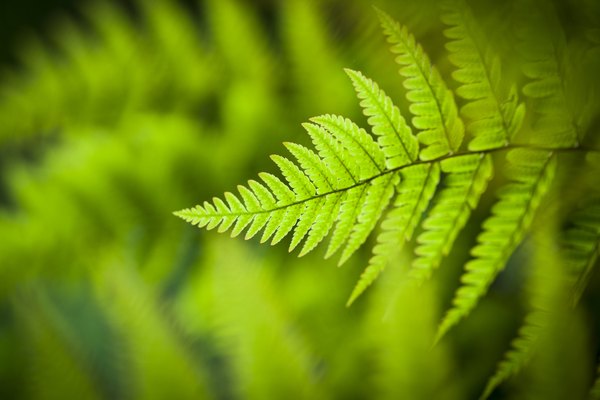
According to the Missouri Department of Conservation, the hardwood forests of eastern North America are home to wild American ginseng. Ginseng thrives on northern and eastward-facing slopes and in areas that are at least 70 percent shaded by a natural forest canopy; this plant grows from soil supplemented by the nutrients of fallen, decaying leaves. Within these areas, be on the lookout for "indicator plants," which are plants that often grow near ginseng: maple, oak, ash and elm trees; ferns, May apple and Jack-in-the-pulpit.
Growth Description
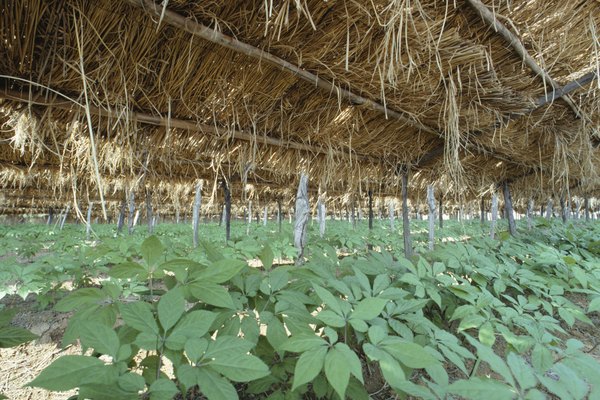
Ginseng grows low to the ground---generally 1 to 2 feet in height when mature, which is 5 years of age or older. The single plant stem branches into four or more compound leaves that each contain five ovate, serrated, 5-inch long leaflets. The two lower leaflets of the compound leaves are smaller than the upper three. Younger plants may have only one compound leaf of three leaflets but should not be harvested---they have no monetary value and this further reduces the diminishing population of wild ginseng.
Ginseng Berries
When around 3years of age and older, American ginseng will grow a single cluster of berries from small, greenish-yellow flowers; this typically occurs between the months of July and September. Berries are initially green but then ripen into bright red. The individual berries each contain two wrinkled seeds; state harvesting regulations correspond with the ripening of berries, as it encourages replanting of their inner seeds.
Ginseng Root
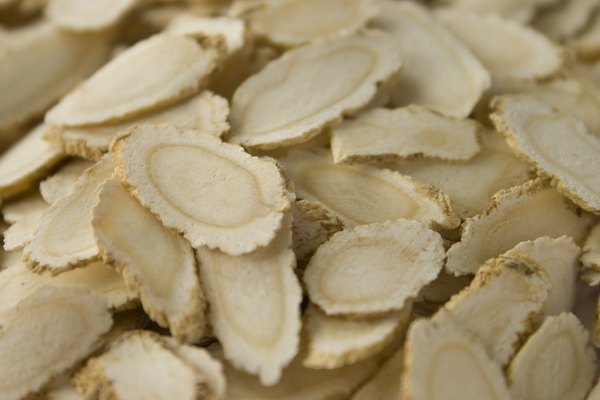
The reason behind American ginseng's popularity is the medicinal and monetary value of its root, which is sold within the United States and exported to China. Ginseng root grows larger and more valuable with age---yet another reason not to harvest younger growth. It's been called the "Man Root," as its shape often resembles that of an upright man, and it's usually 3 to 8 inches in length. As the root ages, it branches outward and the skin becomes grooved with circles.
Mistaken Identity
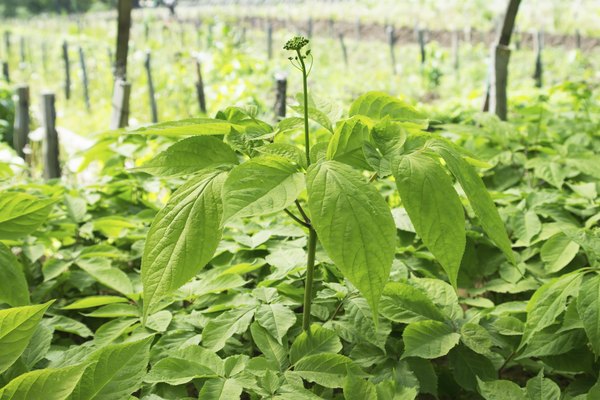
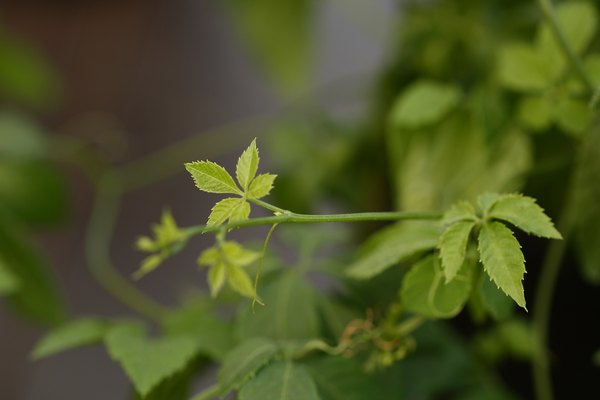
The Pennsylvania Department of Conservation and Natural Resources has listed five plants that are commonly mistaken for wild American ginseng: false sarsaparilla, Virginia creeper, dwarf ginseng, Jack-in-the-pulpit and black snakeroot. The University of Minnesota notes that ginseng's relative, American spikenard, adds to the confusion of proper identification; spikenard's two lower leaflets sprout from a lower point on the stem, whereas ginseng leaflets all meet at one central point. When trying to identify wild plants, it's always beneficial to familiarize yourself with lookalikes.
Warnings

If planning to use ginseng as a personal health supplement, consult your doctor or herbalist for guidance---ginseng root is not safe for use with some health conditions, such as high blood pressure. Wild ginseng's value has caused overharvesting; check individual state laws to ensure compliance with conservation and trade regulations before harvesting and/or selling this plant.
References
Image Credit
Stephanie Frey/iStock/Getty Images