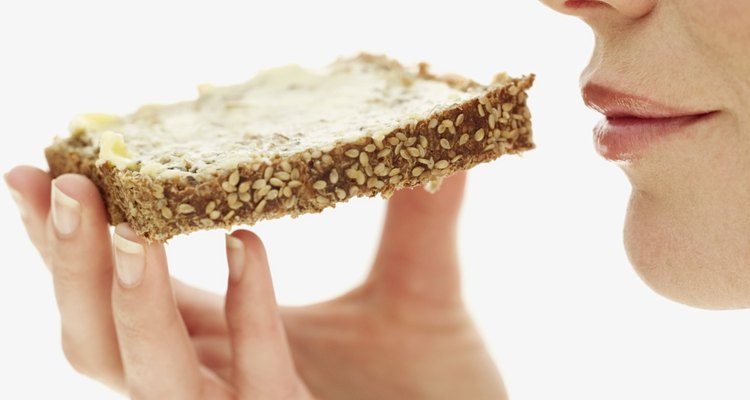
When just vinegar and yeast are mixed, vinegar's weak acid cancels out yeast's ability to grow. Vinegar's power to halt yeast fermentation is why vinegar is the major component in most home remedies for yeast infections on the body. However, when a small amount of vinegar is added to bread dough containing yeast, the mixture enhances yeast's ability to make dough rise, create gluten and develop flavor.
Making Bread Rise
Yeast is a live, single-cell fungus that has three main roles in bread-making: leavening, gluten development and flavor. When combined with flour and water to make bread dough, enzymes in the yeast break down large molecules of flour's starch into their units of sugar. Like all living things, yeast needs nourishment to survive, and it consumes the sugar resulting from starch breakdown. After yeast metabolizes the sugars, it gives off the byproducts of carbon dioxide and ethyl alcohol, which settle in air bubbles that already exist in the dough. This carbon dioxide causes bread dough to rise.
Making Gluten
Bread dough's carbon dioxide bubbles are held in what's known as the dough's gluten network. The combination of two flour proteins, glutenin and gliadin, with water creates this matrix. Each time yeast gives off another puff of carbon dioxide, the gas moves the proteins around and gives them more chances to combine to form more gluten. Moving the flour proteins around helps them grab water and join up, which is why bakers knead bread dough.
Manipulating Baking Chemistry
All of this chemical activity happens on the molecular level inside the bread dough. Vinegar's role is to enhance these chemical reactions by slightly increasing the acidity of the dough. Slightly increasing the dough's acidity slows, but doesn't stop, yeast fermentation, so it gives gluten more chances to form and to trap carbon dioxide. Manipulating the baking chemistry this way produces bread that rises higher and has a more refined texture. However, adding vinegar to yeast dough requires a delicate balance, because too much acid can stop yeast fermentation and hinder browning. Most bread recipes that use vinegar call for no more than 1 teaspoon per 1- to 2-pound loaf. At most, 1 tablespoon of vinegar is the largest amount that should be added to a bread recipe.
Enhancing Flavor
Mixing vinegar into yeast bread dough also enhances the bread's flavor, especially in sourdough bread not made with naturally harvested yeast from a starter. Vinegar is weak as acids go, but it helps with the breakdown of proteins and starches into their more flavorful components. This reaction provides just enough tanginess to transform bland flour, water and yeast into something especially tasty.
Related Articles
Using Vinegar in Baking

Does Yeast Cause Holes in Bread?
Secret to Making Soft Chewy Italian ...

How to Make Bread Chewy
Does Heat Kill Lactobacillus Bacteria ...

What Happens if the Yeast Dies Before ...
Russian Rye Bread vs. Pumpernickel

Salt Water Taffy Ingredients
A List of Leavening Agents
Can You Use Bread Flour Instead of ...
Baking Soda Vs. Cream of Tartar

Can You Refrigerate Homemade Yeast ...
What Kind of Oil Do You Use in Brownie ...
How Does a Bread Maker Work?

Can You Use Malt Vinegar in Place of ...
The Benefits of Essene Bread
How to Make Yeast Rolls More Flavorful

Types of Bacteria in Wine
Can You Substitute Yogurt for Milk in ...
Do Eggs Make Baked Goods Rise?
References
Writer Bio
Cynthia B. Astle is a longtime journalist who has written on practically every topic of human interest for newspapers such as the "United Methodist Reporter," magazines including "Response," "Arts Ministry" and the "Progressive Christian" and websites such as Darkwood Brew and United Methodist Insight. She was also a food editor and restaurant reviewer for the "Clearwater Sun."
Photo Credits
Stockbyte/Stockbyte/Getty Images