Huskies are strong, beautiful dogs often associated with pulling sleds in cold regions of the world. The only true husky recognized by the American Kennel Club is the Siberian husky, but almost two dozen other breeds are referred to as huskies by dog enthusiasts.
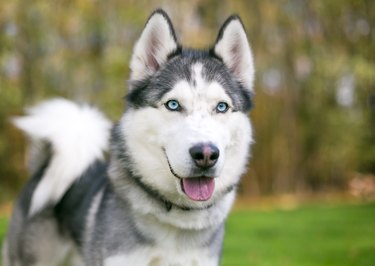
Siberians are family-oriented dogs, based on their original breeding by Arctic peoples who kept them indoors with humans. They are bright, high-energy dogs, so you will have no problems training them. Here are some fun facts about huskies kids will enjoy learning.
Video of the Day
Video of the Day
Huskies handle cold weather well
Like other cold-weather dogs, many husky breeds have a double coat to keep them warm and dry. These dogs do well in northern climates and love to play and go for walks outdoors.
If you keep your dog outside, remember he will still need some shelter — not so much from the cold, but from snow and rain. Dogs with lots of fur and body fat can handle cold weather as long as they stay dry.
The medium-length coats of Siberian huskies should be groomed every couple of weeks, which is a good idea because they tend to shed. When Siberians shed, they shed like crazy, according to the Northern California Siberian Husky Club. However, they only shed once or twice a year, they stay clean, they rarely need bathing, and they are good dogs for people who have allergies.
Huskies are smart dogs
Huskies are intelligent and need mental stimulation. This means they are easy to train because they have high energy levels and are willing to learn new things. While many dogs like to create routines and stay in their comfort zones, huskies are eager to try new experiences.
There are 22 types of huskies
Most people are familiar with the Siberian husky, which is the only breed of husky recognized by the American Kennel Club. However, there are 22 different types of dogs that people refer to as huskies. These husky mix breeds include:
- Agouti husky
- Akita
- Alaskan husky
- Alaskan malamute
- American Akita
- American klee kai
- American Eskimo dog (standard, mini, and toy)
- American Eskimo dog
- Canadian Eskimo dog
- Chinook
- Hug dog
- Keeshond
- Labrador husky
- MacKenzie River husky
- Norwegian elkhound
- Pomeranian husky
- Sakhalin husky
- Samoyed
- Shepsky
- Siberian husky
- Utonagan
- White husky
Some might be too friendly
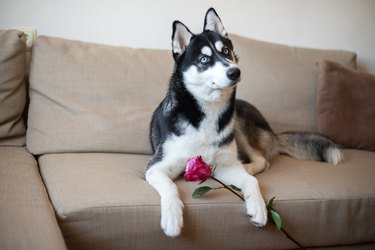
Siberian huskies are playful and friendly and are open to meeting strangers, according to the American Kennel Club. This means they probably won't make the best guard dogs — they might even say hello to a burglar and give him a lick! When they do bark (probably because they're happy and excited), they are very loud.
The good news is, their sociable personalities make them great dogs for families with children and other dogs. The Chukchi people of the Arctic region, who originally bred the Siberian husky, let the dogs into their small homes. There was no room for unruly dogs, and huskies became well-mannered family pets, as well as strong sled dogs. While they are good with people and other dogs, they are known to chase and be unfriendly toward other, smaller animals.
Huskies are often team mascots
Huskies are such powerful dogs that many high schools and colleges use them for their sports mascots. The University of Washington in the Pac 12 Conference, the University of Connecticut in the American Athletic Conference, and Northern Illinois University are just a few schools that have huskies as their mascots.
NIU's live mascot from 2005 to 2013, Diesel, was so popular, that after the much-loved Siberian husky passed away in 2015, fans raised money to buy a statue in his honor.
Huskies come in all sizes
The reputation of huskies as big, strong dogs comes from the Siberian husky and its other large sled-pulling cousins, like the Alaskan malamute. However, dogs in the husky groups range in size from medium to tiny, based on their breeding. Some look long and lean, while others are short and stocky.
Labrador huskies aren’t part-Labrador
When you hear a dog name that combines two different breeds, you assume that the dog comes from both of those breeds. The Labrador husky, however, isn't part Labrador retriever. It gets its name from where it originated, the Labrador region of Canada.
You can have a sled dog
If you own a Siberian husky or another type of husky mix breed, your pup will love giving rides to kids in wagons or on sleds. Just make sure you use a special harness made for dogs and be careful with the amount of weight you ask the dog to pull. Sled-pulling is deep in the genes of certain types of huskies, so even if yours has never done it before, it will feel something natural about the activity and enjoy the opportunity to join its ancestors in pulling a sled.
Huskies were once war dogs
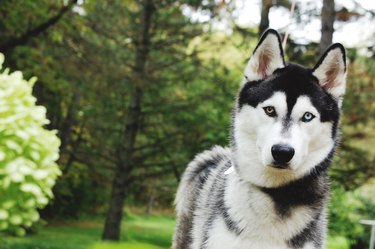
During World War II, fighting raged around the world. In the coldest regions, huskies were trained and used as search-and-rescue dogs. When planes went down in bad, snowy conditions, huskies were called on to help rescuers get through the heavy snow in time to save the lives of pilots, passengers, and important cargo. Their ability to withstand below-zero temperatures was important, because while soldiers could stay overnight in warm tents and sleeping bags, their dogs had to spend the night outdoors.
Even before World War II, huskies helped save peoples' lives. During a diphtheria outbreak among Alaska's gold-mining towns during the gold rush of the 1800s, huskies helped rush life-saving medicines to the different towns and camps where people were sick.