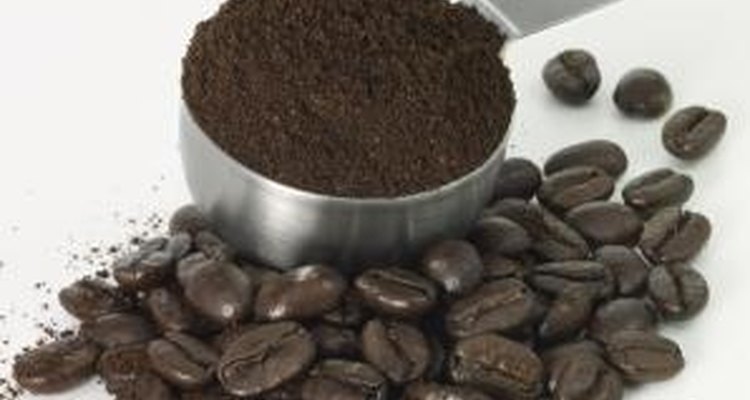
Percolators move boiling water through coffee grounds to produce a rich, full bodied coffee brew. The grind and amount of coffee used for a percolator differs from drip or French press coffee makers. Increasing or decreasing the amount of coffee grounds will have change the strength of the finished coffee. You must use a standard coffee-measuring spoon which equals 2 tbsp. for determining the amount of ground coffee to use.
Grind your coffee beans to a coarse or French-press grind. The grounds should be larger than sugar or sand particles.
Divide the amount of water you will put into the percolator by five to determine the number of 5 oz. servings. For instance, if your percolator holds 50 oz. of coffee, you will make 10 servings.
Determine the desired strength -- light, medium or dark.
Use half of a standard coffee measure per cup for light, three-quarters for medium and a whole standard coffee measure for each cup of strong. For the example, if you want to make 10 cups of medium-strength coffee: 10 x 3/4 = 7 1/2 standard coffee measures.
Add the coffee grounds directly to the percolator basket or put them into a percolator filter before putting the filter into the basket.
Brew the coffee in your percolator according to the directions for the machine.
Related Articles
How to Add Chicory to Coffee

How to Make Coffee for a Crowd
How Long Do You Let a French Press ...

How to Measure the Acidity of Homemade ...

How to Substitute Mayonnaise for Sour ...
How to Make Espresso Using a Krups Il ...
How to Brew Whole Bean Coffee
How to Make Cranberry Juice from Fresh ...

How Much Whole Grain Should You Eat a ...
How to Cook Cheesecake in a Cupcake Pan
How to Make Really Good Lemonade
How to Froth Milk With the Magic Bullet
How to Replace Ingredients to Make ...
How to Make Mocha With an Espresso ...

How to Make Soy Milk With Defatted Soy ...

Krups 880 Instructions
How to Make Mullein Tea

Keurig Coffee Nutrition

How to Mix an Amaretto Sour Drink With ...
How to Make Loose Tea in a Coffee Pot
Photo Credits
Jose Luis Pelaez/Stockbyte/Getty Images