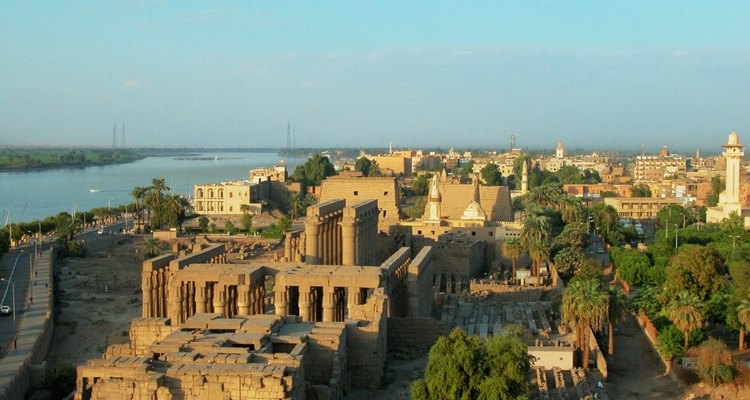
Medioimages/Photodisc/Photodisc/Getty Images
The term Coptic was created to distinguish Christian Egyptians from Muslim Egyptians. The Coptic Orthodox Church, founded by Saint Mark, follows the teachings of the Holy Bible very closely, especially in regards to outward appearances. They believe that what they look like reflects on the Lord.
Scripture on Proper Attire
There is a belief in the Coptic Orthodox faith that immodest clothing causes one to fail in the eyes of the Lord. The Coptic Orthodox Church teaches that believers should focus on their internal character rather than their outward appearance. Peter 3:3-4 states: “Your adornment should not be an external one; braiding the hair, wearing gold jewelry, or dressing in fine clothes, but rather the hidden character of the heart, expressed in the imperishable beauty of a gentle and calm disposition, which is precious in the sight of God.”
Modest Attire
According to Coptic Orthodox culture, attire should be modest at church and in secular life. Proper covering of the arms is important as well as long pants that cover the legs. It is believed practitioners should cover themselves to emulate the robes of the angels. Inappropriate attire can cause lustful thoughts, which is believed to be a form of adultery.
Culture Clashes
Societal culture often clashes with religious customs. An example of such can be seen in contemporary views of modern Coptic Orthodox women. In 2012 a Coptic bishop, Bishoy, publicly advised women in Egypt to dress modestly like “Muslims and St. Mary.” Al Arabiya News reports that Egyptian women "who do not cover their hair or wear mid-sleeved clothing are met with insults, spitting and in some cases physical abuse.” Although the covering of the hair can signify authority, power and glory; in the case of Coptic Orthodox women in Egypt, it now carries a negative connotation of control.
Politics
Politics also plays a large role in Coptic Orthodox dress etiquette. In 2012 Coptic women accused Bishop Bishoy of imposing Sharia (Islamic law) on them in the event of a Muslim Brotherhood political victory. This would require them to cover their heads and wear clothing that covers their entire bodies. The contradicting nature of society and religion often leads to discrepancies in interpretation, especially in geographical areas that are considered conservative. While traditional Coptic Orthodox teaching dictates modest dress, social issues such as women's rights challenge the ancient customs.
Related Articles

Rules for Pentecostal Women

Do Muslims Wear White at a Funeral?

What Is the Meaning of a Ring in the ...
The Impact of Petrarch

Why Do Brides Wear Veils?
What Can You Wear for a Hindu ...

What Should a Non-Muslim Wear to a ...

List of Human Characteristics of ...

About Christian Men Wearing Earrings

Hispanic Clothing History

Jamaican & Rastafarian Clothing

Military Dress Blues Setup Guide

Reasons to Get a Nose Ring

Stages of Underarm Hair

Proper Dress Code for a Catholic ...

Facts About Hairy Men

What Is the Proper Attire for a Woman ...

Facts on Natural Hair Changing Color

What Religions Do Not Allow You to Have ...
How to Wear a Prayer Shawl
References
Writer Bio
Katharine Viola lives just north of Philadelphia and has been writing cultural articles and papers since her time at Penn State University. Additionally she has completed a Masters thesis at New York University, where she recieved a degree in visual culture with a concentration on historical fashion.
Photo Credits
Medioimages/Photodisc/Photodisc/Getty Images