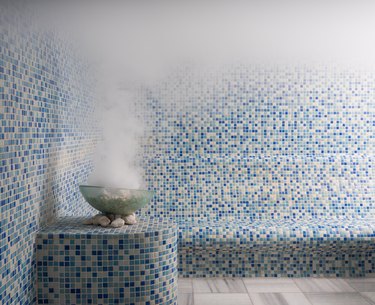
An at-home steam room can feel like a real luxury and can genuinely improve your quality of life. There are numerous health benefits attributed to steam rooms, and they can have a positive impact on many different parts of the body. Nonetheless, a steam room isn't without its disadvantages, including certain health risks. Understanding the pros and cons of a steam room can help you decide if installing one is right for you.
What Is a Steam Room?
Video of the Day
Unlike a sauna, a steam room relies on moist heat to warm the body. They're typically slightly cooler than saunas (between 110 and 120 degrees Fahrenheit as opposed to between 180 and 195 F) but are far more humid. Steam rooms can operate at up to 100 percent humidity, so they can feel far hotter than they actually are. Because of the high level of moisture in the air, steam rooms tend to be made of nonporous materials rather than wood.
Video of the Day
Pros of Steam Rooms
There is a multitude of health benefits to using a steam room. Steam can open up the pores and help cleanse the skin, which can improve conditions such as acne. Steam rooms are also touted as helpful in aiding workout recovery, loosening stiff joints and soothing aching muscles. The moist heat of a steam room can be good for the sinuses and respiratory system, and steam rooms can be of great benefit to those with allergies or asthma.
The other main benefit of a steam room is the sensory pleasure it can provide. Steam rooms are relaxing and can help minimize stress levels. If you're struggling to unwind or need some help switching off from the world, an at-home steam room could be the perfect solution for you.
Cons of Steam Rooms
The primary drawback of steam rooms is that they may become too hot. If the temperature is not carefully managed, a steam room can be dangerous. The high humidity combined with excessive temperature can result in lightheadedness and even fainting. Steam rooms cause you to sweat and lose moisture, so you must always drink plenty of water before and after use to avoid dehydration.
Another risk of using a steam room is scalding. Steam is created by boiling water, which can condense and burn you, so a steam room should have sloping walls. The warm, damp environment of a steam room is also a breeding ground for mold and mildew, so a steam room must be kept as clean as possible.
Steam rooms also have some health drawbacks. Using a steam room is not recommended for those who have rheumatoid arthritis, as this may exacerbate the condition. Steam rooms can also pose danger to pregnant women and to people with specific heart conditions. If you're unsure, consult with your doctor before using one.
If you use a steam room often, it's important to take proper steps to ensure your safety. Make sure you're drinking enough water to avoid becoming dehydrated. Taking a warm shower before entering a steam room can help acclimatize your body to the heat in a safer way. You should also take regular breaks and never stay in a steam room for longer than 20 minutes at a time.