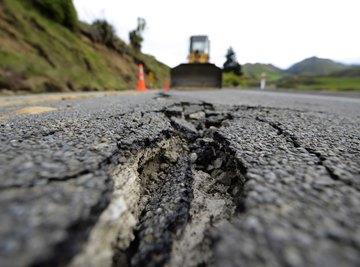
According to the United States Geological Survey, scientists at the National Earthquake Information Center record more than 20,000 earthquakes each year, and estimate that millions occur globally. Many earthquakes are small and barely noticeable. However, some earthquakes, such as Japan’s 2011 earthquake, can unleash devastating amounts of energy, killing thousands of people and destroying large areas of land. Despite this devastation, earthquakes can also have positive benefits for humans.
Understanding the Earth
Measuring small earthquakes allows geologists to study areas underground. Geologists can measure the way that the vibrations of earthquakes travel and make inferences about the type of material the vibrations pass through. Geologists can find water aquifers, oil and natural gas deposits and other important resources based on information they gain from earthquakes. Geologists can also measure the size and extent of these resources to better understand exactly how large the deposits are.
The Creation of Earth's Topography
Earthquakes are the earth’s way of releasing energy stored in plate tectonics as they move. If plate tectonics could not move, the world would look dramatically different, with no mountains and distinctly smaller oceans. As plate tectonics move, it naturally cycles materials from the mantle of the earth. The seafloor that new material creates harbors thousands of species of plants and animals, which themselves play important roles in the human ecosystem by doing things like absorbing carbon dioxide and releasing oxygen through photosynthesis. Without the movement that allows earthquakes, none of this could occur on the earth.
The Downsides: Death
Major earthquakes can kill thousands of people. The earthquake off the coast of Indonesia in 2008 released a tsunami that killed more than 280,000 people. The 2010 earthquake in Haiti killed more than 230,000 people. Earthquakes can be especially deadly for developing areas because they often do not have stringent construction standards and technology that would protect people.
Massive Destruction
In addition to the death toll, earthquakes can cost billions of dollars in damage to repair. The 2011 Japanese earthquake will cost approximately $232 billion dollars to repair. The damage the 2004 Indonesian earthquake wrought is estimated at $8.4 billion dollars. In addition to physical damage, the destroyed infrastructure may cause the economies of the affected areas to suffer. Again, areas with poor building standards suffer the most, although as evidenced by the case of Japan, earthquakes can devastate developed economies as well.
References
About the Author
Chris Burke began writing professionally in 2007. In addition to writing for student-run literary journals in college, he has authored content for The George Washington University, as well as the Association of American Colleges and Universities. Burke holds a Bachelor of Arts in international affairs and is pursuing a law degree from Columbia University.