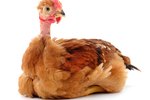
More than 19 billion chickens inhabit the planet, compared with just over 7 billion humans. While people progress through an average life cycle of nearly 80 years, chickens hatch, mature, reproduce and die in a life cycle lasting less than 10.
Which Came First
Chickens spend the first 21 days of life sheltered within an egg. By the third day of life, the chick has a circulatory system and forms eyes and limbs on Day Four. By a week into development, he looks like an embryo with beak, wings and a neck that separates the head from his body. Midway through development, feather follicles and down develop. The mother hen croons to the chicks inside the eggs. Several days before hatching, you can hear the chicks peeping in reply.
A chicken egg in an incubator requires a temperature between 99 to 102 degrees Fahrenheit and 50 percent relative humidity to hatch. The incubator must have adequate ventilation as the egg produces carbon dioxide and absorbs oxygen. Eggs need turning at least three times daily for the first 18 days to ensure proper chick development.
Leaving the Egg
By Day 17, the chick moves into position for hatching. The beak -- previously tucked under the right wing -- extends toward the egg membrane. On the 20th day, the chick pierces the membrane to take in her first breaths from the egg's air sac. Chipping away at the egg with a protrusion on its beak called an egg tooth, the chick breaks free of the egg on Day 21 after 12 to 18 hours. The chick emerges wet from the egg and take about an hour to dry. Incubated chicks should dry before transferring them to a preheated brooder.
Early Life
Chicks raised by their mother spend much of their time nestling under the protection of her feathers. Mother hens keep the chicks close, teach them how to find food and protect them from other adult chickens. If you've hatched your chicks in an incubator, the chicks will stay in the brooder at 99 degrees until their feathers have fully developed. Where hen-raised chicks will eat tiny bits of food that mom scratches up for them, indoor chicks rely on you to provide them with starter mash. Supply water in a shallow container where chicks can't drown. Mother hen's vigilant eye watches over young chickens under her care in an outdoor setting, but you should keep chicks away from ponds or other drowning hazards.
Teenage Chickens
When feathers cover their bodies at about 6 weeks old, young chickens are ready to be on their own in the chicken yard. Provide plenty of hiding places for them to avoid adult chickens in your yard until they find their place in the pecking order.
Pullets to Hens
Young hens -- known as pullets -- may lay eggs as young as 16 weeks old. She'll develop a squatting reflex a few days before she lays her first egg, flattening herself to the ground with her wings spread out. This natural instinct allows a rooster to climb onto her back and fertilize her eggs. Her first tiny eggs are called pullet eggs. They'll get bigger as she lays more eggs. During this time of her life, the hen should eat layer feed supplemented with oyster shell or another source of calcium.
Cockerels to Roosters
A young rooster -- known as a cockerel -- practices his warbling crow at 10 to 12 weeks to prepare for guarding the poultry yard and ruling over his hens. His comb will deepen in color and he'll develop sickle-shaped, iridescent feathers on his tail. Feathers on his neck and shoulders grow in long and pointed and glow blue or green when the sunlight hits them.
Welcome to Adulthood
Adult chickens may live 8 to 10 years, but declining hormones after age 3 means fewer eggs and fewer chicks that hatch. Older hens lay extra-large or jumbo eggs but do so less frequently. By 5 years old, she may stop laying altogether. You can tell a hen is no longer laying by feeling the pelvic bones between her legs. If they are far enough apart that you can lay three or more fingers between them, she's still able to lay eggs. If she's not laying, you'll only be able to fit a finger or two between them. Roosters crow less as their hormones decline, and their wattles, comb and legs fade with age.
Writer Bio
Indulging her passion for vacation vagary through the written word on a full-time basis since 2010, travel funster Jodi Thornton-O'Connell guides readers to the unexpected, quirky, and awe-inspiring.