Food Sources for Vitamin E & Selenium

Vitamin E and selenium, a micromineral, are important nutrients that everyone needs to fight cancer, regulate thyroid and prevent free radical damage. In a synergistic effect, selenium increases Vitamin E's antioxidant powers. To harness these powerful protectors, one must eat a variety of unprocessed foods. This guide will provide a guide for the foods highest in Vitamin E and selenium.

  1. Vitamin E

    • Vitamin E, according to World's Healthiest Foods, is a powerful vitamin that protects against free radical damage and UVA rays. It also prevents Alzheimer's and certain cancers due to its unique ability to aid in human cellular communication.

      The National Institute of Health's Office of Dietary Supplements recommends adults consume 15 milligrams per day.

    Selenium

    • Selenium is a micromineral with a variety of health benefits. According to World's Healthiest Foods, the micromineral regulates thyroid, protects against free radical damage and contributes to the prevention of Parkinson's disease, ovarian cysts and stomach cancer.

      The National Institute of Health's Office of Dietary Supplements recommends adults consume 55 micrograms per day.

      Although there are foods that are traditionally high in selenium, the National Research Council's 1983 subcommittee on selenium warns that a food's selenium levels depend on the quality of the soil. Plants grown in nutrient-poor soils, and the animals that eat those plants, do not contain as high of selenium levels as those from nutrient-rich soils.

    Nuts and Seeds

    • Many nuts and seeds contain high levels of Vitamin E, with sunflower seeds containing the highest levels of all, with 1/4 cup providing 90 percent of an adult's daily value. Other Vitamin E-rich nuts include almonds and hazelnuts.

      Brazil nuts contain the highest levels of selenium, with nuts from good-quality soil containing as much as 544 micrograms per ounce, according to National Institute of Health. Sunflower seeds, with close to 30 percent of one's daily value, are also a good selenium source, and a healthier food overall.

    Fruits and Vegetables

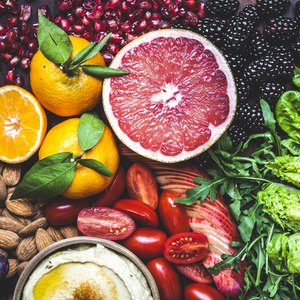
    • According to World's Healthiest Foods, the richest fruits for Vitamin E are olives, with 20 percent daily value, and papaya, with over 15 percent daily value. Additionally, olives are high in heart-healthy monounsaturated fats, and papayas contain high levels of Vitamin C and folate.

      Vitamin E appears in the highest levels in spinach, with close to 20 percent daily value; Swiss chard, with 15 percent; and mustard greens, with just under 15 percent. These vegetables are also high in fiber and other vitamins and minerals, making them excellent foods in general.

      Vegetables typically do not contain high levels of selenium. Mild exceptions are asparagus, with around 5 percent of one's daily value, and garlic, with close to 7 percent. However, as selenium is a mineral, levels will vary depending on soil quality.

    Meat

    • Meats do not contain Vitamin E, but they are the earth's richest sources of selenium. Servings of calf's liver, snapper, salmon, halibut, tuna and cod all contain close to 80 percent of the recommended daily value. Although not exactly a meat, egg yolks contain close to 20 percent of the recommended daily value.

    Whole Grains

    • Vitamin E is not commonly found in whole grains. Certain whole grains, however, are rich sources for selenium. Barley contains the most selenium, with one cooked cup providing 52 percent of one's daily value. A cup of cooked brown rice or oats contain a little over 25 percent of one's daily selenium.

Related Searches:

References

Resources

You May Also Like

  • List of Foods Rich in Selenium

    List of Foods Rich in Selenium. You must include selenium, a mineral commonly found in the soil of North America, in your...

  • Benefits of Vitamin E & Selenium

    Selenium and vitamin E are two essential nutrients needed for proper body function. Both are crucial to immune health, particularly in the...

  • How to Choose Veggies High in Antioxidants

    Who doesn’t want to be the healthiest they can be? One way is to take advantage of the latest research and begin...

  • Sources of Selenium

    Selenium is an important ingredient in semiconductors which are used in photo cells and laser printers. We obtain selenium as a biproduct...

  • Food Sources of Minerals

    Minerals are an important part of the diet, and are best absorbed when consumed in the foods we eat, rather than taken...

  • Selenium Cancer Treatment

    The effectiveness of taking the mineral selenium for cancer treatment, particularly lung, colorectal and prostate cancer, has been the subject of many...

  • Sources of Natural Antioxidants

    Sources of Natural Antioxidants. The American Cancer Institute defines antioxidants as substances in our bodies that interact and bond with unstable molecules...

  • Food Sources of Vitamin E for Dogs

    Vitamin E, or alpha tocopherol, is a nutrient with antioxidant and anti-inflammatory benefits. This vitamin aids in healthy function of the heart,...

  • Iron Rich Sources of Food & Daily Values

    Iron Rich Sources of Food & Daily Values. Iron is among the most common elements in the earth and also incredibly important...

Related Ads

Featured