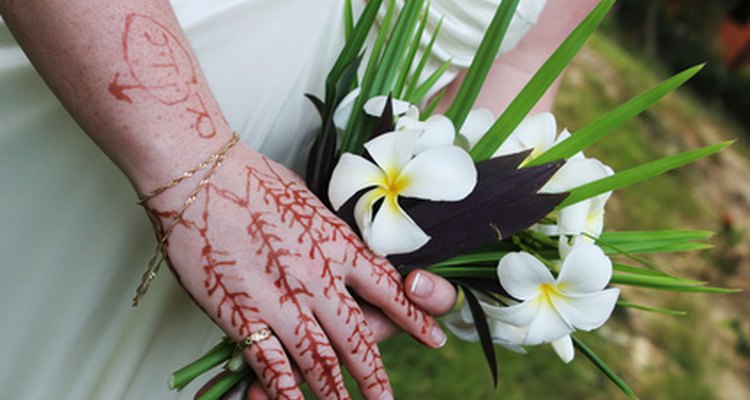
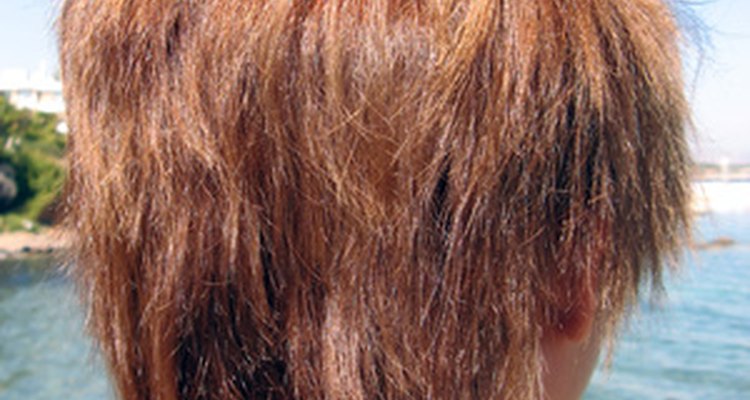
The oils from ground-up henna plant leaves can serve a number of hair-related uses, although its effect on hair growth or loss is debatable. Some people who use the henna oils as scalp treatment praise the plant for repairing hair follicle damage thus leading to stronger, faster-growing hair. Others however, contend that there are some instances where henna oil can actually contribute to hair damage that could lead to or aggravate hair loss.
The Henna Plant
The henna plant or Lawsonia inermis, grows as a small tree. It grows in Africa, parts of Asia and Australia It is most used to dye skin, hair, leather and wood. Henna leaves will not stain the skin until the leaf is broken and mixed with a mildly acidic liquid such as lemon juice.
Henna Oils and Hair
Henna oils have been used for a variety of purposes for thousands of years and have been used as a hair product in Europe since the 19th century. Henna oils today are most commonly used in shampoos to condition the scalp and also as a natural hair dye. The oils bind to the hair follicles and can protect against hair breakage and damage. Obtaining what is known as “neutral” henna from any store selling natural remedies should be suitable for applying to the scalp as a conditioner without changing your hair color.
Sensitivity
An individual is unlikely to be sensitive to henna, as it is a natural product; however it is possible. Those who have bad reactions to henna usually are using henna compounds such as hair dyes that contain other chemicals mixed with henna. This can also occur when an individual applies a henna-compound hair dye to hair that has recently been chemically altered, bleached or dyed. A negative reaction to henna could possibly result in hair loss or damage.
Overuse
Over-shampooing of the hair, leaving henna paste on skin or hair too long or general overuse of the product could result in hair damage. This is unlikely to occur even after several hours, as many people who dye their hair with henna leave the paste in their hair for up to eight hours at a time. However, failing to wash henna paste out of hair properly could cause the product to harden to the skin making it difficult to wash out and remove from hair, resulting in hair loss or damage.
Tips
Overuse of henna has been said to dry out some individuals’ hair, so be sure to introduce the product slowly into your shampoo regimen when you first begin use. Before using a henna product in your hair, be sure to apply the paste to a strand of hair and a small patch of skin on your arm to see if an unwanted reaction occurs. Try using henna just once or twice a week for the first month that you use the product, especially if you have dry hair and/or skin.
Related Articles

Can I Use Henna in My Hair Every Week?

Can Hair Dye Cause Severe Itching of ...
How to Fix Watery Henna
How to Remove Henna With Yogurt
What Does Lemon Juice Do to Your Hair?
Can You Use Henna Ink As Eyeliner?
Acai Berry & Acne
The Benefits of Lemongrass for Skin
How to Store Henna Paste

How to Treat Leather Boots With ...
Anise Seed Cautions and Side Effects
Burdock Root for Hair
Jojoba Oil Benefits
Hair Removal With Papaya

How to Use Peroxide to Fade Out Black ...

How to Make Sugaring Wax
How to Get Peroxide Out of Hair
Definition of Skin Bleaching
How to Make Blonde Hair Darker at Home
The Benefits of Sunflower Oil on Hair
References
Writer Bio
This article was written by the CareerTrend team, copy edited and fact checked through a multi-point auditing system, in efforts to ensure our readers only receive the best information. To submit your questions or ideas, or to simply learn more about CareerTrend, contact us [here](http://careertrend.com/about-us).
Photo Credits
henna hand design and bouquet image by Gina Smith from Fotolia.com