Things You'll Need
Terrarium
Potting soil
Water
Seeds
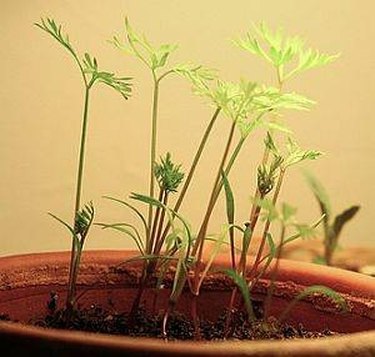
Germination is the process of a seed sprouting and growing. Planting seeds is a fascinating way to observe the entire germination process from start to finish. Start the process by planting a small seed into the soil. With the proper environment, the seed will germinate and eventually it will emerge from the soil. Learn about the growth process of a plant seed by planting seeds and observing the entire process.
Step 1
Understand that seeds contain the future leaves, stems and roots that will emerge when the seed is in the ground.
Video of the Day
Step 2
Plant the seed in a terrarium according to its requirements. Plant the seed at the recommended depth and spacing. Also, plant the seed right next to the glass side to enable observation as it germinates.
Step 3
Water the soil and keep the soil evenly moist throughout the entire germination process.
Step 4
Know that underground the seed begins to germinate in the proper environment. The first part of germination is the radical extending out from the seed down into the soil. This is the beginning of the root system.
Step 5
Watch as the hypocotyl extends up from the seed in a bent loop and pushes above the soil to emerge into the air.
Step 6
See the seedling straighten out and the tiny leaves emerge from the new stem.
Step 7
Observe the leaves grow larger and the stem get taller. When the leaves have completely popped out of the coverings and the cotyledons underneath separate and fall from the seedling, the germination process has finished.
Video of the Day