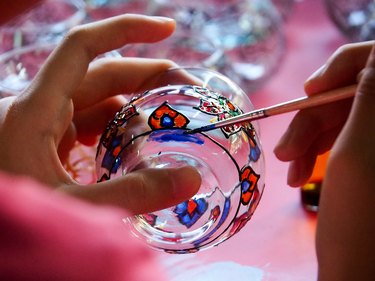
Glass painting is a highly regarded art form with many varieties. Within the history of glass works of art, major differences in the style, purpose and technique used for this kind of painting have occurred. Glass painting may also be referred to as stained glass or glass art. The works produced by early glass artists were considered folk art, but today painted glass is celebrated as fine art. It is an exquisite form of artwork that uses light to magnify the beauty of these masterpieces.
Background of Glass Painting
Video of the Day
In its basic form, glass painting refers to painting on a piece of glass that serves as a canvass. One type of glass painting that has existed since the ancient Roman and Chinese times is the reverse glass painting, which is similar to its normal counterpart, but only requires viewing it with the glass turned over.
Video of the Day
Historians cannot give a definite time when glass painting began. Traces of creating colored glass figures have been found in ancient cultures, such as Rome, Byzantium, China and throughout the Middle Ages.
Early European Glass Window Paintings
The first prominent use of this art was when churches were built in the 10th century. Huge glass windows with paintings of Christ and depictions of Bible characters and stories began to emerge in French and German churches in England.
In the Gothic period of the 12th century, cathedrals across Europe showcased large and intricate glass paintings. The earliest church that used the Gothic style is the one rebuilt by Aboot Suger of the Abbey of St. Denis. In the Renaissance period, the art of glass painting flourished. The images on the paintings expanded beyond Bible figures, and they were not confined in churches, they became more embellishments to homes and establishments.
Historical Changes in Stained Glass Painting
The Gothic-style stained glass windows are mosaics of little pieces of colored glass. It follows a complex pattern that illustrates Bible images and personalities. By the 15th century, the perception of glass painting was changed. It became more mainstream and sophisticated.
The painters used pale colors and larger figures to fill up the entire window. The paint work became more like easel painting. People had more access to newer techniques that enhanced color. The trend involved heavily painting a white glass. The previous stained-glass workers were now considered glass painters because the structural form became more like panel painting.
Cultural Significance of Stained Glass
Like any other forms of art, glass painting was an important instrument of reflecting people's history and culture. In Europe during the Gothic period, glass painting or stained glass enhanced the unique experience of coming to church. The stained windows easily captured the people's attention and became a magnificent storyteller of the Bible. They were more than just paintings; they created an atmosphere that facilitated prayer and solitude.
In other nations where glass painting was adopted, paintings reflect symbolic and cultural figures, and occurrences in a particular period. In India for example, glass paintings of earlier times depicted mythological figures and women in traditional clothes.
Glass Painting in These Contemporary Times
After World War II, there was a movement of expressionism for young artists. This movement called for more variety and exploration of artistic expressions using glass. Glass painting was no longer about huge glass windows depicting images.
Interest in glass painting or art glass at the end of the 20th century was more about making it as a hobby. With the aid of new technology, different techniques emerged that are more focused on using painted glass as home and office decorations.