What Is Geothermal Activity?
If you've ever relaxed in a soothing, bubbling hot spring, visited Old Faithful in Yellowstone, or seen a volcano erupt, you might have wondered a few things. Like where does the heat come from? Or where does all that energy come from? These are good questions, and the answers will lead you on a journey beneath the Earth's surface where this geothermal activity originates.
-
Causes of Geothermal Activity
-
The Earth's core is so hot that beneath us, in what is known as the mantle, is a layer of molten rock called magma. Magma exists anywhere from 5 to 30 feet below the surface of the Earth, and above this layer of molten rock, the Earth's surface is made up of plates. These plates move, shift and grind against each other. Where the plates meet, or where they are thin, heat and sometimes magma from the Earth's mantle escapes, causing what is known as geothermal activity.
Less Obvious Activity
-
Not all geothermal activity is as spectacular as a geyser. Some of this activity can be as simple as warm ground. About a meter beneath the surface geothermal activity can cause the ground to warm enough to affect plants growing in the area. Another less obvious type of activity is steaming ground. In most cases the steam dissipates and isn't noticed, but in moist conditions vapor can form.
-
Hot Pools, Lakes and Springs
-
Hot pools are small bodies of existing water heated from below by geothermal energy. Depending on the source, they can be anywhere from warm to boiling. Hot lakes fill depressions in geothermal areas. Frying Pan Lake in New Zealand was created when water filled in the crater left by the 1886 Tarawera eruption and is fed by numerous acid springs. Hot springs are points where heated water from beneath the Earth's surface bubbles up. Some hot springs discharge water constantly, while others, like Inferno Crater (also in New Zealand)only discharge water when their underground chambers overflow.
Geothermal Displays
-
Some geothermal activity can be quite breathtaking. Fumaroles are vents of steam discharging from hydrothermal or volcanic systems. At some fumaroles, sulfur deposits accent the steam vents, surrounding them with bright yellow rock. Geysers are vents where hot water is violently expelled from beneath the surface. Old Faithful in Yellowstone National Park is one of the most well known geysers. A hydrothermal eruption is a phreatic eruption, which means that rising heat or magma makes contact with water already on the surface, causing it to boil so rapidly that it, in effect, explodes.
Geothermal Activity as Energy
-
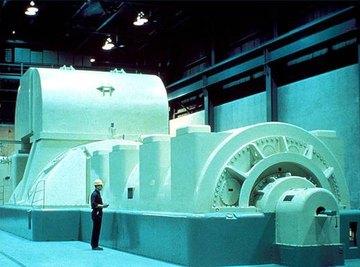
While not every place in the world has abundant geothermal activity, those places that do can make use of that activity to generate energy. Steam and heat captured from volcanoes, geysers and hot springs can be harnessed and made useful to people in places like the western United States, Iceland, New Zealand, the Philippines and South America. The technology for capturing geothermal energy is still too inadequate to fully take advantage of this resource, but in some places, like Iceland, geothermal energy heats 95 percent of all homes.
-
Resources
- Photo Credit wikimedia commons Bruce McAdams