
Oil spills are one of the worst environmental disasters. Spilled or leaked oil can contaminate water, making it unsafe for animals and humans who live near the accident. Luckily, scientists have figured out ways to help reverse some of the effects of a spill. There are also ways to help prevent such disasters from happening in the future.
TL;DR (Too Long; Didn't Read)
Kids can organize fundraisers to help the Coast Guard, the Environmental Protection Agency or local animal rescue centers to cleanup oil spills and protect vulnerable marine life.
Oil Spill Causes
There are four main causes of oil spills. Spills can happen through accidents, such as an oil liner striking rocks that cut a hole in the hull, allowing oil to spill out. They can also happen if equipment breaks down, such as a drill on an oil rig. Earthquakes, hurricanes and other natural disasters can also damage equipment or oil holding facilities, leading to spills. The fourth cause is through intentional actions, such as vandalism or terrorism. Any of these causes can lead to major or minor disasters.
Effects on the Environment
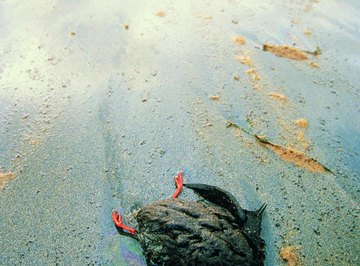
Because oil and water don't mix, spilled oil sits on the surface of oceans, rivers or other bodies of water. Birds and mammals are particularly vulnerable to a spill. Animals whose fur or feathers have been covered in oil cannot regulate their temperature, which puts them at risk of dying from the cold. In addition, long-term exposure to oil can lead to the poisoning of plants and animals for generations. This can be particularly problematic in coastal areas, such as marshes, which can be very difficult to fully clean.
Cleaning Up the Spill
There are ways to clean a spill, but most have a downside. Dispersants, a type of chemical, are the main cleanup tool. These break the oil into fragments that bacteria that already live in the water can decompose. Dispersants, however, have a downside: they can further contaminate the environment. If there is enough oil, it can be burned, but that usually leads to air pollution. When the water is very calm, those in charge of cleaning the spill can skim oil off the top of the water. Perhaps the best way to clean a spill is to use machines that can separate the oil and water. However, if a leak is ongoing, such a machine may not be able to keep up with the rate of contamination.
How Kids Can Help
Spilled oil is not only harmful to the environment, it is also toxic to humans. Because of this, people who help clean up after spills are highly trained. People who aren't trained and kids can help clean spills in other ways, for example, they can raise money through bake sales or yard work. The agencies in charge of the cleanups, such as the National Wildlife Federation, always receive donations. Cutting down on oil use in everyday life is a great way to help, walking or using a bike instead of riding in a car can make a huge difference. Using less oil means less drilling and, therefore, less transportation, which cuts down the chances of new spills.
References
About the Author
An avid lover of science and health, Meg Michelle began writing professionally about science and fitness in 2007. She holds a bachelor’s degree in physics from Creighton University and master’s degree in science writing from Johns Hopkins. Her work has appeared in publications such as EARTH Magazine.
Photo Credits
Stockbyte/Stockbyte/Getty Images