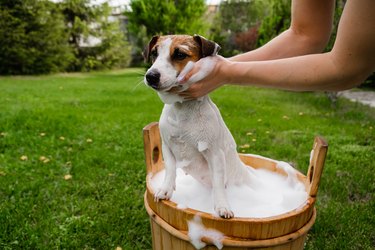
Although an excellent way to treat dandruff and other conditions in humans, there is no coal tar shampoo for dogs. In fact, you should never use human shampoos and soaps on your dog as they may irritate his skin or aggravate any existing skin problems. Your best course of action is to use only products designed for pets when bathing your dog. The same is true when treating doggy dandruff or other skin conditions. Human treatments are for people only unless your vet specifies otherwise.
Video of the Day
What is coal tar shampoo?
Often marketed under the brand name T-Gel, coal tar shampoo is considered a medicinal shampoo and is not intended for use by anyone on a daily basis. The shampoo itself is dark brown and has an odor to it. T-Gel shampoo is marketed to treat scalp itching and flaking due to conditions like dandruff, psoriasis, and seborrheic dermatitis. The product is often recommended by dermatologists and is available over the counter.
Video of the Day
It is considered to be a highly effective treatment for many scalp ailments, especially when typical dandruff shampoo products have not worked. Active ingredient percentages may vary slightly by product, but most of these shampoos typically contain about 2% coal tar extract with the rest of the ingredients being inactive.
Is there a coal tar shampoo for dogs
The short answer here is no. T-Gel shampoo should not be used on your dog, or any animal for that matter. It is a strongly medicated shampoo and can dry out your pet's skin to the point that the dog will need to be seen by your veterinarian for treatment. The active ingredient of coal tar can actually burn or damage your dog's tender skin and make the treatment much worse than the problem you are trying to treat.
What dandruff treatment options are safe for dogs?
If you can't use coal tar shampoo for dogs, what can you use? Look for medicated shampoos at your local pet store. Choose one specifically labeled for treating dandruff or dry skin in dogs. Medicated pet shampoos are readily available and ideally will contain sulfur or salicylic acid. When you do bathe your pet, use warm water rather than hot and avoid shampoos that include pesticides. These will dry your pet's skin even further.
Causes of dog dandruff
If you have been using a flea shampoo on your dog, stop using it and switch to another flea protection treatment. Flea shampoos can be very drying to a dog's skin and may be the cause of the dandruff. Allergies can also result in dog dandruff as can yeast infections and bacterial infections. Sometimes dandruff signifies a parasite infection or thyroid problems, as well.
If dandruff shampoos fail to help your dog, consult with your veterinarian. She can rule out more serious problems like malnutrition and may offer a prescription-strength shampoo to help clear your dog's dandruff more effectively.
Bathing your dog
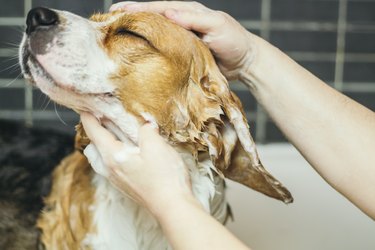
If your dog has dandruff, regular bathing using a non-drying pet shampoo can help to remove flakes and make your dog feel better. The frequency of baths may vary depending on your dog's breed and lifestyle.
It is possible, however, to dry a dog's skin by bathing her too often. Generally, it's best to wash your dog once a month in the winter and twice a month in the summer. If your dog spends a lot of time outdoors, more frequent baths may be needed. But if your dog is an indoor pet or has a smooth coat, baths may only be needed on occasion.