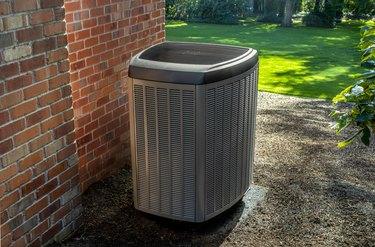
If you own a snow shovel, your heat pump probably has an auxiliary heat option. Cold climates make this feature, also sometimes called emergency heat, a necessity. Heat pump auxiliary heat is a kind of backup heating system that kicks in when the outdoor temperature drops below freezing. For homes that use a heat pump, auxiliary heat can be a key part of enjoying a warm and cozy winter.
How Your Heat Pump Works
Video of the Day
Some homes have an HVAC system that uses a furnace to burn fuel and generate heat. Hot air is then forced through a system of ducts and out through the registers in every room. A heat pump system serves the same purpose as a furnace — it forces hot air through your ducts — but it does this by transferring heat from the outdoor air instead of creating heat like a furnace does.
Video of the Day
There are a few different types of heat pumps. An air-source pump, one of the most popular types, uses an outdoor condenser that has a set of metal coils. When the heat is turned on, refrigerant circulates through the coils, and the condenser pulls in outdoor air. As the air passes through the coils, the refrigerant absorbs heat and moves it to another set of coils, where the heat energy is transferred to the air that moves through your ducts and into your rooms. The process is powered by electricity rather than gas.
A heat pump is unlike a furnace in another key way: It can also cool your home in hot weather. The process is simply reversed when a heat pump system is used in cooling mode. Warm air is pulled out of your rooms and passed over coils filled with refrigerant. The refrigerant absorbs heat from the air and pumps it outdoors, and the cooled air is pumped back into your ducts.
Heat Pumps With Auxiliary Heat
Heat pumps have many advantages compared to furnaces, including the fact that heat pumps cost less to run than furnaces generally do. (Putting in a new system is still pricey — installing a heat pump costs anywhere from a few thousand dollars to more than $10,000.) However, heat pumps also have an intrinsic problem: Because they can't generate their own heat, their ability to function relies on there being some warm air outdoors. An air-source heat pump won't work efficiently when the air temperature drops below about 35 degrees Fahrenheit.
Enter the backup heating system. Inside a heat pump that has auxiliary heat, there's a set of coils that can be heated via electricity. When the outdoor air drops into freezing temperatures, the auxiliary heat feature is activated, and the coils are heated to produce the warmth that you feel come through your vents.
There's one significant drawback with using this type of heat pump. Auxiliary heat uses more energy than your pump's heating mode does, so factor that into your overall budgeting for heat pump costs. You'll see a spike in your electricity bill when you use your auxiliary heat a lot, but when the alternative is going without heat during freezing weather, having auxiliary heat is a matter of necessity.
Heat Pumps Without Auxiliary Heat
People who live in hot climates generally have no use for a backup heating system, so heat pump auxiliary heat isn't a common feature in all places. If you're new to a home that has a heat pump system, look to the thermostat for more information. It may have a switch on the front, or its digital display may show an emergency or auxiliary option in its settings. If you don't see either of those, the pump was likely installed without auxiliary heat.
This kind of system can sometimes be modified to add auxiliary heat later. Your HVAC technician can share more information about your options when you schedule your yearly tune-up as part of the routine maintenance of your pump.