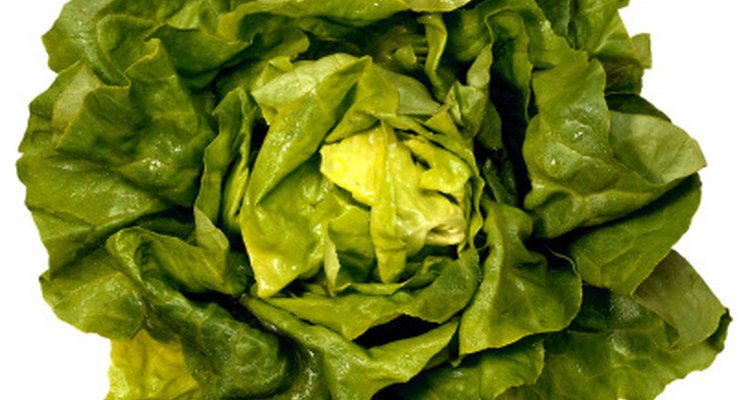
Butter leaf lettuce, also known as Bibb lettuce, is a cultivar of a lesser used lettuce called butterhead lettuce. It has a flavor that is somewhat sweet and buttery. Grown primarily in California, Arizona and Washington, butter lettuce has a uniform, light brown color. Its leaves are thick and large but are easily removed from its head.
Eye Health
Butter leaf lettuce is a good source of phytonutrients, organic compounds that are beneficial to your health and fight against disease. These phytonutrients include carotenoids, the substances that give the lettuce its pigment. One of these carotenoids is zeaxanthin. When consumed, zeaxanthin is absorbed into the retinal macula lutea in the eye. There, it acts as an antioxidant and helps protect the eye from harmful light. In older people, zeaxanthin helps fight against age-related macular degeneration, a disease in the elderly that deteriorates the sharpness of eyesight.
Vitamins
Butter leaf lettuce is a good source of vitamin A. If you eat just 3.5 oz. of lettuce, it will provide you with 247 percent of your daily vitamin A needs. It also has beta carotene, which converts into vitamin A in the body. Vitamin A is beneficial for skin and eye health and mucus membranes such as the lips. Lettuce is also a good source of vitamin K, which stimulates osteotrophic activity in the bones and can help increase bone mass. People suffering from Alzheimer's disease also benefit from vitamin K as it limits neuronal damage in the brain. Further, butter lettuce contains vitamin C, which helps the body fight off infectious agents such as viruses.
Minerals
Lettuce is loaded with minerals that are important to your diet. Butter leaf lettuce contains both copper and iron, which help your body produce red blood cells. It also contains potassium, which helps regulate your blood pressure and controls your heart rate. Manganese is another mineral found in butter leaf lettuce that works with antioxidants to help rid your body of free radicals and other harmful properties.
Other Benefits
The addition of lettuce to your meals can help fight against both osteoporosis and iron deficiency anemia. Butter leaf lettuce is also a source of flavonoids, water soluble polyphenolic molecules that serve as antioxidants that prevent lung and oral cavity cancers. It is also beneficial for pregnant women because it contains folates, which prevent neural tube defects to the fetus.
Related Articles

Vitamins for Mental Alertness
What Vitamins Help the Liver?

A List of Foods That Contain Choline

What Is the Nutritional Value of ...

Avocado Serving Size & Nutrition
What Are the Health Benefits of ...

The Best Vitamins for Sinuses
What Are the Health Benefits of Pico De ...
The Nutritional Value of Edamame Beans
Nutrition Information on Blueberries

L-Lysine for Hair Growth
Bok Choy Nutrition

Which Vitamins Can Help Reverse ...
Food Sources of Phosphatidylcholine
The Nutrition in Soybean Sprouts
Grapefruit Skin Benefits
Is Zinc Good for Hair Growth?
Food Sources of Betaine

How to Reduce Acne Inflammation

Best Time to Take Vitamin B Complex
References
Writer Bio
David Harris is a writer living in Portland, Ore. He currently is the editor-in-chief of the online magazine Spectrum Culture. He holds a Master of Fine Arts in creative writing from Sarah Lawrence College.
Photo Credits
Brand X Pictures/Brand X Pictures/Getty Images