What Is Hydroponics Farming?
"Hydroponics" comes from two Greek words meaning "water" and "work." First developed in the 19th century, this growing method is becoming more common among commercial growers and is gaining popularity with home gardeners. If you would like to experiment with growing some of your own food or flowers hydroponically, the following article will give you some background information of how to get started.
-
Identification
-
Hydroponics is a method of growing plants without soil. Instead of having their roots supported and nourished by soil, the plants are supported by an inert growing medium and are fed via a nutrient-rich water solution. Hydroponic systems may be as simple as a glass of water filled with pebbles and water containing fertilizer or as complex as a large greenhouse structure containing beds of clay pellets that are periodically flooded with a nutrient solution and drained.
Significance
-
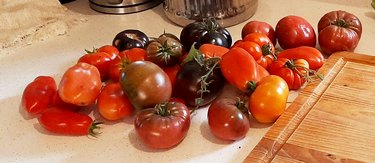
Growing plants hydroponically is a strategy for producing fruits, flowers, and vegetables in areas where the soil is unsuited for gardening or where space is at a premium. On a commercial scale, hydroponics is used to grow tomatoes and other crops out of season in large greenhouse operations. It is also an enjoyable hobby for the home gardener who wants to push his repertoire of techniques. Hydroponics is a convenient means of cloning hybrid cultivars that would otherwise not grow true-to-type from seed.
Growing Media
-
Soilless growing media include rock wool, pottery shards, glass marbles, special porous and inert clay pellets, coir fiber, perlite, vermiculite, sand, gravel, polystyrene packing peanuts, or any other inert material not toxic to plants and not subject to decomposition. Rock wool is the most usual medium. It is produced from molten minerals allowed to cool and form a spongy mass. Inert clay pellets are also quite common in modern hydroponics. These are made of special clay that, when fired in a rotary kiln, puffs up somewhat like popcorn. It is a reusable medium that can be sanitized.
Nutrient Irrigation Systems
-
Hydroponic nutrient solutions are often custom formulated to suit the crop being grown. The delivery method is nearly as variable. For the home hobbyist, the most common type is static solution culture--allowing the solution to surround the plant roots and being refreshed manually on a periodic basis. Next in popularity is continuous flow in which a constant stream of nutrient solution is pumped through the growing medium.
Getting Started
-
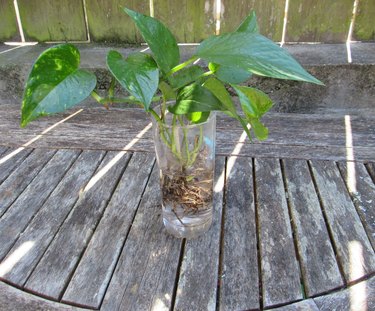
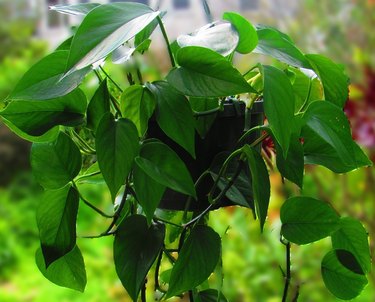
Doing your homework is the best first step in setting up a home hydroponics system. Decide on what you want to grow, what kind of growing media you want to use, the proper nutrient solution and delivery method, and any supplemental lighting you'll need. Good beginner plants include herbs, greens, and some flowers. An easy first project is taking a clipping from a houseplant like philodendron and sticking it into a glass of water, some pebbles, and a pinch of general-purpose plant food.
-
Related Searches
Resources
- Photo Credit flickr.com