




While you are born with good bacteria, promoting the right balance as you age depends on providing your body with optimal nourishment. Probiotics are good bacteria, or live and active cultures, that can maintain and harmonize your gut flora and intestinal bacteria levels, leading to immune and digestive health benefits. Some types even improve allergy or intolerance symptoms, while others may help prevent cancer. Some benefits of probiotics are strain-specific, so talk with your doctor or dietitian and do a little research before taking them for a particular purpose.
Cultured Dairy Products
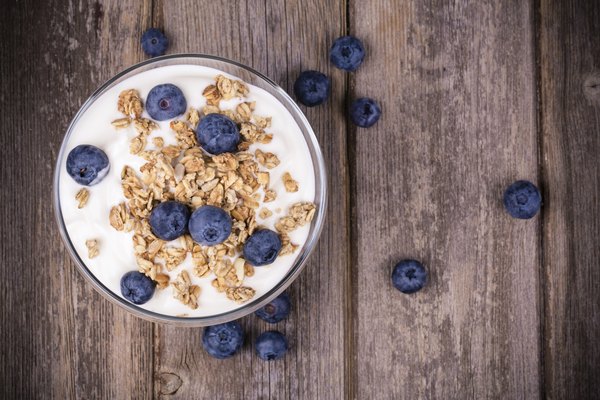
Perhaps the best-known source of probiotics is yogurt. The bacteria with which yogurt is made provide the probiotic benefits, but some processing methods destroy these properties, so choose the types with "live, active cultures" on the label. To drink your yogurt, try kefir, a cultured milk product that even those with lactose intolerance tend to tolerate. Buttermilk is another dairy product containing probiotics, but the benefits are destroyed if you heat it. Some brands of soft cheese or cottage cheese also contain or are fortified with probiotics; look for the "live, active cultures" claim.
Fermented Vegetables
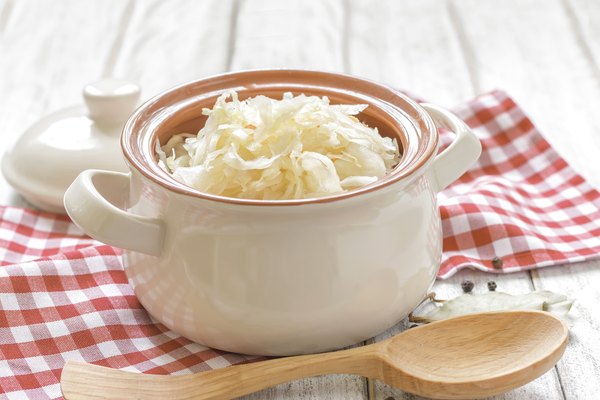
Lacto-fermentation is the process by which the lactobacilli bacteria naturally present in vegetables are fermented with starches and sugars in a salt solution. This results in lactic acid production, which ultimately preserves the food. While pickles can be made this way, many of them are made using heat and vinegar, so look for fermented types to get those probiotic benefits. Sauerkraut, fermented cabbage and kimchi, a spicy Korean condiment made of vegetables, also provide probiotic benefits. Just be sure to choose the fresh types in the refrigerated section rather than canned, heat-treated options to get the live, active cultures.
Soy Products
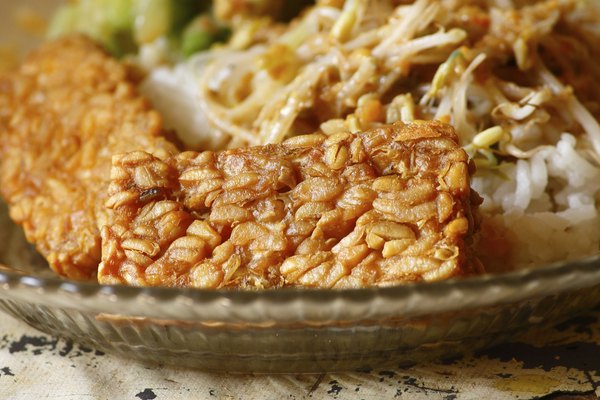
While soy contains some natural probiotics, a few manufacturers also fortify soy milk and soy yogurt with live, active cultures. Tempeh is another soy food and vegetarian meat substitute made of soybeans fermented with a mold that improves its digestibility and provides antibiotic benefits. Miso is a paste created by cooking soybeans with rice or barley, salt, and a starter culture, koji, which is part of what is responsible for its probiotic properties. Miso is mainly used as a soup base, but be sure to get the unpasteurized type and avoid boiling it to maintain the benefits.
Other Probiotic Options

Kombucha tea, an ancient tea originated in China, is made by fermenting tea with sugar and a symbiotic culture of bacteria and yeast. The result is a sweet and sour, fizzy beverage that is relatively low in calories and rich in probiotics. Like many other fermented items, you could even make your own kombucha tea at home. Another option for incorporating more probiotics into your regimen is to purchase supplements in either capsule, tablet, powder or liquid form. You may want to stir the contents of a supplement into a juice or smoothie. Some juices can also be purchased prefortified with live and active cultures.
References
Writer Bio
Based in Berkeley, Calif., Registered Dietitian Joelle DiTucci received her Master's degree in nutrition, and enjoys her work as an eating disorder dietitian, support group leader, writer and a Rise coach. Her main interests are in recipe creation, disordered eating, psychology and intuitive eating.
Image Credit
Марина Пестерева/iStock/Getty Images