
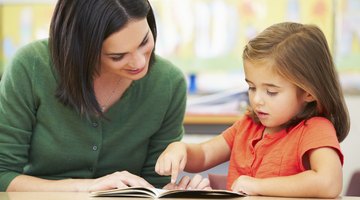


The basic goal of a quality primary education is to establish, create and offer opportunities to kids of various ages as they enter the education system. Through a balanced curriculum, it is intended to provide emotional and cognitive instruction and to assist in social development. A quality primary education allows a student to thrive, to learn how to participate and to study and master the basics of the main course subjects.
Tip
Generally, children who are between the ages of 5 and 11 years old are expected to attend a primary education institution, where they learn subjects and skills that set the foundation for the rest of their schooling.
Primary Education Subjects
The main subjects on which primary education teachers focus in the classroom setting are math, reading, science, social studies and physical education, which can also include social interaction and health. These subjects aren’t intensive and should be age-appropriate in the amount of work the child is given during and after class. They reinforce basic math and reading skills. This leads to reading fluency and comprehension, which assists in logic and problem-solving skills as the child matures. Basic number recognition as well as mathematical operations such as addition and subtraction are emphasized for math. This creates a solid foundation for the child to tackle more complex math areas like multiplication and division.
Benefits of a Primary Education
A primary school includes the basic subjects of math, reading and physical education, but primary education is so much more. The primary grades can be an exciting and fruitful endeavor for both the child and the parent. Whether a child starts early at the tender age of 5 for kindergarten or enters school at another primary school age, there are many benefits in attending elementary school. A large part of primary education that is often overlooked is the social skills that come from interacting with teachers, pupils and others.
What Are the Primary Grades?
Preschool and pre-kindergarten are not considered within the realm of mandatory primary education. Children who are between the ages of 5 and 11 years old are expected to attend a primary education institution or home equivalent. Depending on the state, a primary education can begin in kindergarten or not until the first grade. Age requirements also range by state. However, most kindergartens will accept a child at the age of 5, and first-grade children should be at least 6 years old. If a child has a summer or winter birthday, he may be slightly older or younger than his peers in class. Deciding on when to enroll a child is dependent on the maturity level of the child. It isn’t unusual for a child who is 7 years old to enter first grade or for a kindergartner to be 6 years old when he begins the school year.
Children With Disabilities
The rules for primary education are put in place to assist children of all ages, genders and capabilities. For children with special needs, there are exceptions that range from grading and mastery of subjects, including social interactions, to attendance requirements.
A quality primary education can also catch issues early on, such as dyslexia and attention deficit disorder, if a child is lagging behind her peers. When addressed early on, reading or attention issues can be less of a hurdle for children. Once these are confronted and things are put in place, the child can thrive in a typical classroom setting.
For children with severe developmental delays, there are no age restrictions for primary education. The team of special educators that are in place to assist children are there to ensure they will thrive not only in elementary school but through the rest of their educational career. Many students with special needs who have these learning difficulties addressed before third grade can master more skills, which increases their chances of finishing high school.
Related Articles


References
Writer Bio
Kimberley McGee is an award-winning journalist with 20+ years of experience writing about education, jobs, business trends and more for The New York Times, Las Vegas Review-Journal, Today’s Parent and other publications. She graduated with a B.A. in Journalism from UNLV. Her full bio and clips can be seen at www.vegaswriter.com.