
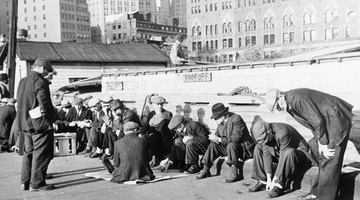


Working conditions in the early 1900s were miserable. Workers often got sick or died because of the long hours and unsanitary conditions. Workers formed unions and went on strike, and the government passes legislation to improve unsafe and inhumane conditions.
Work-related Fatalities
In the early 1900s, workers were much more likely to be killed on the job compared to today's workers. Worker safety has improved dramatically since the early 1900s in the U.S. Between 1900 and 1979 the rate of work-related deaths decreased 96 percent when compared to the GNP and adjusted for inflation, according to Stanley Lebergott in the Concise Encyclopedia of Economics. Lebergott also cites a similar 97 percent drop in the coal mining and railroad industries during the same period.
Weather-Related Issues
Many workers in the early 1900s worked outside in all seasons, exposed to rain and snow, extreme heat and extreme cold, according to Lebergott. He compares those conditions to those of 1990, when four out of five workers spend their workdays in climate-controlled buildings.
Hours
Long work hours and six-day weeks were another problem that has been improved upon since the early 1900s, according to Lebergott. Many workers worked from sunrise to sunset, Monday through Saturday. Many women and children working in factories in New York City worked 15-hour days. Today's 40 hour workweeks are much less taxing on the body.
Labor Strikes and Legislation
Though conditions were poor for many workers in the early 1900s, that was also the time that some work conditions began to change. The International Ladies' Garment Worker's Union formed in 1900 in an attempt to work against poor working conditions. The union organized a strike of 60,000 workers in New York City in 1909, according to the Hearts & Minds website. The Fair Labor Standards Act of 1938 set a minimum wage and forced employers to pay overtime for any work over 40 hours. These are just some of the events that brought about the gradual change that lead to the working conditions present today.
Related Articles





References
Writer Bio
Melissa Worcester is a mom, freelance writer and graphic designer. She has been writing professionally for over 18 years and earning a part-time income writing for various websites since 2007. She writes about technology issues, business and marketing, home improvement, education and family topics and assists in her husband's home remodeling business. Worcester has a Bachelor of Arts in communications and psychology from Syracuse University.