
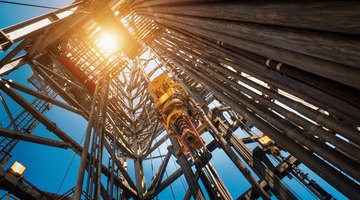

Europe has many natural resources, from oil and natural gas to gold and uranium. In places like Russia, the difficulty of the terrain has been a roadblock in unleashing its tremendous power in gold, natural gas and oil, while tiny Kosovo has become a target largely because of her disproportionately large endowments in strategic minerals.
Northern Europe
The natural resources of northern Europe are largely in metals such as bauxite (to make aluminum), copper and iron ore. Some northern European countries such as Denmark have some reserves of petroleum and natural gas. Germany has large coal reserves, as well as nickel and lignite (or brown coal, similar to peat). Scandinavia is relatively rich in oil and natural gas, and is a major fishing center.
Southern Europe
Southern Europe--such as Italy--has substantial reserves of coal, mercury and zinc. Croatia has limited amounts of petroleum and some bauxite. Bosnia has reserves of bauxite, coal and iron ore. Greece has some iron ore, bauxite, some oil, lead and zinc. Southern Europe has a well-developed fishing industry.
Western Europe
Spain and France share strong coal and zinc reserves, as well as copper and lead. France has an edge in bauxite and uranium. Great Britain has some offshore reserves of oil and natural gas, as well as substantial coal reserves and some gold. Iceland is one of the main fisheries of western Europe, as well as a leader in hydro-power and geothermal power production. Portugal boasts of some gold, as well as zinc, copper and uranium. Ireland has substantial reserves of natural gas and peat for fuel.
Eastern Europe
Ukraine and Russia both depend heavily on their large natural gas and oil reserves. The Baltic states are more or less poor in natural resources, though Latvia has begun to take advantage of its hydro-power potential. Poland is blessed with substantial coal reserves, as well as natural gas, iron ore and copper reserves, as well as some limited supplies of silver (and has historically been a target of larger powers for this reason). Serbia has some oil and natural gas, as well as copper and zinc. She also has some limited supplies of gold and silver. Bulgaria produces bauxite and copper. Kosovo, however, is likely the most blessed of all eastern European states, since it is sitting on what some say are trillions of dollars worth of gold, silver, natural gas, bauxite nickel and zinc. Finally, Russia has an abundance of natural resources. It has a large percentage of the world's oil and natural gas, as well as huge reserves of nearly all the most important strategic minerals valued today.
Europe as a Whole
Europe has substantial resources in metals. Russia and Ukraine are the main suppliers of oil, which has given them a strategic edge in international negotiating. Outside of Russia, oil is relatively scarce in Europe (except off the coast of Scotland and Norway). Timber, peat and potash are also important to the European economy, as are its well-developed fishing industry. Zinc and copper are the primary resources shared by almost all European countries. Iceland is a leader in alternative energies. Since the Baltic states are so resource poor, they depend on other powers such as Sweden for trade.
Related Articles



References
Writer Bio
Walter Johnson has more than 20 years experience as a professional writer. After serving in the United Stated Marine Corps for several years, he received his doctorate in history from the University of Nebraska. Focused on economic topics, Johnson reads Russian and has published in journals such as “The Salisbury Review,” "The Constantian" and “The Social Justice Review."