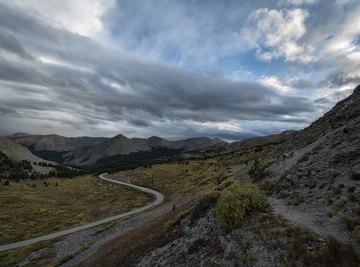
From the Finnish word for treeless plain, tundra describes some of the harshest climates on earth. Arid and freezing with poor soil and short summers, life barely thrives in these unforgiving environments. With annual precipitation levels the same as some of the driest deserts, the Arctic tundra is as beautiful as it is unforgiving.
However, just like classic deserts, these cold deserts are often teeming with certain organisms and life forms that have evolved to handle low amounts of precipitation and sunlight. Both plants and animals are able to survive in the tundra climate.
The official tundra definition along with the average rainfall in tundra biomes and tundra climate information greatly affects the organisms that live there.
Alpine Tundra Definition
It is important to note the distinction between alpine and Arctic tundra. Alpine tundra are defined by altitude as opposed to precipitation and temperature like Arctic tundra.
Alpine tundra are located at the tops of mountains, above the tree line. Depending on the mountain and the region, this can be anywhere from 10,000 feet and higher. Alpine tundra are characterized by freezing nighttime temperatures, high winds and, in some areas, heavy snowfall.
Arctic Tundra Definition
The Arctic tundra includes the area around the North Pole from Siberia in Europe, to most of Alaska and about half of Canada. The Antarctic peninsula is also considered an Arctic tundra. These areas have short growing seasons, usually only from 50 to 60 days.
Temperatures range in the summer from minus-three to minus-12 degrees Celsius and around minus-34 degrees Celsius in the winter. Including melting snow, average rainfall in tundra biomes (including other forms of precipitation) is six to 10 inches annually. The tundra is also characterized by permafrost, a layer of land averaging 12 inches in depth.
Effects of the Summer Thaw and Precipitation on Tundra Climate
During the short summer, a small amount of rain falls and temperatures rise enough to melt the top layer of permafrost. As a result, the ground becomes soggy and marshy, which also can't support many organisms.
While it is not a diverse ecosystem, there are flora that thrive in the Arctic tundra. Low shrubs, mosses, lichen, and even some flowers grow in the melting permafrost. Due to the high winds and frozen soil, trees cannot survive in the tundra. The lack of developed soil and rainfall prevents most seed-bearing plants from thriving here, which is why plants like lichens, mosses, and low shrubs are able to overtake the landscape.
During winter the bogs and marshes freeze, adding layers to the permafrost.
Conditions That Create the Arctic Tundra Climate
The polar anticyclone is caused by descending cold air at the polar latitudes. Cold air is denser than hot air and "sinks" or subsides causing high atmospheric pressure and resulting in cooler, drier air.
Divergence, or the outflow of horizontal winds also moves or holds this cooler and drier air downward. These forces combine to create a freezing desert.
Effects of Global Warming on the Arctic Tundra Climate
The Arctic tundra's permafrost is made up of soil and frozen organic matter, like plant material. Plants take carbon dioxide from the air and when they die and decompose it is released back into the air as carbon dioxide and methane.
The plant matter in deepfreeze under the tundra could pose a threat to the atmosphere if global temperatures continue to rise and permafrost begins to melt. The plant matter frozen in the soil will begin to decompose and release its trapped carbon dioxide and methane into the atmosphere, possibly increasing the effects of global warming.
References
About the Author
Melissa Monks began writing professionally in 2003 and spent four years writing for the Beutler Heating and Air company newsletter. She also spent two years as a content director for StoryMash.com, publishing projects and blogs, and has worked as a research assistant for One On One, a company publishing educational material. Monks received a Bachelor of Arts degree in English from the University of Utah.