




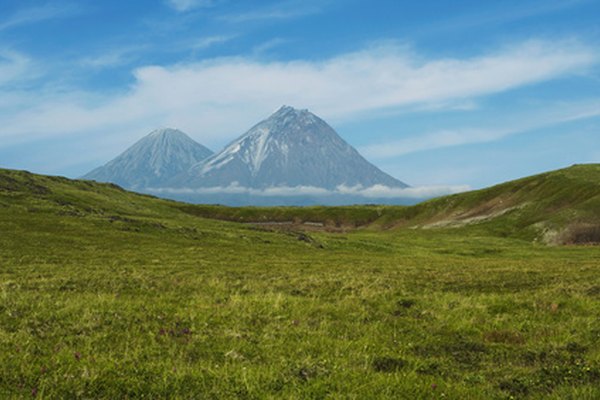
From sandy beaches with emerald-blue water and palm trees under tranquil skies to the rugged, black shoulders of volcanoes that continue to reshape the earth, the Hawaiian Islands teem with diversity. Beyond the terrain itself, the islands present a bedazzling variety of plants, animals and people, a colorful intermingling of different races and ethnic groups, epitomizing the U.S. experience of immigration, collaboration and living together.
Land
Stretching roughly from northwest to southeast, Hawaii has eight principal islands: Niihau, Kauai, Oahu, Molokai, Lanai, Maui, Kahoolawe and the Big Island (Hawaii). At the southeast end, especially on the Big Island, volcanoes are still active, according to the Hawaii Center for Volcanology at the University of Hawaii at Manoa.The capital city, Honolulu, and Pearl Harbor lie on the central island of Oahu.
Original Settlers
The Hawaiian Islands were first discovered by humans around 700 A.D., according to the book, “Hawaii,” by Ruth Tabrah. Voyaging across thousands of miles of ocean in mat-sailed double canoes, these Polynesian immigrants came from Tahiti and the Marquesas Islands. By the end of the 18th century, having lived isolated from the rest of the world for more than 200 years, the Hawaiians had divided their eight islands into four occasionally warring chiefdoms.
European Discovery
In 1778, the Hawaiian Islands saw the arrival of Capt. James Cook, a British explorer, and, over the next century, the islands drew more explorers, traders, immigrants and missionaries from different European countries, China, Japan, and the United States, Tabrah notes. In 1898, five years after the overthrow of their last native ruler, Queen Liliuokalani, the islands were annexed by the United States and, in 1959, attained statehood.
People

Along with epidemics that did much to reduce native numbers, more than two centuries of immigration, intermarriage and cultural intercourse have engendered a diverse population. Currently, a quarter of Hawaiians consider themselves to have at least some native Hawaiian ancestry, 58 percent claim some Asian ancestry, and 39 percent say they have at least some white ancestry, according to Instant Hawaii, a website devoted to providing information on the Big Island.
Vegetation
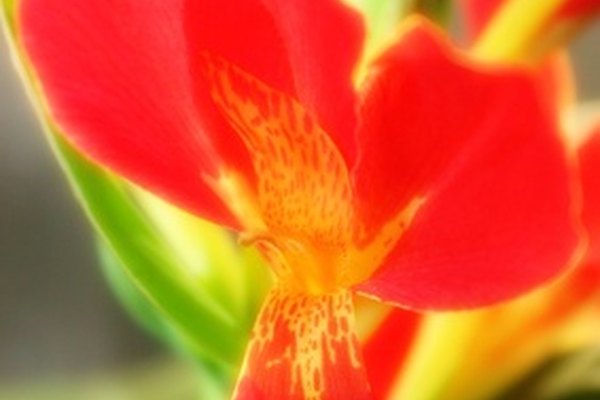
Reflecting Hawaii’s geological history, including volcanic eruptions, as well as its extreme isolation, climatic contrasts and differences in soil and topography, the islands have more than 1,800 species of flowering plants, 956 of which are native to the Hawaiian Islands, according to the book, “Manual of the Flowering Plants of Hawaii.” Hawaii possesses many plants brought by humans, for example, the coconut, taro, breadfruit and bananas introduced by the Polynesians, notes Tabrah.
Animals
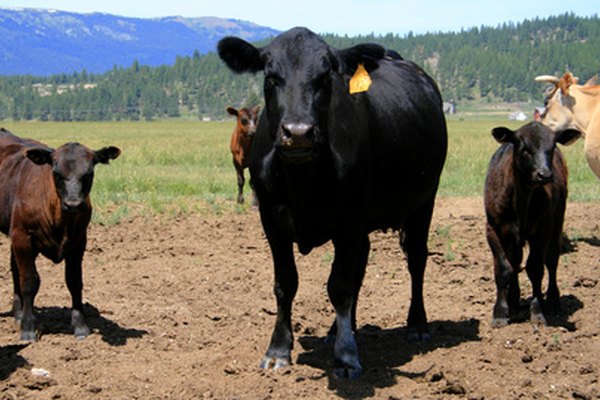
When the first humans arrived, the Hawaiian Islands had 67 varieties of endemic birds, according the website of “To-Hawaii." There were, however, no reptiles, amphibians, mosquitoes, lice, fleas or cockroaches and the only endemic mammals were the hoary bat and the monk seal, “To-Hawaii" states. The Polynesians introduced dogs, pigs, and fowl, according to Tabrah. Humpback whales plus 680 species of fish roam the waters around the Islands, according to “To-Hawaii."
References
- “Hawaii: a History”; Ruth M. Tabrah; 1980
- Hawaii Center for Volcanology: Formation of the Hawaiian Islands
- Instant Hawaii: The Big Island
- “Manual of the Flowering Plants of Hawaii”; W. L. Wagner, D. R. Herbst and S.H. Sohmer; 1990
- To-Hawaii: Animals in Hawaii
Photo Credits
- tropical beach 2 image by PictureDaddy from Fotolia.com