Scuppernongs Definition
Harper Lee mentions a scuppernong arbor in her well-known book, "To Kill a Mockingbird," which has caused many a reader to wonder what, exactly, a scuppernong is. Scuppernongs are a type of grape native to the South, particularly abundant in North Carolina. Many native southerners have fond memories of picking these treasured grapes wild and feasting on them in the hot, lazy days of late summer. Does this Spark an idea?
-
Identification
-
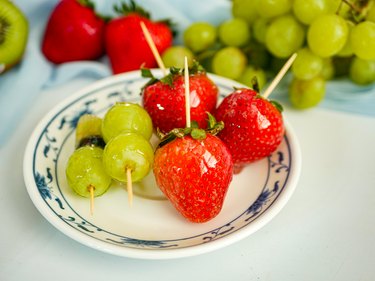
Scuppernongs are defined as a type of bronze muscadine grape. They are distinguished from the purplish muscadines by their green, amber, or bronze color. They were originally called the "big white grape." Scuppernongs are very large, about twice the size of a regular grape, with a thick, bitter skin. They are found in farmer's markets and grocery stores throughout the South in late summer and early fall.
History
-
Scuppernongs were North America's fist cultivated grape, with varieties having been taken from the wild and grown at home for over 400 years. Native Americans enjoyed the fruit of this vine and dried the grapes for year-round use. Sir Walter Raleigh's explorers and the Florentine navigator, Giovanni de Verrazzano, saw these grapes while exploring eastern North Carolina and wrote about their abundance. The scuppernong grape is named after the Scuppernong River in coastal North Carolina. Scuppernong is a Native American word that comes from the Algonquin tribe.
-
Types
-
Breeding has resulted is several good varieties of scuppernong vines. Triumph is a cultivar that bears early, large fruit that is best when eaten fresh. Carlos and Doreen both bear medium-sized fruit that is good fresh or for wine. Carlos bears mid-season, while Doreen bears very late. Magnolia is an early-bearer with medium to large grapes that are good for juice, wine, or eating fresh.
Benefits
-
Scuppernongs are a healthy food to enjoy for their sweet flavor as well as the nutrition they provide. One cup of scuppernong grapes provides about 100 fat-free calories, ample amounts of vitamin C, and potassium, bioflavonoids, fiber, vitamin B and trace minerals.
Function
-
Scuppernong grapes are best when eaten fresh off the vine. Pop them in your mouth and bite down to squeeze the pulp out of its skin. Enjoy the juicy, sweet, musky flavors, and then spit out the bitter skin and seeds. Scuppernong grapes make an excellent wine that has been produced for centuries. Other uses for scuppernongs include pie, cobbler, preserves and jelly,
-