
Common duckweed (Lemna minor), also known as lesser duckweed, is a floating plant that has abundant populations in the lakes, pond, streams and marshes of North America. Duckweeds grow in thick mats, which cover the water's surface. They have no stems and no leaves, but instead feature oval-shaped fronds and tentacles. While many animals utilize duckweed for sheltering purposes, some species also use it for subsistence and include it in their regular diets.
Birds
Several semi-aquatic bird species consume duckweed, including mallards (Anas platyrhynchos), wood ducks (Aix sponsa) and Canada geese (Branta canadensis). According to Fairfax County Public Schools, while mallard ducklings start out eating duckweed, and eventually move away from it as they grow older in favor of other items, such as grains and seeds, wood ducks do just the opposite. Their ducklings feed mainly on insects, and only later in life develop a taste for duckweed. Canadian geese are strict herbivores, and include duckweed in their diets along with several other aquatic plants.
Fish
Grass carp (Ctenopharyngodon idella) and koi, which are domesticated varieties of common carp (Cyprinus carpio), are two of the most well-known species of fish who feed on duckweed. According to Ohio State University, while grass carp eat the plants while they are growing. Once they get too large, the duckweed becomes less useful as a food as it is too insubstantial. Kois, on the other hand, are much smaller than their grass carp cousins, usually reaching only a foot-in-length maximum. For this reason, they are satisfied with eating duckweed throughout their lives.
Crustaceans
Stagnant pond snails (Lymnaea stagnalis) help clean aquatic environments by feasting on the dead animals and plant matter. This includes the decomposing remains of duckweed.
Insects
While crane flies (Diptera: Tipulidae, several species) may look like giant mosquitoes, they do not feed on your blood. Instead, according to Fairfax County Public Schools, they are vegetarians and feed on the dead remains of plant matter. The flies are particularly fond of dead stems and leaves (or rootlets and fronds) that collect on the bottoms of streams, including those that duckweeds leave behind.
Amphibians
Eastern painted turtles (Chrysemu picta picta) are omnivores, and feed on a wide array of organisms. These include animals like leeches, insects, snails, earthworms, frogs, tadpoles, crayfish and animal remains (or carrion), as well as plants like algae, water lilies and duckweed.
Mammals
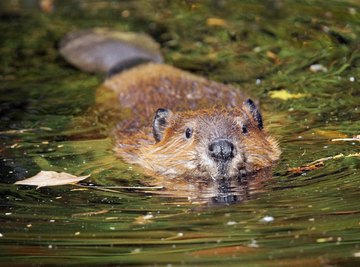
While beavers (Castor Canadensis) feed primarily on the soft interior fibers of trees and tree bark, such as those from birch, willow, maple, hickory, sweetgum, beech and aspen trees, they also save room for aquatic plant. These include:
- ferns
- pond lilies
- algae
- sedges
- pondweeds
- ragweeds
- duckweeds
References
About the Author
Erik Devaney is a writing professional specializing in health and science topics. His work has been featured on various websites. Devaney attended McGill University, where he earned a Bachelor of Arts in humanistic studies.