History of Victorian Furniture

History of Victorian Furniture thumbnail
History of Victorian Furniture

As love stories go, few rival the passion and intensity of the match that brought Queen Victoria and her consort, Albert Prince of Wales, together. Because her husband was not of royal blood--or perhaps she lacked the willingness to adopt the aloof personality traits of her ancestors, Victoria closely identified herself with Britain's middle class. As most social scientists will attest, a society lead by so prominent a personage will quickly adopt their lifestyle, thus Queen Victoria's taste for furniture became the nation's barometer. Fueled by the Industrial Revolution that almost immediately changed England's furniture industry from a collection of cottage industries to large shops capable of mass-producing whatever design was in vogue at the moment, the confluence triggered a dramatic shift in style that went from old world to arts and crafts-influenced style in just 60 years. In sum, the Victorian era reflected more radical design swings than most societies experience in generations.

  1. History

    • Straddling the past and stepping into the Industrial Revolution that was to forever change the way the world worked, England experienced an amazing evolution of furniture style changes between 1840 and 1900. The invention of machinery revolutionized the fabrication of tables, chairs, divans, settees and other common parlor furnishings, thus anything Queen Victoria could commission for her residences was also within reach of middle class Englanders. Small shops didn't disappear, but it became increasingly difficult for furniture shoppers to resist the lure of royally-inspired pieces that could be made in record-setting time. Mass production offered an irresistible plus--now, the middle class could both literally and figuratively keep up with the Joneses, so they took advantage of the technology and crammed their homes with heavy, imposing furniture where navigating became something of a challenge for hoop-skirted hostesses.

    Identifying Victorian Furniture

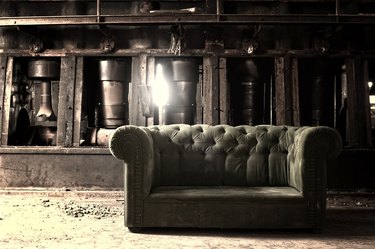
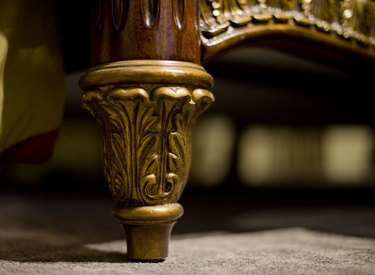
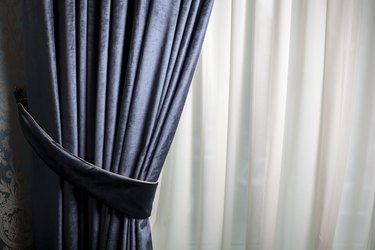
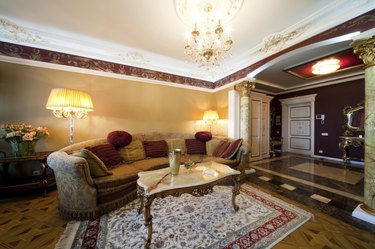
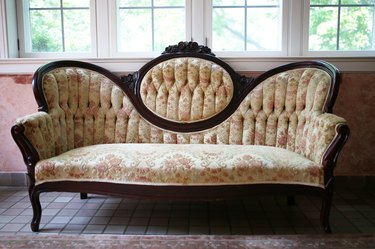
    • Look for thick, darkly colored woods with ornate carvings, high-tone gloss, richly carved silhouettes and as many flourishes and ornaments as the surface of a piece of furniture would allow. Curators love to use the word "imposing" when describing Victorian-style furniture because the sheer size and weight of pieces were formidable, designed to give the appearance of being owned by the wealthy. Mahogany and rosewood were popular and rich colors, intensified by layering high-gloss lacquers over stained wood were highly desired. Comfort was an important consideration for purchasers who wanted their homes to be gracious reflections of their financial health, so velvet cushions and brocade sofa fabric were often coordinated with velvet drapes for maximum impact.

    Different Styles During the Victorian Era

    • Since the Royal family turned to England's furniture designers to decorate palaces and estates in a stately manner, old school Tudor and Chippendale-inspired furnishings reigned supreme as the Victorian era commenced. It is easy to see why these period pieces fit the times--both boasted signature dark woods and solid construction. Regency-influenced furniture next found favor with Victoria and Albert, edging out slightly older influences but retaining the curves, incised designs and woven seat cushions favored by buyers and manufacturers. As the nineteenth century wound down, the public's appetite for new and unusual furniture styles ushered in the beginnings of radical new influences, the most extreme of which are depicted by furniture found in the Arts and Craft and Art Nouveau movements.

    The End of Victoriana

    • Many theories prevail, but no one story explains why the English public took so readily to the wild style swings that evolved during the last half of the Victorian period. For a time, medieval and Gothic shapes and lines came into vogue--perhaps influenced by French furniture designers--morphing the classic Chippendale carvings into furniture heavily influenced by gargoyles, arches, snakes and other foreboding images. Some say society became fed up with the meteoric swings in old world furniture styles and when the Arts and Crafts and Art Nouveau schools of furniture design debuted, the light-wooded, adornment-free furniture offered a literal and figurative breath of fresh air as a new century dawned and the official end of the Victorian era came to a close.

    American Victorian Finds a Home in the U.S.

    • While Victorian England enjoyed multiple stylistic changes, the United States launched its own version of Victorian-styled furniture employing readily available walnut, hickory, apple and willow wood to manufacture tables, chests, benches and upholstered furniture. Known as "American Victorian," the style is easily identified by natural tree cuts that often left the bark on the wood for a roughly-hewn appearance. The Arts and Crafts movement particularly delighted America. It is easy to see why--this new furniture style offered clean, simple lines and impeccable craftsmanship--an interesting antithesis to the ornate furniture identifying the nation to which it had once sworn allegiance. Looking to own a piece of this remarkable period? Make it your mission to find a curly maple and cane chair made by Portland, Maine artisan Walter Corey. You may not be in a financial position to acquire one of his chairs, but if you do, you'll be proud to show off the work of the man who was as close to a furniture rock star as possible between 1820 and 1890.

Related Searches:

Resources

  • Photo Credit © Rare Victorian Auctions

Comments

You May Also Like

  • What Is the History of Victorian Era Clothing?

    The period during Queen Victoria's reign (1837-1901) is known as the Victorian Era. During this time, fashion changed immensely from decade to...

  • Furniture Styles in American History

    Furniture Styles in American History. American history abounds with a plethora of varying furniture styles, all of which enjoyed popularity at different...

  • About Victorian Furniture

    Victorian furniture encompasses many different styles, with later movements in rebellion against characteristics of the earlier ones. Because of the range of...

  • The History of Mission Style Furniture

    Mission style furniture was popular in North America and Great Britain beginning in about 1890 until about 1914. The style was a...

  • Types of Victorian-Style Table Furniture

    Types of Victorian-Style Table Furniture. The Victorian Era, named after Queen Victoria of England, lasted from about 1840 to 1910. The furniture...

  • The History of Wicker Furniture

    Wicker furniture has been in existence since the ancient Egyptians. From its humble beginnings on the river banks of the Nile, to...

  • Materials Used to Make Victorian Furniture

    Queen Victoria reigned from 1837 to 1901, and furniture made during this period is referred to as Victorian. The fashion was for...

  • How to Recognize Victorian Style

    The Victorian era, named for England's Queen Victoria, lasted from the 1830s to the turn of the 20th century. During those decades,...

  • Victorian Design History

    Victorian architectural design was employed from about 1837 to 1901 and named for the era of Great Britain's Queen Victoria. The designs...

  • The History of Victorian Era Men's Clothing

    The Victorian Era in the Western part of the world was a time of elegance, formality, propriety and strict attention to etiquette...

  • The History of Furniture Design

    Furniture design is defined as fashioning goods for seating or storage from raw materials. Within this broad definition, humans have been designing...

  • The History of Chair Design

    The chair, a common piece of furniture that is often taken for granted in today's society, has roots all the way back...

  • About Antique Victorian Furniture

    Victorian furniture was made in England in the nineteenth century. During the Victorian era, Britain ushered in industrialization and mechanization, which fueled...

  • The 19th Century Victorian Living Room

    The Victorian era (1837-1901) included many furniture styles, including Gothic, Rococo and Neo-classical revivals. Early Victorian parlors included imposing furniture ...

  • Traditional Victorian Furniture

    Victorian furniture is known to be intricate and heavily decorated, but there were many things that made this type of furniture unique....

  • Primitive and Antique Furniture History

    Furniture design and production developed according to social, cultural, political and economic issues. For example, peasants during the Middle Ages owned a...

  • Victorian Furniture Information

    Although the Victorian era (1837 to 1901) was defined by the reign of Queen Victoria in the United Kingdom, changes in material...

Related Ads

Featured