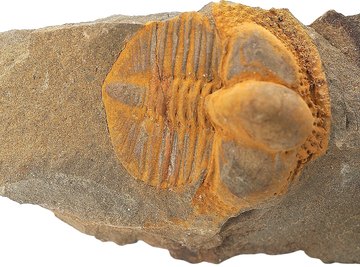

The study of the Earth, including its formation, resources, natural processes, history, and environments is called earth science or geoscience. Geoscientists also study other planets and the solar system. Earth science is fundamental to understanding life on Earth, and involves chemistry, physics and mathematics and biology. The National Science Foundation considers the major divisions of geoscience to be geology, geophysics, oceanography, marine science, hydrology, atmospheric science, meteorology, planetary science, soil science and environmental science.
Structure and History
Geologists study the entire Earth. The subdivisions of geology are physical geology and historical geology. Physical geologists investigate the structure of the Earth and the processes that go on inside it and on its surface. Historical geologists study the formation and evolution of Earth and everything within and upon it. Geophysicists look inside the Earth, using laboratory experiments, direct observation, remote imaging and computational and theoretical modeling to understand what goes on below the Earth's surface. They use mathematics and physics in their work. Geophysicists investigate what happens during earthquakes and within the mantle and core layers of the Earth, as well as Earth's gravitational, magnetic and electrical fields.
Water and Soil
In hydrology, scientists study the Earth's water, including the complex water cycle and where and in what form water exists in nature. Hydrologists seek to understand the problems in water supplies, including purity, contamination and movement. Oceans cover 71 percent of the Earth's surface. They hold 97 percent of Earth's water and support an enormous biomass within their depths. Oceanographers study deep sea and coastal oceans, incorporating chemistry, geology, physics and biology to examine the complex interactions between the ocean and continents, ice caps, the atmosphere, including influences of the sun and moon on the tide and heat from the core and mantle. How soil originates and is distributed, its composition and its physical and chemical properties all fall under soil science.
Air and Weather
Meteorologists study how the atmosphere is structured and its composition, along with atmospheric phenomena and how they affect life on Earth. Making weather predictions is one aspect of meteorology. Atmospheric science is a broader discipline that combines meteorology with other physical sciences. Atmospheric scientists investigate climate, weather, solar radiation, and the processes of ozone depletion, pollution and climate change. Environmental sciences links geoscience with human activities and policies regarding environmental issues.
Beyond Earth
Planetary scientists study of the origin of Earth, other planets and the solar system. They gather information about the interiors, surfaces, atmospheres, and satellites of planets, carrying out investigations from observatories and telescopes worldwide. They use data gathered from landers and from Earth-orbiting and planetary spacecrafts. They also investigate asteroids, using radar to determine their physical attributes and to track their occurrence and possible trajectories near Earth.
References
- American Geosciences Institute: Careers in the Geosciences
- Mississippi State University Department of Geosciences: What is Geology?
- Stanford University School of Earth Sciences: Geophysics
- United States Geological Survey: The USGS Water Science School: What is Hydrology and What Do Hydrologists Do?
- United States Department of Commerce: National Oceanic and Atmospheric Administration: Ocean
- American Meteorological Society: Challenges of Our Changing Atmosphere
- Texas A&M University: Geosciences: Who We Are
- California Institute of Technology: Jet Propulsion Laboratory: JPL Science: Planetary Science
About the Author
Carolyn Csanyi began writing in 1973, specializing in topics related to plants, insects and southwestern ecology. Her work has appeared in the "American Midland Naturalist" and Greenwood Press. Csanyi holds a Doctor of Philosophy in biology from the University of Wisconsin at Madison.
Photo Credits
Zedcor Wholly Owned/PhotoObjects.net/Getty Images