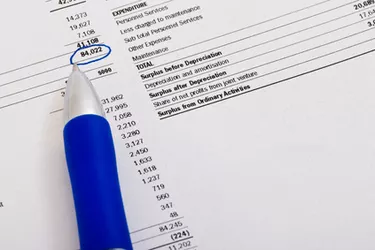
Educating investors about the annual report of a company is a critical step in raising capital for the business. An annual report should be structured in a way that lets investors clearly know how the company has performed over the past year. The three basic categories to be included in an annual update are: balance sheet, income statement and cash-flow statement. In addition, a word about the company's future expectations and results of the financial statements are key in helping investors decide if buying into the business is a good financial move.
Instructions
Video of the Day
Step 1
Open the annual report with the "Letter from the Company President" and/or chairman. The letter should detail the president's interpretation of how the company performed over the past fiscal year, the company's earnings goals and the strategies it plans to employ to meet those outcomes. For example, the letter may state that new stores will be built in upcoming years, which may help investors determine whether the company is poised for growth.
Video of the Day
Step 2
Include explanatory illustrations such as pie charts and graphs that show the company's financial journey and year-end position. For example, a pie or bar chart can show the company's annual revenue and expense totals over the past 10 years. A line graph can show trends in growth over the past three years.
Step 3
Summarize the results of the balance sheet, giving investors an idea of how well the company has managed its finances. Balance-sheet analysis should focus on two areas: liquidity and capital structure. Define and explain the company's liquidity in terms of assets. Discuss the capital structure, which examines the ways a company finances its operations.
Step 4
Describe the results of the income statement to give investors a clear understanding of the company's profitability. Explain how much the company paid in expenses and how well the company's operations performed throughout the year. Discuss the company's revenues, expenses, net earnings or net losses over the period.
Step 5
Discuss the cash-flow statement, which will help investors make a smart decision about buying, holding or selling stock in the company. Highlight the major activities that impact cash flows and affect the overall cash balance. Review how much cash the company spent on investments and on its operations.
Step 6
Include notes to the investors. Reveal the company's accounting practices, mergers, and other disclosures that may affect the company's financial condition. "Notes are as important, if not more important, than the financial statements themselves," writes George Thomas Friedlob, Ph.D. in "Keys to Reading an Annual Report."
Tip
Compare this year's annual report with the previous annual report to see if last year's goals were met.