
This Season
 

The History of Cloning

The first theories and experiments with cloning began in the late 1880s as scientists sought to prove their theories about how the genetic material inside cells worked. The earliest experiments involved splitting the embryos of frogs and salamanders to see how the resulting animals would develop. As chromosomes became better understood, more experiments were done with cloning, resulting in the first cloned animals in 1952.

Related Searches:
    1. History

      • Discoveries about the nature of DNA in the 1940s made it possible for cloning experiments to progress. In 1944 it was discovered that genetic information for each cell was kept in the cell's DNA. When Oswald Avery found this genetic information, it gave scientists new ways to try to clone animals by using that genetic blueprint.

      Types

      • The first cloned animals were northern leopard frogs that were cloned in 1952. Thomas J. King and Robert Briggs cloned 35 frog embryos and saw 27 tadpoles hatch. This first successful cloning taught scientists more about what cells needed to be used in the cloning process. King and Briggs believed, based on their clones, that young cells were more viable for the cloning process. Cells that were taken from adults resulted in abnormally developed tadpoles.

      Significance

      • The next successful cloning experiments also resulted in cloned frogs. John Gurdon cloned South African frogs in 1962. His use of adult cells disproved the prior theory that only young cells could be used in the cloning process with success. From 1962 to 1965, Thomas King, Robert McKinnell and Marie Di Berardino created more frog clones from adult frog cells.

      Considerations

      • While animal cloning had been the focus of cloning experiments, the 1960s also saw other types of cloning. In 1964 F.C. Steward took an adult root cell from a carrot plant and successfully cloned the plant. Throughout the rest of the 1960s, scientists continued to clone frogs and to discover more about DNA. The first gene was discovered in 1969.

      Potential

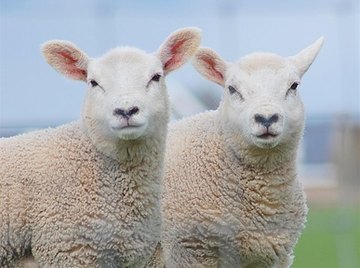
      • In 1977, the first cloned mice were created. Mouse cloning research continued, and new cloned mice were created in 1979. The first mammal was cloned in 1984. The cloned sheep was quickly followed in 1985 with cloned cattle embryos. A cow clone was created in 1986 and several calves in 1993. That same year, human embryos were cloned for the first time. In 1995 and 1996, sheep were cloned, including the famous Dolly. Since Dolly's creation, the cloning of mice and other small animals has continued, but human cloning research has been banned in many countries.

    Related Searches

    Read Next:

    You May Also Like

    • The Pros & Cons of Cloning

      Cloning hit the mainstream as a scientific debate when scientists cloned a lamb named Dolly in 1996. Cloning is a process that...

    • Advantages & Disadvantages of Cloning

      In genetics, to clone an organism is to make an exact copy of its DNA. Cloning is commonly done on small organisms,...

    • How Does Cloning Work?

      Dolly the sheep is a famous example of cloning. In 1997, scientists cloned Dolly, but this was not the first time a...

    • Plant Cloning Facts

      Plant cloning is an ancient form of producing desired outcomes in plant species. Through the years, the best quality plants have survived...

    • What Is the Definition of Genetic Cloning?

      The study of genetics--the branch of biology that examines heredity in plants, animals, and humans--has come a long way from its humble...

    • What Is the Meaning of Cloning?

      In its most basic form, cloning is the process of duplicating biological material. The most successful attempt at cloning was carried out...

    • Who Invented Cloning & When?

      Cloning occurs in nature. Identical twins are created when an embryo divides into two individuals with identical DNA. Self-pollinating plants produce plants...

    • Information on Human Cloning

      Human cloning is the process of manipulating DNA for the potential copying or transference of genetic information and tissues. The process, as...

    • Cons of Cloning Organs

      Cloning is the process of creating an organism genetically identical to another organism. Scientists have successfully cloned many animals. One possible future...

    • What Are the Risks of Cloning?

      Cloning is the copying of a living organism, producing a separate genetic replica. While scientists have been interested in cloning since at...

    • Description of Cloning

      Cloning is the creation of an organism that contains the exact same DNA as another organism.

    • Advantages & Disadvatages of Cloning

      Advantages & Disadvatages of Cloning. Cloning, or the process of making an exact copy of something, has been a scientific fascination for...

    • What Is Human Cloning?

      While human cloning may be an unfamiliar term to some people, it is gradually making its way into the view of mainstream...

    • The Pros & Cons of Cloning Pets

      The Pros & Cons of Cloning Pets. Because so many pet owners have strong emotional ties with their pets, it is a...

    • Gene Cloning and DNA Analysis

      “Gene cloning is the process in which a gene of interest is located and copied (cloned) out of DNA extracted from an...

    • The History of Bioengineering

      Traditional engineering concerns the application of math and science to improve the human condition. This includes the design and analysis of objects....

    • Cloning Fact Sheet

      The Human Genome Project was a 13-year undertaking to record and identify information about all genes found in human DNA. With the...

    Follow eHow

    Related Ads