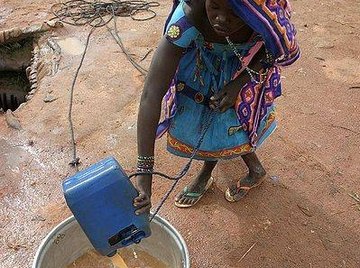
What many poor people, backcountry hikers, and those living in remote areas have in common are a reliance on untreated, local sources of water that may be contaminated, and must be purified before it can be safely consumed. There are two basic approaches to water purification: using a reverse osmosis filter, or a tag team of two methods working together to eliminate two separate contaminants.
Reverse Osmosis Filters
A reverse osmosis filter is the do-it-all of water purification. The process is the only one that addresses both harmful microorganisms and pollutants at the same time. It works by forcing water under pressure through a membrane made of thin film composite, with a inner matrix of dense polymers. The result leaves purified water on one side of the membrane, and contaminants on the other side. The technology is reliable, but expensive and relatively cumbersome, and requires electricity to work. It is therefore a sound choice for use in fixed positions or by those who can afford to tow a small trailer with a small electrical generator around, but anyone on the move or without access to electricity needs to use other methods.
Microorganisms
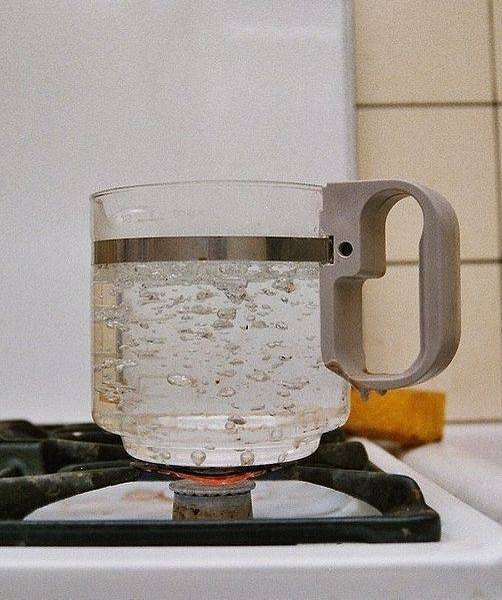
The first part of the purification tag team must eliminate microorganisms, like harmful bacteria and parasites. There are a handful of tried and true methods for doing this. The most familiar is boiling. Simply bringing water up to its boiling point of 212 degrees Fahrenheit will kill almost all microorganisms, so just a few minutes of boiling will do the job.
The other options involve chemical agents. Hikers have long been familiar with using iodine tablets to kill microorganisms in local water sources. A typical example would be a tiny pellet being good for a quart of water. Bleach has been popular in poorer countries for decades as a means of killing microorganisms in local tap water, and works just as well with other sources. Eight drops per gallon will make the water safe to drink. Both methods should be allowed half an hour to do their job.
Carbon Filtration
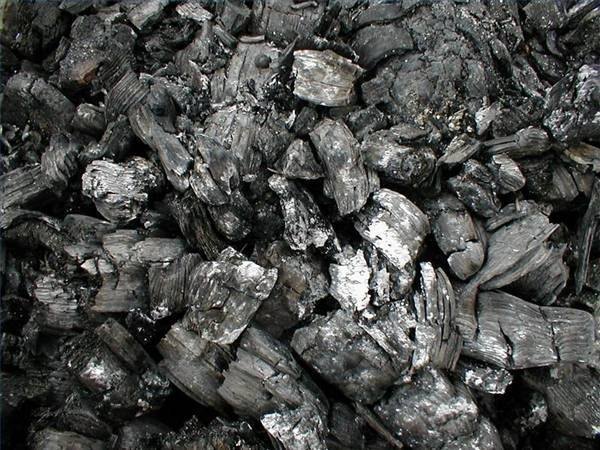
The other half of the tag team is to eliminate pollutants. The best way to do this is with a homemade carbon filter. This uses the same technology as Brita filters. Carbon is a chemically active substance, with a tendency to bind to most anything. At a microscopic level, charcoal is a heavily pitted and striated material, which vastly increases its real surface area. The result is that when water slowly runs over charcoal, pollutants find themselves glued to the charcoal surface. An improvised filter can be made out of ground-up charcoal, a strainer and a funnel. Bear Gryllis made a purification drinking straw out of little more than a reed and some charcoal bits for the Discovery Channel's "Man vs. Wild." It's a simple technique, but it is highly effective.
Solar Distillation
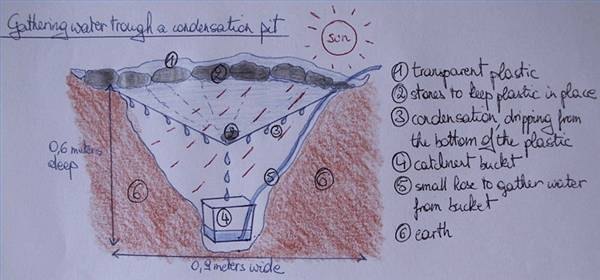
There is another method that produces fully purified water in one step, and that is distillation. A solar still can be built by digging a hole, putting an empty pan in the bottom, setting a bucket full of impure water into the middle of the pan, and then setting a peaked clear plastic sheet over top. This will evaporate the water out of the impurities, collect and condense it inside the plastic, and let it drip down into the empty pan. The problem with this method is that it is very slow and produces relatively little water.