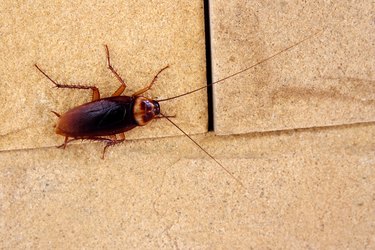
Roaches are no fun. Unlike some household pests, they don't disappear thanks to a simple trap or insecticide. They are hardy animals that multiply quickly, can survive for months without food and become nearly impossible to contain if not properly eliminated. Thankfully, though, with the proper prevention tactics and a swift removal of any current infiltrations, your roach infestations can become a thing of the past.
Get Rid of Roach Food
Video of the Day
Since roaches are such pervasive pests, getting rid of them requires getting to the root of the problem. First things first: clean your house, and keep it that way. Roaches love food, and are drawn to food sources that you might not even realize you had.
Video of the Day
Start by getting rid of obvious problem areas like recent food spills, your garbage or improperly stored food. Then, move on to the harder-to-reach areas. Even in a tidy home, crumbs and spills can quickly accumulate in areas like under the stove, inside and around the microwave and toaster and beneath the refrigerator. Thoroughly wipe down, sweep or vacuum these areas to rid them of any food scents or debris.
You may also need to change your food storage methods. If you have foods that are kept in easy-to-infiltrate cardboard or paper packaging such as cereal or flour, consider storing those foods in plastic, metal or glass containers that have airtight seals. If you have a pet, keep its food in an airtight container.
If you already have roaches, make sure that you also wipe down or vacuum any areas where roaches may have gone, even if it wasn't near a food source. They may have left behind their scent, stray body parts, skin or feces, all of which could lure back their roach friends.
Attack the Water Supply
Roaches can go months without food, but only a few weeks without water. So, they often camp out in bathroom or kitchen drains, where there is a consistent water supply. This is tricky because you can't eliminate a drain in the same way you can get rid of loose crumbs. But it's still possible to take measures that will make your drain an unhappy home for roaches.
For starters, fix any leaky faucets or drain pipes. Roaches love the puddles that form following a leak, so don't give them a standing water source. Use duct tape, caulk or sealant to repair any leaks. Also look for any gaps in the wall where pipes come through, particularly under a kitchen sink. Fill any of those holes with urethane foam, steel wool or copper mesh. If you have pipes that produce significant amounts of condensation, wrap them in insulation foam.
Before you go to bed at night, make sure surfaces such as sinks and tubs are completely dry. You may also want to plug tub drains and cover your faucets with a drain stopper. This is impractical during the day, but that's okay, since roaches prefer coming out at night.
Say Goodbye
Once you've made your home unfriendly for future roaches, work on clearing your home of any existing roaches. Depending on how invasive the problem is, you may need a multi-pronged approach.
Your first step in elimination can be laying sticky glue traps that will ensnare the roaches. This should quickly wipe a few of the invasive pests. It can also give you a better idea of the areas in your home that roaches love, which will help you know where to set out bait.
The bait will be a solid second step in ridding your home of roaches. The most effective bait are the ones containing boric acid. Roaches are drawn to the boric acid, consume it and bring it back to their roach community. There, they spread it to the other roaches before croaking. It's a similarly unhappy ending for the additional roaches that feast on the dead carcasses of the roaches who consumed the bait. It's a phenomenon known as chain killing, and it's super effective. Head to your local hardware store and look for gel, tablet or liquid bait traps that use boric acid. If you don't already know where the roaches love to congregate, place the bait in the dark, confined spaces that roaches prefer, such as behind the stove, the crevices in a wood floor or beneath the sink.
You can also spray or fumigate your home. Most of the aerosol sprays you can buy don't kill roaches on the spot. Instead, they release fumes that either draw the roaches out from their hiding spots, slowly kill them or stop them from reproducing. These sprays can be effective, but also full of harsh chemicals, so make sure you read all the safety instructions beforehand.
Always be mindful of the products you are using. Traps, insecticides and baits can all be harmful to children and pets. If you use them, follow any listed precautions and place them in areas where they can't be accessed by any kids or animals. If you feel like any of these products are too toxic or can't guarantee your kids or pets will stay out of their way, there are safe, family-friendly products on the market. Boric acid is one of those. Simply mix three parts boric acid with one part sugar and sprinkle a thin layer of it in dark, roach-laden areas. You can also look into electric plug-in pest repellant products, which release non-toxic fumes into the air to repel roaches. Or, check to see if there is a natural exterminator in your area.
It's no fun to deal with roaches. But with the right preventive measures, a commitment to cleanliness and some stellar roach killers, your pests are going to have to find a new place to terrorize.