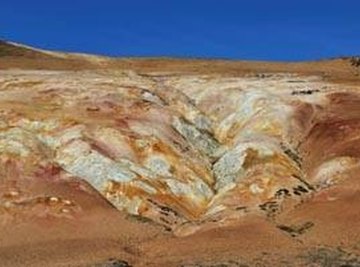
In an environment of increasing demand for renewable energy resources and derivatives, geothermal energy is one of the resources toward which industry is turning. "Geothermal" means heat from the Earth. As with all non-fossil fuels alternatives, geothermal energy has pros and cons.
Definition
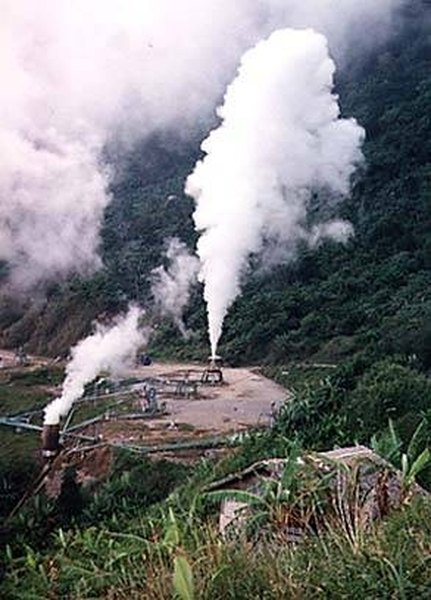
Geothermal energy taps into the vast stores of natural heat within the Earth. At certain points around the globe, the Earth's heat combines with water and is relatively easy to extract. Familiar examples of the Earth's heat combining with water are the geysers at Yellowstone. There are vast reservoirs of heat waiting to be converted. Although the Earth's heat is available from anywhere on the planet, drilling for geothermal energy is only reasonably done in geothermal reservoirs closer to the Earth's surface. These areas are mostly found in Alaska, Hawaii, and some Western states.
Applications
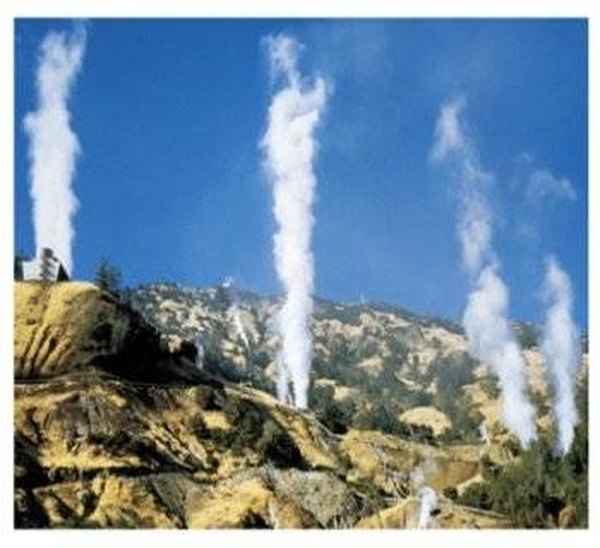
Geothermal energy has various applications. Electricity is derived from geothermal sites and direct applications such as crop drying and district heating are possible. According to NREL (see Additional Resources), public utilities use geothermal water and steam to power generators and to produce electricity for utility consumers. Geothermal-derived heat also provides power necessary for infrastructure such as roads and for industrial uses. There are smaller scale residential uses as well.
Function
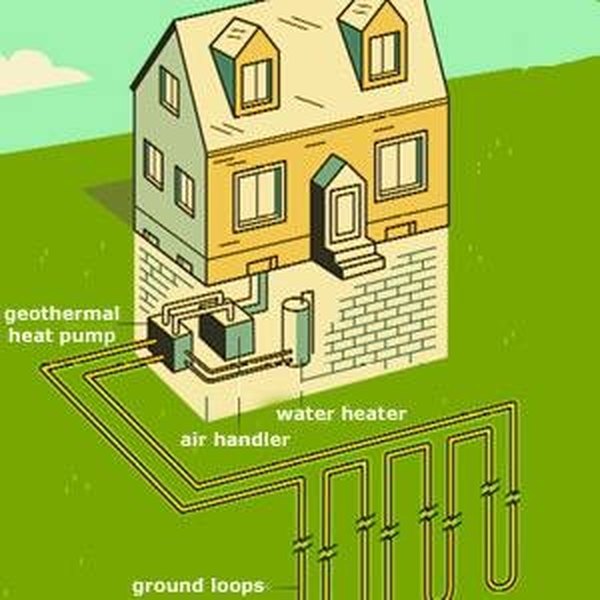
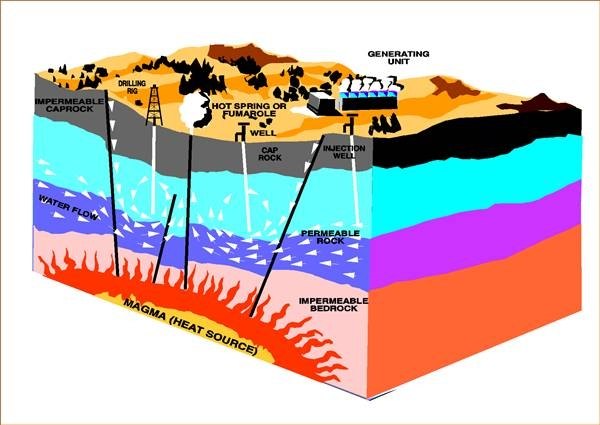
The Department of Energy, Energy Efficiency and Renewable Energy resources describes how a geothermal system works. (Cited from http://www1.eere.energy.gov/geothermal/egs_animation_text.html ) The process begins with an injection well that drills into hot rock. Next, water is injected to either create a fracture for a reservoir or to further open fractures already in the rock. In the third stage, another well is drilled that interests the fractures and distributes water that pulls the heat from what previously was dry hot rock. Finally, more wells are drilled that will provide necessary power.
Pros
Once produced, geothermal energy is nearly completely non-polluting. Geothermal power plants are relatively inexpensive to operate. The energy is technically renewable and can be used as direct power source. These power plants are environmentally-friendly and leave few carbon footprints. Fossil fuels are not needed to bring geothermal power plants online.
Cons
Technology only makes geothermal energy available from certain regions on the planet. Initial drilling costs are expensive and the process is complex. Although the Earth's heat is ever-present, current or future geothermal sites may not be continuous sources of heat. Hot rocks must be managed well or the the water can cool the rocks. While some consider geothermal energy the most cost-efficient and non-polluting, there is as yet no guarantee that possible sites will provide desired quantities.
About the Author
Alyson Paige has a master's degree in canon law and began writing professionally in 1998. Her articles specialize in culture, business and home and garden, among many other topics.
Photo Credits
http://www.communitysmarts.com/geothermalenergy.html, http://www-esd.lbl.gov/ER/images/geothermal2.jpeg, http://www.liv.ac.uk/science_eng_images/earth/geothermal.jpg, http://climateprogress.org/wp-content/uploads/2008/08/geothermal-pump.jpg, http://commons.wikimedia.org/wiki/File:Geothermal_energy_methods.png, http://inhabitat.com/wp-content/uploads/geothermal2.jpg