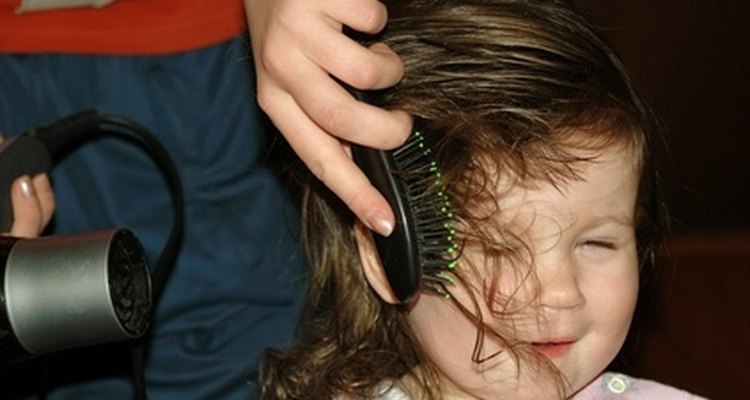
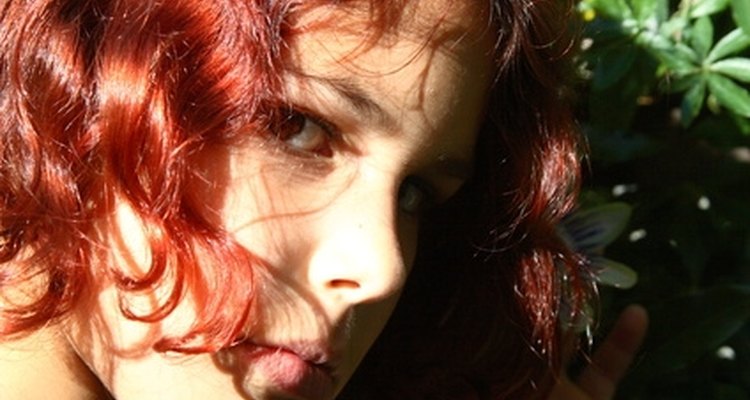
Hair color ranges from the palest blond to midnight black or fiery red. The traits for hair color are passed down from parents to children; however, it's not a direct correlation of a more dominant color overriding a recessive gene. From what scientist understand, hair color is the result of more than one gene and whether that gene is "on" or "off." The genetic complexity is why some children born to the same parents have different hair color.
Genetics
Understanding genetics and how high color is passed down from parent to child isn't completely understood by scientists. The way a trait in general is passed down involves the chromosomes. Humans have 46 chromosomes. At conception, the father provides 23, and the mother provides 23 to form a zygote. The zygote divides and begins the creation of a new human. These combined chromosomes from the mother and father determine certain traits the child has. The genes contain the traits and are made of DNA that resides in the chromosome. Hair color is determined by more than one gene.
Pigment
Hair color is created by a pigment called melanin. Melanin has two forms, phomelanin and eumelanin. The amount of melanin creates hair color. How much melanin a person has is determined by numerous genes. Hair that has more melanin forms darker shades of hair, which also means hair with less melanin will be more in the blond range.
Gene Trigger
The amount of melanin in your hair is determined by numerous genes, many still undetermined. In genetics, some genes are considered "on" and some are "off." Basically, it means that some genes are active and some are not. For hair color, when the gene is "on," it makes melanin or the pigment for hair color. When it is "off," no pigment is made.
Signals
Hair color has other triggers. A regulatory molecule sends a signal that triggers a hair follicle to create hair in a certain color. A melanocyte is a cell in hair follicles that synthesizes the pigment. The melanocytes have organelles called melanosomes. When genetic or molecular signals are given through hormones or enzymes, the melansomes can synthesize brown and black eumelanin, or they can synthesize red and yellow pheomelanin pigment.
Other Signals
Melanocytes also have growth triggers. The follicle only creates hair growth during the anagen or growth phase of the hair cycle. Melanin is synthesized during the anagen phase only. When a new hair is forming, it is almost colorless. Melanin then enters the core of the hair shaft, creating color.
Considerations

According to the International Society of Hair Restoration Surgery, there is still a lot scientists don't know about hair color traits, but what they do know is that pigmentation is controlled by genetics, hair color cannot be changed genetically that scientists are aware of, and when the melanocytes in the hair follicles become inactive, white and gray hair typically result.
Related Articles

Dominant & Recessive Hair Colors

What is Hair Composed of?

Can Supplements Reverse Gray Hair?

Chlorella and Hair Loss

What Are the Causes of Graying Hair?

Burdock Root for Hair

Stages of Underarm Hair

Zinc & Gray Hair

About Hair Bleaching

Does Lack of Tyrosine Make Your Hair ...
Facts on Natural Hair Changing Color

Matcha Green Tea Butter for Hair Growth

How Often Can You Color Your Hair at ...

The Effects of Perm Lotion on Hair ...

Ways to Prevent Damage During Hair ...
Grecian Formula Problems

Synthetic Hair Vs. Kanekalon Hair

Ingredients in Hairfinity Vitamins
Instructions for How to Use a Wella ...
Physical Characteristics of the Ruby ...
Writer Bio
Debbie McRill went from managing a Texas Department of Criminal Justice office to working for Compaq and Hewlett-Packard as a technical writer and project manager in 1997. Debbie has also owned her own businesses and understands both corporate and small business challenges. Her background includes Six Sigma training, and an Information Development career with journalism and creative writing as her passion.
Photo Credits
drying of hair by a hair drier to the little girl image by Sergey Galushko from Fotolia.com