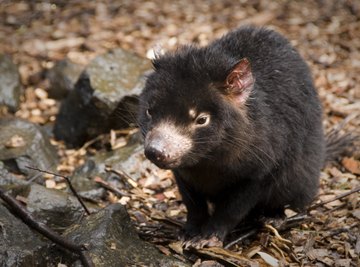

Most Americans know the Warner Bros. cartoon character known as Taz, short for Tasmanian devil. The interesting marsupial -- a mammal that keeps its newborns in a pouch -- that inspired the animated one, however, remains a mystery to many. Confined to one island state in Australia, they do often live up to their demonic name.
Such Devils
When not eating or challenging an enemy, a Tasmanian devil resembles a baby bear, with mostly brown or black fur and an awkward walk on short rear legs and long front ones. However, when they fight or go after food, with loud growls and snarls and vicious attacks, they do seem devilish. The largest meat-eating marsupial in the world -- at 30 inches long and 26 pounds -- with their sharp teeth and strong jaws, devils bite harder than almost any other mammal. Their noise and behavior led early English settlers to give them their popular name, and centuries later inspired the cartoon namesake.
So Hungry
Tasmanian devils eat birds, fish, insects or snakes they kill or dead animals they come across, gobbling everything, including bones, fur and skin. The nocturnal animals find their prey at night and hide in their dens alone during the day. Devils turn on their crazed personalities when they gather to devour a large meal, often an already dead animal, which cleans up the landscape and prevents parasites from spreading. They store extra fat in their tails to stay healthy in lean times.
Hard to Find
Tasmanian devils once lived throughout Australia, but over time were pushed onto only Tasmania, an island state off the coast of that country. They live in woods and on the edges of towns. Scientists believe that dingoes, a wild dog now common in Australia, helped push the devils into Tasmania at a time when the mainland and island were connected, thousands of years ago. They live on the entire island, although they congregate near coasts and forests.
Shaky Past and Future
Late 19th century farmers blamed Tasmanian devils for killing their animals, which was later proven wrong, except for birds like chickens. The farmers tried to rid the island of the animals, making them nearly extinct. In 1941, the Australian government listed the marsupials as protected, bringing their numbers back up. However, since the 1990s, they have been dying in large numbers -- tens of thousands -- due to a cancer that causes such big lumps on devils’ faces that they starve when they can no longer eat. That government has downgraded the animals’ status to endangered, but wildlife experts are trying to save the Tasmanian devil and stop the disease by captive breeding efforts.
References
- Tasmanian Devil: A Unique and Threatened Animal; David Owen, David Pemberton
- National Geographic: Tasmanian Devil
- Kidcyber.com: Tasmanian Devil
About the Author
Since 1988, Mary Thomsen has been working on the "Valders Journal," a Wisconsin weekly newspaper. Thomsen has won several awards from the Wisconsin Newspaper Association. She studied print journalism at the University of Wisconsin-Eau Claire.
Photo Credits
wazzzzo/iStock/Getty Images