
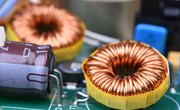
Electricity and magnetism are distinct entries in the dictionary, even though they are manifestations of the same force. When electric charges move, they create a magnetic field; when a magnetic field varies, it produces current. Although a single wire carrying current produces a magnetic field, coiled wire wrapped around an iron core produces a stronger one. Inventors have harnessed electromagnetic forces to create electric motors, generators, MRI machines, levitating toys, consumer electronics and a host of other invaluable devices that you rely on in everyday life.
Powerful Tools for Heavy Lifting
You can't switch a regular magnet on and off, but you can do that with an electromagnet. On the other hand, electromagnets will not work without an external power source. You can also alter an electromagnet's strength by changing the amount of current flowing through its wires. Businesses, such as auto salvage dealers, can turn a large electromagnetic on, use it to lift a car, move it to another location and cut the electromagnet off to release the car at another location. Scrap yards also use large electromagnets to separate iron and other ferrous metals mixed with nonferrous materials.
Large Scale Electromagnetic Marvels
Japan is testing a 320 kilometer per hour (200 mile per hour) levitating train that uses electromagnets to hover and move. The U.S. Navy performs high tech experiments with a futuristic electromagnetic rail gun weapon. It can fire projectiles significant distances at speeds greater than Mach 6. Because the projectiles have tremendous kinetic energy, they can destroy targets on impact without using explosives. The Navy has also tested an electromagnetic catapult designed to launch planes off carrier decks. Because it is more precise than older, steam-based catapults, carriers could launch a wider variety of aircraft.
Electromagnets and Induction
When a wire that's near to a changing magnetic field produces electric current, this phenomenon is called induction. Electric motors, power generators and transformers all work because of induction. Transformers are critical in electrical transmission because they can step voltage up or down as needed during its journey to consumers. Electric motors turn electric current into mechanical power in all manner of equipment including toy cars, real cars, Mars rovers, washing machines, hair dryers and power tools. Power generators work like electric motors, but in reverse: they turn rotary motion into electric power. The rotary motion can come from windmills, steam turbines, gasoline engines or other sources. This is true for equipment ranging from small gas-powered generators all the way to giant electric utilities that power cities.
Electromagnets In Other Common Devices
You may never see some electromagnets, but they often lie hidden in many electronic products you use. Press a doorbell, for example, and electric current creates a magnetic field that attracts a ringer which strikes the bell. Relays are special electromagnets that function like automatic electrical switches. You'll find them in a variety of consumer and commercial applications, such as:
- TVs
- computers
- cars
- elevators
- copy machines
Some of the most powerful magnets in the world reside in MRI machines. Resembling a doughnut, an MRI electromagnet scans patients to produce pictures doctors can review.
References
About the Author
After majoring in physics, Kevin Lee began writing professionally in 1989 when, as a software developer, he also created technical articles for the Johnson Space Center. Today this urban Texas cowboy continues to crank out high-quality software as well as non-technical articles covering a multitude of diverse topics ranging from gaming to current affairs.