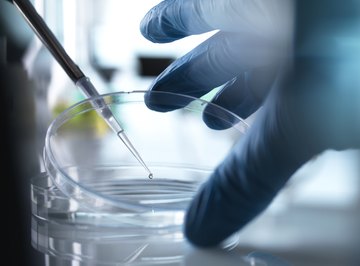

As you read this, researchers around the globe are at their lab benches, figuring out how to some day grow new tissues and organs from single cells. If you think that sounds like something out of a science fiction movie, you aren’t alone. Yet this research could yield a scientific breakthrough that changes the way medical professionals treat a wide range of human diseases in the real world.
The ultimate goals of this research might be broad, but the research subject is so infinitesimally small that you can’t even see it with the naked eye. The subject is stem cells. Thanks to their unique characteristics, these amazing cells have the potential to change the future of science and medicine.
Read more about the advantages and disadvantages of stem cell research.
What Are Stem Cells?
You know that sexual reproduction requires a sperm cell and an egg cell to come together and form a zygote via fertilization. This single eukaryotic cell contains a full complement of genetic information and has the potential to divide into a complex multicellular organism such as yourself.
But have you ever wondered how that single cell could divide into the trillions and trillions of cells in a human body? And how could just one cell give rise to so many different types of cells – both skin cells and brain cells, for instance?
As the zygote begins to divide (before it implants in the uterus), the resulting cells are in fact stem cells. Scientists say these flexible cells are both proliferative and pluripotent. This means the cells readily divide to produce many, many more cells – and they can develop into any type of specialized cell through stem cell differentiation.
Read more about the explanation of cell specialization.
Stem Cell Structure
At first glance, the parts of a stem cell don't seem all that special on the surface. Like all cells in the human body, stem cells all share a few common structures. These include:
- A cell membrane, which is a lipid bilayer surrounding the cell that lets some materials enter the cell and keeps others out.
- Cytoplasm, which is the liquid broth inside the cell.
- A nucleus, which contains all the cell’s genetic information stored as DNA.
Between fertilization in the fallopian tubes and implantation in the uterus, the embryo will change from a simple sheet of stem cells into an organized group of cells – called a gastrula – with three germ layers. These will eventually give rise to all the many cell types, tissues and organs that comprise a whole (albeit still very small) human fetus.
The outermost layer, called the ectoderm, gives rise to skin cells and nervous system tissues. The middle layer, or mesoderm, yields blood cells, connective tissue, muscle cells and the placental tissue that keeps the fetus alive in utero. The interior layer, called the endoderm, creates the linings of the gut, lungs and urogenital tract.
Thanks to pluripotency, stem cells can differentiate and become any of these cell types after implantation. These stem cells associated with the normal development of embryos are one of three types of stem cells used by scientists. Researchers call them human embryonic stem cells, or hESCs.
Embryonic Stem Cells
The embryonic stem cells used by scientists never originate from traditional fertilization inside the fallopian tubes of an actual human. Instead, scientists create them in test tubes using in vitro fertilization (IVF). These embryonic stem cells generally wind up in research labs after people using IVF to create families finish the process and donate the extra frozen embryos to science (rather than destroying them).
For researchers, there are certain benefits to using embryonic stem cells compared with other types of stem cells. Embryonic stem cells are fairly easy to come by and are simple to grow in culture. Most importantly, embryonic stem cells are truly blank slates that can give rise to essentially any type of cell upon stem cell differentiation.
Embryonic Stem Cell Lines
Just like cells do after implantation in a living uterus, embryonic stem cells in the lab naturally clump together into embryoid bodies and begin to differentiate into specialized cells. Scientists who grow embryonic stem cells in culture must maintain specific conditions in the growing medium to keep this from happening.
By allowing the stem cells to proliferate without differentiating, scientists create embryonic stem cell lines. Scientists can then freeze these cell lines and send them out to other labs for research projects or further culturing. To qualify as a cell line, the embryonic stem cells must:
- Grow undifferentiated in cell culture for at least six months.
- Be pluripotent, or capable of differentiating into any cell type.
- Have no genetic abnormalities.
When researchers are ready for the cells in an embryonic stem cell line to become specific types of cells, such as for a specific research project, they simply alter the culture medium or inject specific genes into the stem cell to trigger stem cell differentiation.
Adult Stem Cells
It turns out that many mature tissues in the fully developed human body hang on to some undifferentiated cells for a rainy day. These adult stem cells – sometimes called somatic stem cells – activate when the body needs new cells. This happens in order to account for normal cell turnover and growth and also to repair tissue after an injury or disease.
Scientists have found adult stem cells in a wide variety of organs and tissues, such as:
- Blood vessels.
- Bone marrow.
- Brain.
- Gut.
- Heart.
- Liver.
- Ovaries.
- Peripheral blood.
- Skeletal muscle.
- Teeth.
- Testes.
Adult stem cells are generally found in specific areas, called stem cell niches. Unlike embryonic stem cells, which can differentiate into any cell type at all, adult stem cell differentiation is limited and tissue specific. This means adult stem cells typically differentiate into only the cell types associated with the tissue in which they reside.
For example, adult stem cells in the brain will only become nerve cells or non-neuronal brain cells. Here are some other well-known adult stem cells and their specialized cell types:
- Hematopoietic stem cells are found in bone marrow and give rise to blood cells, including red blood cells and immune system cells.
- Mesenchymal stem cells are found in bone marrow (and some other tissues) and give rise to bone cells, cartilage cells, fat cells and stromal cells.
- Epithelial stem cells are found deep in the lining of the gut and give rise to absorptive cells, goblet cells, enteroendocrine cells and Paneth cells.
- Skin stem cells are found in the basal layer of the skin and give rise to keratinocytes that make a protective layer on the surface of the skin.
Adult Stem Cell Differentiation
Scientists have observed in experiments that some adult stem cells differentiated into specialized cells other than the expected cell type, which is similar to the valuable pluripotency of embryonic stem cells. However, this transdifferentiation is rare and only affects a small segment of stem cells when it does occur. Researchers are unsure if it happens at all in humans.
Adult stem cells have some drawbacks for scientists. They are rare and difficult to grow in the lab. They also have limits on how much they can divide and what types of cells they can become. However, adult stem cells have one distinct advantage: They are probably less likely to trigger immune rejection since they could be harvested from a patient’s own body.
A Third Type of Stem Cell
In 2006, researchers discovered one more type of stem cell: induced pluripotent stem cells, or iPSCs. These are adult stem cells that scientists reprogram to act more like embryonic stem cells. However, it isn’t yet clear if there are meaningful clinical differences between induced pluripotent stem cells and embryonic stem cells. Scientists already use iPSCs for important work, such as drug development and modeling human diseases for research purposes.
There are technical hurdles to overcome before researchers can use these induced pluripotent stem cells for more direct applications. In addition to confirming that these stem cells are not fundamentally different from embryonic stem cells, researchers must devise new techniques for making induced pluripotent stem cells in the first place. The current method uses viruses as a vehicle for reprogramming, which has shown serious side effects, such as cancer, in animal studies.
Clinical Applications for Stem Cells
In addition to screening new drugs for the pharmaceutical industry and serving as models for disease for research projects, scientists believe that stem cells might make new (and exciting) cell-based treatments possible. This means that someday labs might grow new organs and tissues for people who need transplants rather than relying on organ and tissue donors.
This could look like scientists using stem cells to make heart muscle cells they can transplant into people with chronic heart disease. Current animal studies suggest that stromal stem cells from the bone marrow show promise for this application, although the precise mechanism is still unclear. Scientists aren’t sure if the stem cells give rise to new heart muscle cells or blood vessel cells – or if they do something else altogether.
Another theoretical example is type 1 diabetes. Scientists hope to differentiate human embryonic stem cells into the cells that produce insulin. The immune systems of people with diabetes disrupt these cells and prohibit them from doing their jobs. Scientists wonder if they could some day differentiate stem cells into insulin-producing cells and transplant them into patients.
In addition to heart disease and diabetes, other human diseases and conditions scientists believe this medical advance could affect are broad and include:
- Burns.
- Macular degeneration, which can cause vision loss.
- Osteoarthritis and rheumatoid arthritis.
- Spinal cord injury, which can cause numbness, loss of function or paralysis.
- Stroke.
Hurdles to Overcome
Of course, bringing these novel therapies to actual patients will require scientists to master every step of this theoretical process. This means they need to:
- Grow enough stem cells to physically build the tissue or organ.
- Stimulate the stem cells to differentiate into the correct cell type.
- Ensure the differentiated stem cells can survive inside the patient’s body.
- Make sure the differentiated stem cells properly integrate into the recipient tissues inside the patient’s body.
- Reasonably expect the new tissue or organ to do the job it is built for over the entire course of the patient’s life.
- Make sure the new cells don’t cause any collateral harm to the patient, such as cancer.
By stem cell definition, these steps seem achievable using embryonic stem cells but will require many years of serious research on multiple fronts. This is why stem cell research is such an active field in the professional sciences – and also why it is top of mind for many science teachers and students.
While the ultimate result of stem cell research may still be down the road, increasing the general understanding of stem cell structure and how stem cell differentiation works is a great way to be a part of this emerging science.
References
About the Author
Melissa Mayer is an eclectic science writer with experience in the fields of molecular biology, proteomics, genomics, microbiology, biobanking and food science. In the niche of science and medical writing, her work includes five years with Thermo Scientific (Accelerating Science blogs), SomaLogic, Mental Floss, the Society for Neuroscience and Healthline. She has also served as interim associate editor for a glossy trade magazine read by pathologists, Clinical Lab Products, and wrote a non-fiction YA book (Coping with Date Rape and Acquaintance Rape). She has two books forthcoming covering the neuroscience of mental health.