About Russian Sage
Russian sage makes a spectacular addition to any landscaping. Its gray-blue leaves and spray of bluish-lavender flowers blend with other plants easily. This perennial is considered drought tolerant and worships the sun. It is also pest tolerant, with no insect bothering it to any great significance. Although it is called sage, it is not a cooking herb. The flowers, however, are sweet, edible and can add a beautiful color to salads. Does this Spark an idea?
-
History
-
Although Russian sage does not have its origins in Russia, but in Central Asia. It was named for a Russian diplomat, B.A. Perovski. Hence, the Latin name for the plant is Perovskia atriplicifolia.
Russian sage is not a form of the herb sage either. It is believed that it was so named because of the sage-like aroma the crushed leaves give off. It can be found naturally growing in Afghanistan, Pakistan and Tibet.
Types
-
The following are some of the varieties of Russian sage.
Blue Mist differs from the original Russian sage in that the flowers are a bit lighter and it blooms earlier.
Blue Spire has a more violet-hued flower with deeper cut leaves.
Filigran displays light blue flowers and filigreed leaves.
Little Spire is a compact version that grows to about 2 feet tall.
Longin exhibits straight, stiff stems, giving it a more formal appearance.
Blue Haze has light blue flowers with whole leaves rather than the deep cuts of the other varieties. -
Function
-
Russian sage functions best when planted where it receives full sun and has well-draining soil. When they are newly planted they may tend to flop over a bit. This is not detrimental to the plant, but it gives the landscaping a more informal look. If you prefer a more orderly appearance to your yard, you may stake the Russian sage up or choose the Longin variety, which naturally gives a more elegant show.
This deciduous plant will do better in wet winters if you aerate the ground for better drainage. In early spring, trim the stems to 8 inches to a foot high. This will keep it from getting too woody and will give nice full blooms. At the same time, as you trim, give the Russian sage a light dose of fertilizer (organic is always best for the earth and our environment).
Planting
-
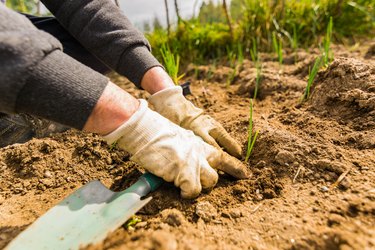
Russian sage can be seeded in your garden at anytime of year. However, it will take from 1 to 4 months with soil at a temperature of 60 to 65 degrees for germination. The benefit of seeding before or during a colder time of year is that a period of at least 10 days in which the seed is in soil at a temperature of 35 degrees or colder will enhance germination. You can always seed indoors and plant after the threat of frost is gone. Although Russian sage can be slow in establishing itself, once it does it is a hardy plant.
Considerations
-
If you live in a rural location with an abundance of wildlife, you will always be looking for nice-looking plants that the deer and rabbits won't eat. For the most part, they leave the Russian sage alone, probably because of its sage scent.
Russian sage could be considered a top "green" plant, as it needs little water and care once it is established in your landscape. It's great for desert and high desert regions of the country. The blue-lavender blooms complement companion plants and flowers such as black-eyed Susans, sunset hyssop, purple coneflowers and winecups.
-