About Shortbread
Shortbread is a dense, rich, butter-flavored dessert created hundreds of years ago in Scotland. While shortbread is most similar to the American "cookie," its history and tradition make it a dessert in a class by itself. With its simple ingredients and crumbly texture, shortbread is both easy to make and available prepackaged in most grocery stores. Does this Spark an idea?
-
History
-
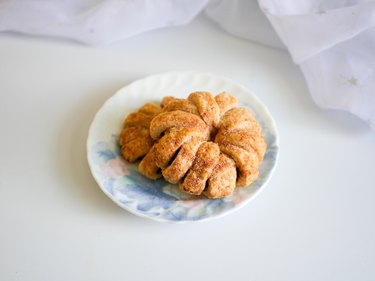
With its origins in a hardened biscuit bread that was common in the Middle Ages, shortbread may have existed as early as the 1100s, though legend gives Mary, Queen of Scots the credit for developing it in the 1500s. She enjoyed eating a traditional form of shortbread called Petticoat Tails, which were triangular wedges cut from the shortbread round, resembling the shape of fabric pieces used to make women's petticoats in that era.
Time Frame
-
With butter and sugar having often been considered luxuries in past centuries, shortbread was initially regarded as a special food that was only to be eaten while celebrating important holidays. The two most significant holidays in Scotland, when shortbread was most frequently consumed, were Christmas and Hogmanay, the Scottish New Year's Eve.
Over time, the ingredients used to make shortbread became more affordable, and shortbread was consumed more regularly, becoming a Scottish dessert staple.
-
Geography
-
Having originated in Scotland, shortbread is still an integral part of the national cuisine of that country, though it eventually became popular in the rest of the United Kingdom and in other northern European countries. Today Scottish and English companies still produce the majority of the shortbread that is sold worldwide, though the dessert is commonly eaten throughout the world.
Features
-
Traditionally, shortbread was made simply from sugar, butter, and flour and formed into rounds that could later be cut into Petticoat Tails. Today, shortbread is made in many shapes and comes in a wide variety of forms--though the most traditional types of shortbread are the Petticoat Tails, individual shortbread rounds or cookies, and shortbread fingers cut from a larger, rectangular shortbread.
Shortbread was normally made according to a ratio of 1 part sugar, 2 parts butter and 3 parts flour, though it is common for different ingredients to be added to shortbread in different parts of the United Kingdom, to create additional flavoring.
The butter and sugar are beaten until fluffy, and the flour is then added gradually to create the shortbread dough. Shortbread dough can be formed into the desired shape or pressed into a greased shortbread mold and baked at 300 degrees F until the edges brown (generally, 35 to 40 minutes).
Considerations
-
Since its invention, the shortbread (as its name implies) has been classified as a bread. Yet since the dawn of food taxes, efforts have been made to define shortbread as a regular cookie, a food that is charged a higher tax than breads in most places. The European Union attempted to tax shortbread as a cookie in the 1980s, but the Scottish Association of Master Bakers won the battle, claiming that shortbread was no ordinary cookie, but a dessert bread with a long and honored history.
-