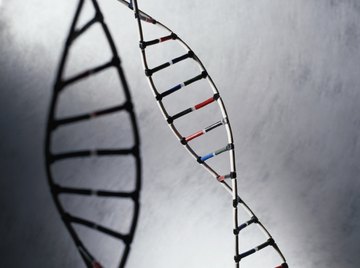

Embryo cloning is a scientific advancement, that can -- when used responsibly -- provide innumerable benefits. As suggested by the name, it is the process of cloning, or creating a copy, of an embryo. Somatic cell nuclear transfer is one type of cloning technique that relies on the transfer of genetic material from one organism to another.
Embryo Cloning Basics
An animal cloning process produces a biologically identical copy of a living creature. The biologic copy -- which is sometimes called a clone -- has the same genetic makeup as the original. An embryo is an organism that is early in its developmental cycle; fertilized eggs that have begun cell division and are up to eight weeks old are sometimes referred to as embryos. Embryo cloning, then, is the process of making a biologic copy of a fertilized egg that has begun the process of cell division -- in theory, creating a biologic "twin."
Embryo Cloning Techniques
While there are a number of techniques that can be used in embryonic cloning, somatic cell nuclear transfer, or SCNT, is one of the most common. In SCNT, scientists start by removing the DNA-containing nucleus -- which houses all of the organism's genetic material -- from a somatic, non-reproductive cell. This nucleus is then transferred to an egg cell, whose nucleus and DNA have also been extracted. After a series of laboratory "tweaks," the egg cell with the new DNA is allowed to grow into an embryo which, through a process of embryo transplant, is transferred to a surrogate mother, and is carried to term.
Embryo Cloning Benefits
Embryonic cloning is often touted for its potential in the field of medical research -- in fact, some US scientists suggest that embryonic cloning can lead to breakthroughs in the field of stem cell research, including the production of a variety of cell and tissue types. In theory, these materials could be for organ repair and transplantation, potentially saving millions of lives. When used in agriculture, embryonic cloning has the potential of increasing food supply by increasing the production of plants and animals with desirable traits. Similarly, embryonic cloning may prove useful in preventing the extinction or rare and endangered animals.
Ethical Concerns
Despite its numerous benefits, embryonic cloning is not without flaw. In fact, the health problems faced by many cloned creatures have caused some to question the safety of their use. Researchers in Tokoyo have found that cloned mice generally die sooner than their "natural" counterparts -- and even those who do survive often suffer from a host of birth defects, according to the National Human Genome Research Research Institute. Similarly, female animals implanted with cloned fetuses may experience an increased risk of death as a result of cloning-related complications.
References
About the Author
Kathryn Vera holds a master's degree in exercise physiology, as well as licensure as a Registered Dietitian. Currently, she works as a Clinical Exercise Physiologist in Cardiac Rehabilitation, where she provides care to patients living with chronic heart disease.
Photo Credits
Photodisc/Photodisc/Getty Images