This Season
 

About Denim

About Denimthumbnail
About Denim

Denim has an interesting history that begins in France. However, it wasn't until the fabric was introduced to America by Levi-Strauss that it became a popular trouser fabric. By the 1950s, all of America was wearing denim, and the rest of the world soon followed. Today there are many types of denim, as well as countless washes, colors and uses for the fabric.

Related Searches:
    1. History

      • Denim has a long and varied history. It was first created by the Andre family in the city of Nimes, France. Denim was created from a serge fabric, which is a specially woven type of cotton twill. Denim got its name from the shortening of "serge de Nimes," which was the phrase used to describe the fabric when it was first created.

      Time Frame

      • Although denim had been around since the 16th century, knowledge of the fabric was limited. Denim did not become popular in America until the mid-1800s, when Levi Strauss began making pants for miners out of the "serge de Nimes." Even though it became popular with workers and miners at that time, It was not until the movie industry boomed in the 1930s and 1940s that the general public began to wear denim. Movie stars playing cowboys and ranchers were idolized on the big screen, and the desire to emulate their style resulted in the popularity of denim pants.

      Function

      • Denim was first used as a sturdy fabric for laborers' pants. Upon its import to America, it came to function as the trouser of choice for gold rush miners as well.
        Once the general public began wearing denim, it was still primarily used in the creation of pants. However, with the technological advancements in the textile industry, it became possible to create a thinner, more malleable denim during the 1960s. Consequently, denim began to be used in creating thin, comfortable shirts, on trims for clothing, on purses and in jackets.

      Types

      • Today there are a few main types of denim. The most basic type is called raw denim. Raw denim is the pure, unaltered result of the denim-making process. The characteristics of raw denim are a dark indigo color that is uniform throughout the pant and a stiffer feel to the fabric. Over time as the jeans are worn, raw denim will fade and shape to the wearer.
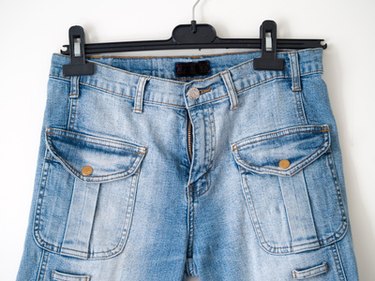
        Washed denim is a denim fabric that has been treated with a particular dye and fading process that gives it a unique look and color. Washes can range from pure black to magenta to a simple light shade of blue.
        Selvage denim, also sometimes referred to as "Japanese denim," is the highest quality denim available. It is characterized by a special weaving process that uses a single continuous thread instead of multiple cross-threads. This results in a clean inner edge on the seam of the jean and can be seen when the denim is turned inside out.

      Considerations

      • When choosing the perfect pair of denim jeans, there are a few factors people should take into consideration. First and foremost, despite the current trend, consumers should always buy denim jeans that best flatter their body type. For women, a slight boot-cut fit is the most forgiving and balances out the hips. Also, denim that has been woven with 2 percent stretch is typically more flattering and will fit better than nonstretch denim.
        Even within one brand of jeans there are many types of denim used on the pants. This can result in different fits in the same size, even if the two pairs of jeans are the same style. For example, an unwashed raw denim will have less give and can feel thicker. The same style and cut of jean in a different denim, for example, with a 2 percent stretch, will fit more snugly overall.
        One last consideration is that jeans without any spandex stretch are likely to fit tighter in the store but stretch out naturally over time. Because they do not have spandex, they will not snap back into their original shape after washing, and over many washes might get too loose. A general rule of thumb for women is to buy stretch jeans that fit just right in the dressing room, but buy nonstretch jeans a little tight because they will stretch out over time.

    Related Searches

    • Photo Credit image via shopbop.com

    Read Next:

    Comments

    You May Also Like

    • How to Wash Different Types of Jeans

      If you wear jeans often, then you probably own many different types of jeans. Jeans come in many different colors and styles...

    • How Did Chevrolet Get Its Name?

      The Chevrolet automobile was named after Louis-Joseph Chevrolet, a Swiss native who was raised in France. Chevrolet developed a six-cylinder touring car...

    • About Denim Fabric

      Blue jeans, which are primarily made from cotton denim fabric, are part of most wardrobes today. Denim fabric was first woven in...

    • What Type of Sewing Needles Are Used for Blue Jean Material?

      Blue jean material, more commonly known as denim, is a rugged cotton twill textile. First created in Nimes, France, denim was made...

    • How Long Has Chinese Drywall Been Around?

      At the beginning of the 21st century in America, several factors coincided to create a major building and remodeling boom, especially in...

    • Jean Patch Stretching: First Corner

      Stretch the patches before painting them to make sure all creases are out of the fabric. Design and create unique patch art...

    • Who Created the Angels Jeans Brand?

      ANGELS jeans have a style crafted by the Italians, so you may be surprised to learn they originated in a neighbor to...

    • Denim Fabric Types

      Denim comes in a variety of fabrics, washes, colors and styles. Stores stock shelves filled with bootcut, flared, skinny and straight styles...

    • Jean Types for Men

      Jeans have been around for a long time and are to this day one of the most popular types of clothing for...

    • How Is Denim Fabric Made?

      Denim jeans are one of the most common articles of clothing found in most people's wardrobes, yet few know how the fabric...

    • How to Insulate With Denim

      What do you think of the idea of insulating your new home or addition with old blue jeans? No, it's not a...

    • How Long Has Steel Been Around?

      Steel is a metal composed mostly of iron alloyed with carbon and several other elements. The carbon acts as a hardening agent....

    • Types of Washes for Denim

      Types of Washes for Denim. Types of washes for denim come in and out of style. The term "wash" refers to the...

    • Different Types of Denim Fabric

      Comments. You May Also Like. Denim Fabric Types. Denim comes in a variety of fabrics, washes, colors and styles. Stores stock shelves...

    • Who Invented Jeans?

      Blue jeans are a fashion staple and a common part of our lives today. It's difficult to imagine a world without them....

    • How to Decorate Your Denim Jeans with Fashion Trim

      Stylish and personalize jeans are a popular seller in boutiques and department stores. However, the price tags are often quite high. With...

    • How to Make Denim Skirts Out of Jeans

      Denim skirts are a fashion staple that seem to transcend fashion fads. Instead of shopping for just the right denim skirt, save...

    • Facts About Denim Fabric

      Denim is a rugged fabric made of cotton in a twill fashion. The difference between denim and cotton twill is the diagonal...

    • Denim Characteristics

      Denim Characteristics. The word "denim" comes from the phrase "serge de Nimes," referring to a fabric that originated in the French town...

    • Denim Alternatives

      While denim is celebrated as a durable, casual-wear fabric that can be dressed up or down, there are numerous alternatives for those...

    Follow eHow

    Related Ads