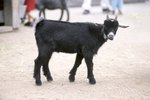
If there's anything more fun than a box of puppies, it's a pen full of pygmies. These little goats make good, if mischievous, pets. Raising pygmy goats doesn't differ much from full-size goats, except their basic needs are on a smaller scale. Because goats are herd animals, you should always keep at least two pygmies.
Pygmy Goats
While larger goat breeds are still used primarily for milk or meat, in the West pygmy goats are primarily pets. That's not true in their native Africa, where they're meat goats. At maturity, pygmies weigh about 75 pounds and stand between 16 and 23 inches tall at the shoulder, the size of a large dog. Full-sized breeds often weigh 120 pounds or more. Pygmies can be just as friendly and lovable as canines. Neuter your male pygmies -- wethers make far better pets than bucks, and they don't give off that musky billy goat odor. Since pygmy does can get pregnant as young as 3 months, make sure you neuter bucks or separate them from does by that time. If you do breed your does, it's best to wait until they're past their first birthday. It's not unusual for pygmy does to give birth to triplets or even quadruplets. The average pygmy lifespan is similar to that of larger breeds, about 10 to 12 years, although it's not uncommon for them to live into their teens.
Disbudding
If you're raising pygmy goats from kids, have the babies disbudded -- horns removed -- when they're very young. All goats butt, but there's a big difference if you're butted by a playful goat without horns compared to one with a full set. Horns can also get stuck in fencing or anywhere a curious goat tries to go. Your vet can disbud your kids when they reach 2 weeks of age.
Feeding
If you have pasture, your pygmies can graze while grasses are abundant. They also eat vines and brush. In the winter, or if you have don't have pasture, feed your pygmies good quality grass or timothy hay. Make sure your goats always have access to fresh, clean water and provide an iodized salt block for them to lick. Unlike larger goats, most pygmies don't always need goat grains, or chow. However, pregnant and nursing does and growing kids require some commercial goat feed to meet their energy needs.
Housing
A run-in shed facing south provides basic pygmy housing. While full-size goats need larger shelter, a big dog house is sufficient if you're only keeping a couple of pygmies in a suburban backyard. If you have several goats and live in a colder climate, a small barn or shed in the winter should suffice. Along with basic shelter, provide opportunities for your pygmies to indulge in their favorite pastimes -- climbing and jumping. Old picnic tables, tires set in the ground, earth mounds and teeter-totters provide hours of fun for pygmies.
Some people keep pygmy goats in the house. While possible, it's probably not advisable, unless you thoroughly goat-proof any accessible rooms. While you might be able to housebreak your pygmies, evidence of house-trained goats appears anecdotal.
Fencing
If good fences make good neighbors in general, that's doubly true if you keep pygmy goats. You -- or your neighbors -- won't appreciate some of the mischief loose pygmy goats can get into, such as climbing onto parked cars and executing some dance steps. Predators in your neighborhood, such as coyotes and stray dogs, find pygmies quite tasty if they can enter the pens or pasture. Your best bet for keeping pygmies safely where they belong is woven wire fencing, at least 4 feet high. You'd need higher fencing for larger goats. For added safety, install electric fencing to keep goats in and canines out.
References
- National Pygmy Goat Association: Housing
- National Pygmy Goat Association: Playground for Pygmies
- University of Illinois Urbana-Champaign College of Veterinary Medicine: Pygmy Goats Can Make Good Pets
- GoatWorld: Feeding Pygmy Goats
- Oregon State University Extension: 4-H Pygmy Goat Project
- Keystone Pygmy Goat Club: Pygmy Goats 101
Photo Credits
-
Thomas Northcut/Photodisc/Getty Images
Writer Bio
Jane Meggitt has been a writer for more than 20 years. In addition to reporting for a major newspaper chain, she has been published in "Horse News," "Suburban Classic," "Hoof Beats," "Equine Journal" and other publications. She has a Bachelor of Arts in English from New York University and an Associate of Arts from the American Academy of Dramatics Arts, New York City.